The kitchen table is clear, illuminated only by the sterile white glow of two glass slabs resting side by side. You hear the crisp peeling of factory protective film, that satisfying low snap that signals a pristine beginning. For twenty minutes, floating blue and cyan particle clouds dance across screens as your life transfers from an old companion to a new flagship. It feels seamless, almost magical, like pouring water from one vessel into another without spilling a drop.
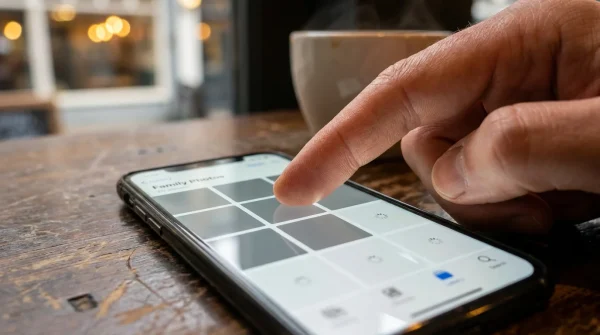
Then comes the sudden morning quietness three days later. You pull up a snapshot of your toddler taking their first steps on a windswept Oregon coast four years ago, only to watch a pixelated mosaic freeze on the screen while a tiny grey exclamation point mocks you in the lower corner. You scroll back further, reaching for your sister’s wedding toast, and notice dozens of squares simply dissolving into empty grey place-markers. Your camera roll is quietly hemorrhaging high-resolution history, not because the new phone failed, but because you misunderstood what happened in the invisible airspace between them.
We treat our phones like lockboxes, assuming anything captured through their lenses is etched into digital granite. But modern mobile architectures do not operate on archival storage principles; they operate on dynamic cache reconciliation. When you unpack a new handset, you aren’t moving physical photos—you are tethering two mirrors to a moving target.
The Mirror Versus the Vault: Rethinking the Cloud
The tragedy begins with a single linguistic confusion: the difference between a backup and a sync. Most people treat iCloud Photo Library like an attic where old boxes go to live safe from household floods. In reality, it acts more like a synchronized mirror hanging across every wall of your digital house. If you spray paint over the glass in the hallway, the living room mirror reflects the exact same smear instantly.
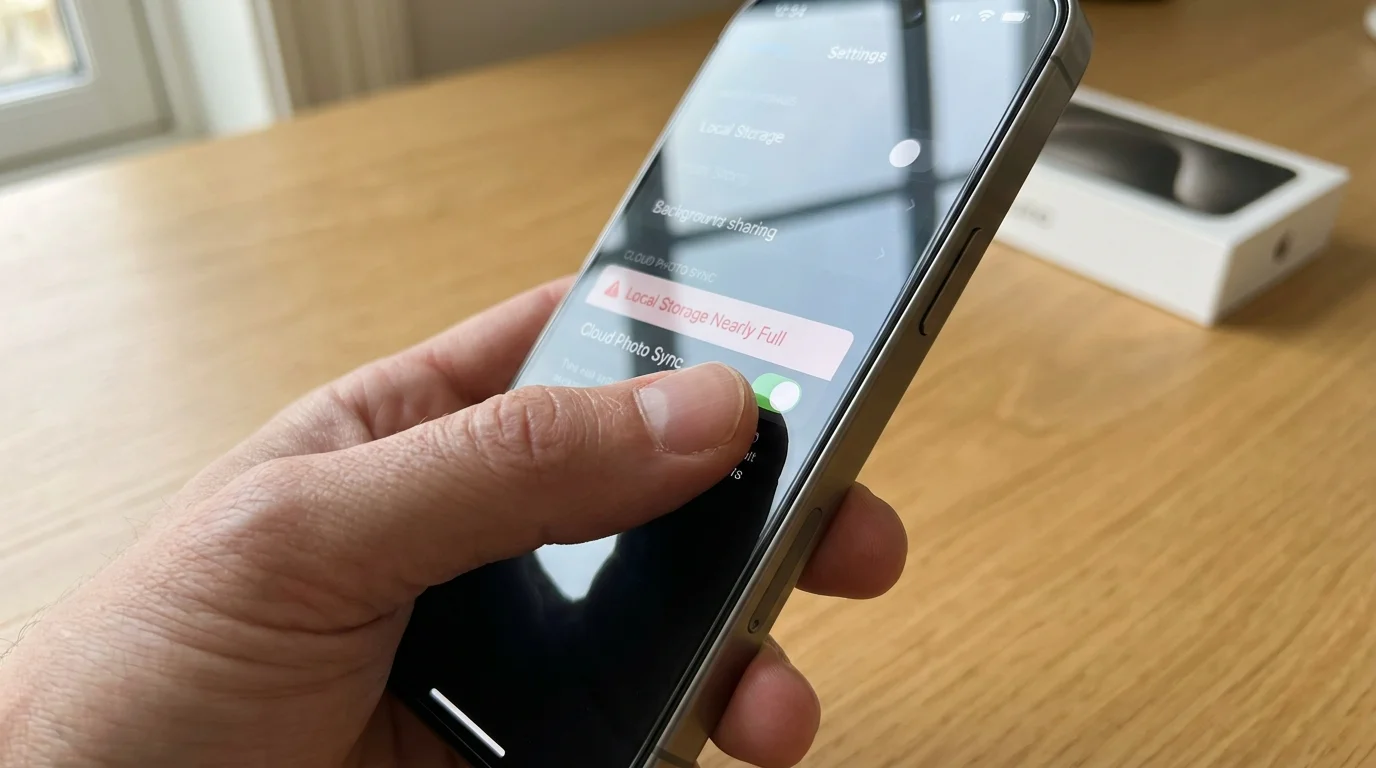
When you set up a new phone, Apple offers an appealing, default olive branch called Optimize iPhone Storage. This toggle sounds like pure generosity—giving you back thirty gigabytes of room by keeping full-resolution files on remote servers while leaving featherweight thumbnails on your device. What nobody tells you is that your old phone was likely operating under this exact regime for months. It held mere ghosts of your files, downloading the true raw bytes only when you tapped on an image.
If you unceremoniously factory wipe that old device before the new one builds a complete local index, or if you toggle off the library mid-migration, the system interprets your impatience as a deletion command. The cloud mirror updates. It registers that the local files are gone, concludes you no longer want them taking up space, and quietly scrubs them from the cloud ecosystem altogether. You did not migrate your library; you triggered an automated purge.
- Hisense smart TVs stream intrusive video ads across cluttered home screen menus
- Samsung AMOLED screens trigger stinging eye fatigue without warmer color temperature tweaks
- Citibank text alerts mask predatory spoofed caller IDs stealing checking logins
- CapCut video drafts hoard phantom gigabytes freezing cluttered phone storage bars
- Keychron mechanical keyboards mimic boutique luxury gear while delivering crisp tactile key clacks
The Cost of Speed: A Master Class from the Field
Sarah Chen, a 38-year-old architectural photographer based out of Seattle, learned this distinction in the most agonizing way imaginable. After trading in her three-year-old phone at a retail counter, she watched the store technician perform the standard factory reset while she slipped her sleek new replacement into her pocket. The trade-in credit was processed, the old device was dropped into an anonymous padded shipping pouch, and Sarah drove home.
Two weeks later, while prepping a digital portfolio for a major commercial client, Sarah went looking for archival location shots captured during a month-long trip through coastal Maine. Over twelve hundred RAW-format reference images were gone. Because her previous phone had been running on low storage, over ninety percent of her actual original files had never finished downloading from the cloud before the wipe. The handoff was severed halfway through, leaving her new phone holding corrupted, two-megabyte JPEG proxies instead of thirty-megabyte digital negatives.
Tailoring Your Strategy: Three Profiles of Risk
For the Minimalist Daily Shooter
If your photo library is largely receipts, parking spot reminders, and casual pet portraits, you can afford to let the system automate your storage balancing. However, you must establish a thirty-day quarantine window. Never erase an old device immediately upon finishing the blue-cloud transfer screen. Plug both devices into power overnight on high-speed home Wi-Fi, allowing the silent file integrity check to finish while you sleep.
For the High-Resolution Archiver
If you record your life in 4K at 60 frames per second or shoot in Apple ProRAW, automated sync protocols are your greatest enemy during migrations. A single five-minute video file can take hours to properly verify across cloud infrastructure under typical domestic upload bandwidths. Force full local file downloads on your primary machine before initiating any migration steps, ensuring the bits sit safely on physical flash storage rather than in server transit.
For the Family Library Curator
Shared libraries introduce multiple points of failure during hardware refreshes. If you participate in a shared family album, another user’s device settings can inadvertently override your local cache state. Verify that your personal camera roll is segregated from shared family folders before you decouple your old hardware from your primary Apple account.
Mindful Migration: The Fail-Safe Pre-Transfer Check
Protecting your history takes fifteen minutes of deliberate intention. It requires ignoring the impatient prompts on your shiny new screen and doing the quiet, unglamorous diagnostic work on the old phone first.
- Open Settings > Photos on your old phone and verify whether Optimize iPhone Storage or Download and Keep Originals is checked.
- If Optimize was enabled, switch it to Download and Keep Originals while connected to unmetered Wi-Fi and power. You may need to temporarily delete bulky apps to make physical space for this process.
- Scroll to the absolute bottom of the Photos app library tab and verify that the sync status reads Updated Just Now with no pending upload or download counters.
- Log in to iCloud.com via a desktop browser, click into Photos, and match the total file count exactly against the number displayed at the bottom of your phone’s camera roll.
- Only after both numbers match down to the single digit should you proceed with device transfer protocols.
Keep your old phone powered, connected to home internet, and physically intact for at least seventy-two hours following the new setup. Check your favorite albums on the new device while in Airplane Mode. If an image opens instantly in tack-sharp clarity without a loading spinner while your radios are disabled, you know the original file lives locally on your new flash memory.
The Weight of What We Keep
We are the first generation of humans tasked with maintaining an unbroken digital timeline of our entire existence. Our grandparents kept their histories in shoe boxes tucked beneath cedar beds, insulated from systemic software logic and remote server updates. Those prints faded at the edges, but they never vanished because someone accidentally touched a grey toggle switch in a sub-menu.
Taking ownership of your data means accepting that convenience often trades away resilience. When you slow down during a phone migration, treating the data not as invisible air but as irreplaceable personal artifacts, you regain control over your digital legacy. The few extra hours spent verifying bits and bytes return something far more valuable than spare gigabytes: the guarantee that your memories will remain waiting for you exactly as you left them.
The cloud is not an infallible vault; it is merely an obedient mirror that reflects your mistakes as efficiently as your memories.
| Migration Strategy | Technical Behavior | Safety Margin |
|---|---|---|
| Direct Migration without Check | Transfers thumbnails; relies on cloud to background-fill originals over weeks. | Low; susceptible to partial sync loss if old phone is wiped early. |
| Download Originals Protocol | Forces full-resolution assets onto local flash storage prior to device link. | High; completely isolates your media from cloud disconnects. |
| Desktop Web Verification | Cross-checks cloud database counts against physical device tallies. | Absolute; eliminates blind faith in automated status bars. |
Frequently Asked Questions
Why did my photos show up as low-resolution thumbnails on my new phone?
Your previous device likely had Optimize Storage enabled, meaning full-resolution files were still sitting in cloud servers. Your new phone simply hasn’t finished the multi-gigabyte background download, or the sync was interrupted before the full assets could transfer.If I delete a photo on my old phone to free up space, does it delete everywhere?
Yes. Because iCloud Photo Library is a synchronization service rather than a passive backup, any deletion made on any connected device instantly replicates across all other devices and the cloud itself.How long does it take for a full-resolution library to migrate completely?
Depending on your home broadband upload and download speeds, a 100GB library can take anywhere from twelve to forty-eight continuous hours of connected, powered idle time to reconcile fully.Can Apple Support recover photos that vanished during an improper setup?
Only if they still reside in the ‘Recently Deleted’ album on iCloud.com within a 30-day window. Once that cache purges or sync conflicts overwrite indexing, those files are permanently unrecoverable.What is the safest way to prepare an old phone for trade-in without losing data?
Confirm your entire library is visible on iCloud.com via a computer, back up the device to a physical Mac or PC with encryption enabled, and only then proceed with ‘Erase All Content and Settings’.