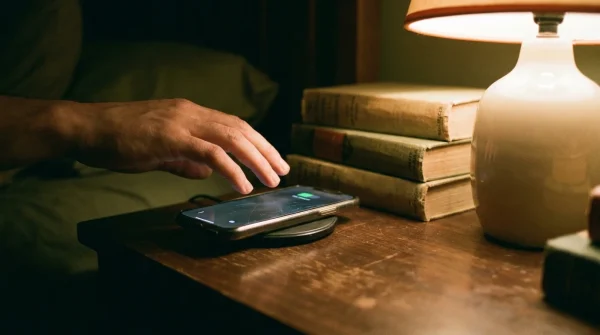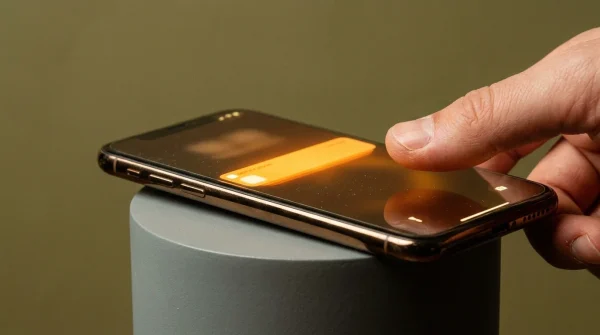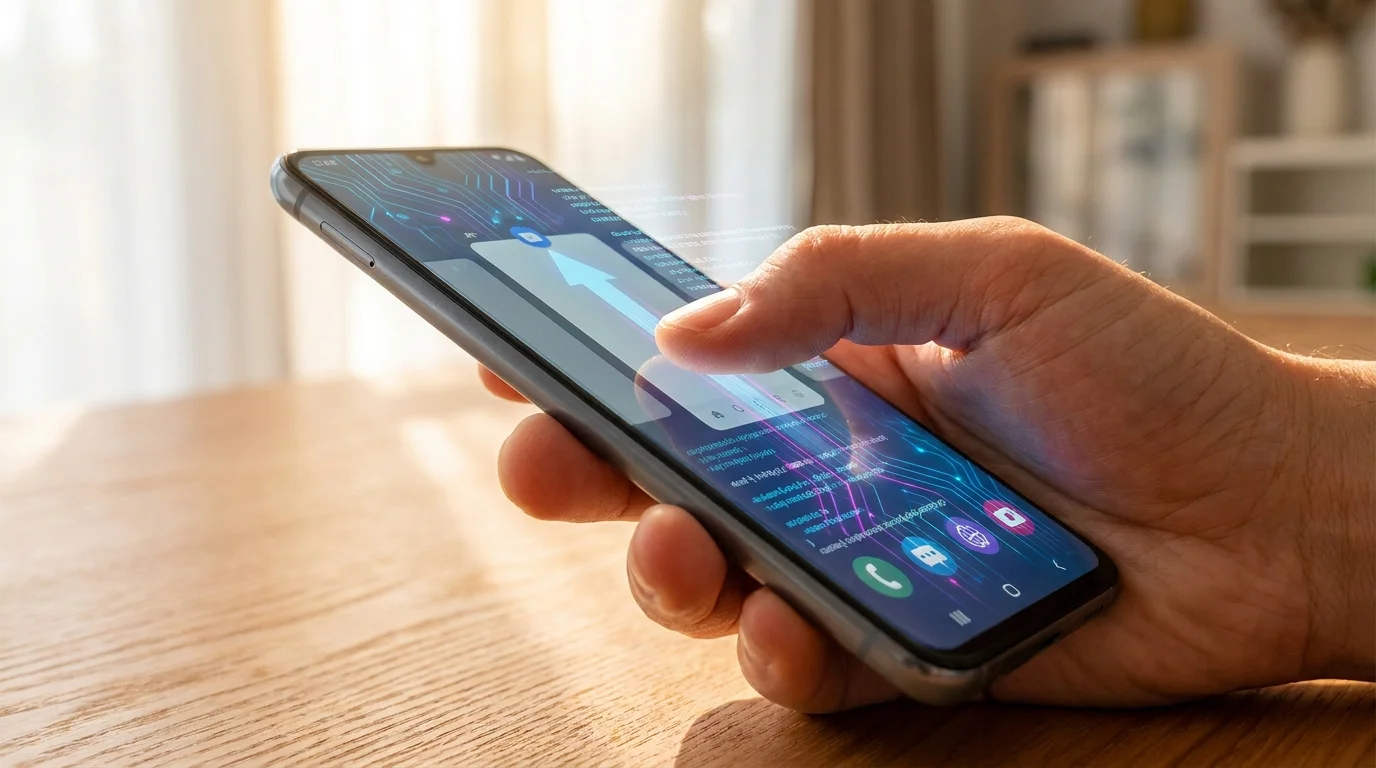
The subway car rattles on its rails beneath Manhattan, bathed in that sharp, blue-white light of late afternoon commuters. Your thumb moves with rhythmic muscle memory: a flick upward from the bottom bezel, a brief pause as the cascade of open cards fans out, and then a rapid series of upward swipes. Instagram disappears into the void. Messages vanishes. Maps, Spotify, Mail—swiped away, clean, gone. The screen returns to an austere, spotless wallpaper, and a subtle wave of neatness settles into your chest.
It feels orderly, like wiping down a granite kitchen counter before turning off the lights for the night. You look down at the little battery icon in the top right corner, sitting at thirty-four percent, convinced that you just saved your phone from an early evening blackout. You believe you just silenced dozens of greedy processes clamoring for your battery cells.
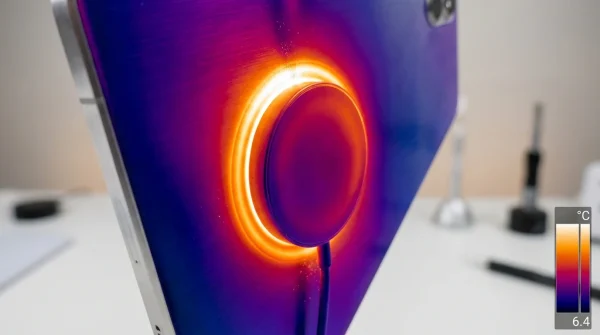
Yet twenty minutes later, when you tap open Messages to check a train arrival, the phone hesitates for half a heartbeat. A faint warmth develops against your palm right behind the camera module. Without realizing it, you just asked the microprocessors under the glass to work five times harder than if you had simply left those app cards alone.
The Refrigerator Door Paradox
To understand what actually happens when you swipe away an app card, think of your iPhone less like an open office where unsupervised workers waste electricity, and more like a high-tech kitchen refrigerator. When you step away from an app, iOS places it in a state of suspended animation. It takes a perfect snapshot of its current state and sets it quietly on a refrigerated shelf inside low-power physical memory—your device’s Random Access Memory (RAM).
In this frozen state, the app consumes zero clock cycles from the Central Processing Unit. It sips an imperceptible trickle of current simply to keep that memory address populated, much like a chilled carton of milk sitting motionless on a shelf. Holding data in suspended RAM costs virtually nothing in terms of watt-hours over the course of a day.
When you flick that card up and off your screen, you are not closing a running motor; you are dumping the milk down the drain and unplugging the refrigerator shelf. When you tap the app icon five minutes later, iOS cannot simply wake the sleeping image. It must fetch the application assets from deep flash storage, decompress compressed files, initialize runtime environments, re-establish secure network handshakes, and allocate fresh memory spaces. That process spikes the processor to maximum frequency, draining your battery faster than a half-hour of casual reading.
- Samsung Galaxy S24 cellular switching drains battery bars along daily commutes
- Blink Outdoor cameras freeze motion sensors once subscription cloud tiers expire
- iPhone 16 screens flash hidden backlight pulses triggering strained eye fatigue
- PS5 Digital Edition vertical stands drain cooling alloy across bare processors
- Bose QuietComfort Ultra earcups trigger dull ear pressure during extended listening
The Diagnostics Desk Secret
Marcus Vance, a forty-two-year-old hardware technician based in Austin, has spent over twelve years running power draw analytics on mobile devices. When customers arrive at his diagnostic counter complaining that their year-old phones cannot survive past 3:00 PM, his first action is rarely to swap the lithium-ion pouch. Instead, he checks their interaction logs in the iOS analytics console.
“Nine times out of ten, their battery health reads ninety-six percent, but their application launch count is astronomical,” Marcus notes. “I watch people unconsciously flick away forty apps while standing in line for a flat white. They are effectively forcing their CPU to cold-start a diesel engine at every single stoplight instead of letting the modern auto-stop system do its job. Cold restarts burn peak voltage, creating internal heat spikes that quietly chew through battery capacity.”
Rethinking Your Memory Habits by Usage Style
How you treat the App Switcher should depend on how your day actually unfolds. Treating your phone as a self-regulating ecosystem requires adjusting your habits based on your daily workflow.
For the Frequent Communicator
If you find yourself popping between Slack, Messages, and email every few minutes, force-closing these applications is the single most counterproductive thing you can do. Each communication client maintains lightweight background push connections managed entirely by the operating system kernel, not the app itself. Leaving them frozen in the switcher allows them to re-render in two milliseconds, bypassing the processor-heavy boot sequence entirely.
For the Commuter and Traveler
Navigation apps and streaming audio tools are the rare exceptions where people feel compelled to swipe cards away, fearing continuous GPS polling. However, iOS handles this automatically through fine-grained location indicators. Background location access flags tell you instantly if a suspended app is pinging your coordinates. If the small arrow in the status bar is hollow or gone, the app is completely inert. Swiping away Maps while running errands only guarantees that your phone must re-cache map tiles and re-calculate routing tables the moment you need a turn.
For the Digital Minimalist
If the visual clutter of having forty cards in your switcher gives you mental friction, realize that the switcher is not a task manager—it is a chronological history scroll. The cards at the far right of the stack may have been closed by the operating system hours or days ago to free up memory for your camera. Swiping through them is merely sorting through an album of digital ghosts.
The Mindful Interaction Protocol
Breaking a compulsive swipe habit requires replacing the physical reflex with an understanding of what requires your attention. Follow these baseline rules to keep your battery discharge smooth and steady throughout the day:
- Leave working apps alone: Allow the operating system memory manager to freeze and page out applications naturally according to internal prioritization algorithms.
- Reserve force-quitting for true crashes: Use the upward swipe only when an app completely freezes, fails to accept touch input, or experiences an audio loop bug.
- Audit background activity properly: Instead of clearing cards, navigate to Settings > General > Background App Refresh, and turn off access for social media feeds that do not need to pre-load content while you sleep.
- Tame push notifications: Disable lock screen wake triggers for non-critical delivery apps, which preserves screen power far more effectively than clearing memory cards.
By treating the App Switcher as a history drawer rather than an active control board, you remove a layer of constant busywork from your day. Your device stays noticeably cooler, runs smoother, and your battery percentage stops making sudden, inexplicable drops before dinner.
The Calm of Letting the Machine Work
There is a quiet relief in letting go of the urge to micromanage your tools. Modern operating systems are designed by teams of engineers who spend decades refining kernel schedulers, memory compaction routines, and thermal mitigation logic. They built these systems so you would not have to think about processor states or allocated memory partitions.
When you resist the impulse to swipe away that neat row of preview cards, you allow the engineering beneath the screen to do exactly what it was created to do: rest. Your phone ceases to be an unruly machine that demands constant supervision, becoming instead a seamless extension of your thoughts—ready when tapped, silent when ignored, and effortlessly cool in the palm of your hand.
“Modern operating systems handle memory allocation far better than human intuition ever could.”
| Interaction Method | System Behavior | Impact on Daily Battery |
|---|---|---|
| App Left in Switcher | Code frozen in RAM; zero CPU cycles drawn | Negligible current drain; instant waking state |
| App Force-Closed (Swiped) | Memory dumped; cache flushed from volatile RAM | Forces cold CPU boot; spikes voltage draw upon restart |
| Targeted Background Refresh Off | Suspended in RAM; prevented from fetching new data | Preserves battery longevity without cold-boot penalties |
Frequently Asked Questions
Does leaving apps open in the switcher drain my battery overnight?
No. When an app moves to the background and finishes its immediate task, the operating system suspends it entirely. It draws no processing power and does not actively cycle battery reserves while you sleep.When should I actually force-close an application?
The only time you should swipe an app card away is when the software becomes completely unresponsive, freezes on a white screen, or encounters a known bug that prevents normal navigation.Why does my phone get warm when opening an app I just swiped away?
Because the system must rebuild the app from scratch using flash storage and high CPU clock speeds. This intense burst of computational activity generates sudden heat against the back chassis.Doesn’t Background App Refresh mean apps are constantly running?
Background App Refresh only allows apps to check for updates periodically during predictable windows. You can easily toggle this off in your settings without ever needing to swipe cards away.Why does the App Switcher keep apps from days ago?
The switcher is primarily an application launcher and recent history ledger. Most older cards are merely static screenshots; their underlying code was quietly purged from active memory long ago.