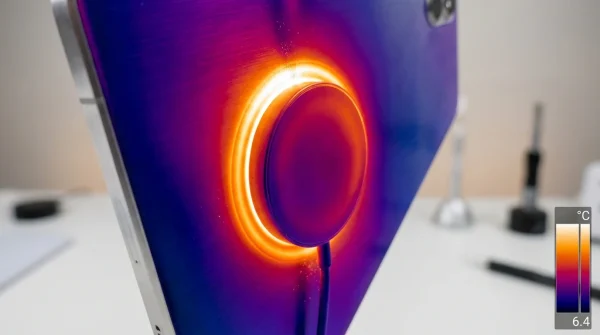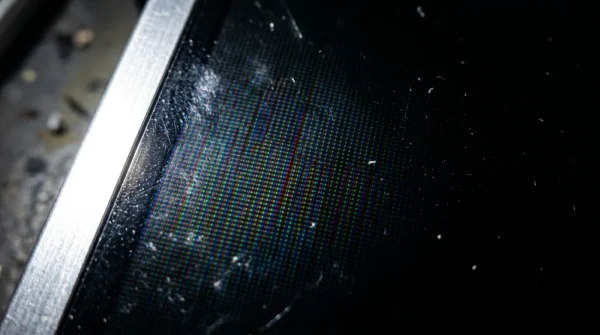
The afternoon sun cuts across your wooden desk at a flat, warm angle, catching the quiet micro-scratches on an anodized aluminum monitor arm. You click a spreadsheet cell, glance up toward a secondary panel, and there it is: a violent, momentary blackout. The panel drops to pure void for half a heartbeat before snapping back to life with a faint, jagged distortion around fine text. You push the connector a millimeter deeper into the dock, listening for a plastic click that never resolves the underlying instability.
Most workdays absorb this friction in silence. You assume the graphics driver crashed, that the operating system bungled its display handshake, or that the panel panel itself is showing premature fatigue. We have been trained to treat modern electronics as infallible digital conduits until something completely catches fire, overlooking the copper conduits running behind our desks.
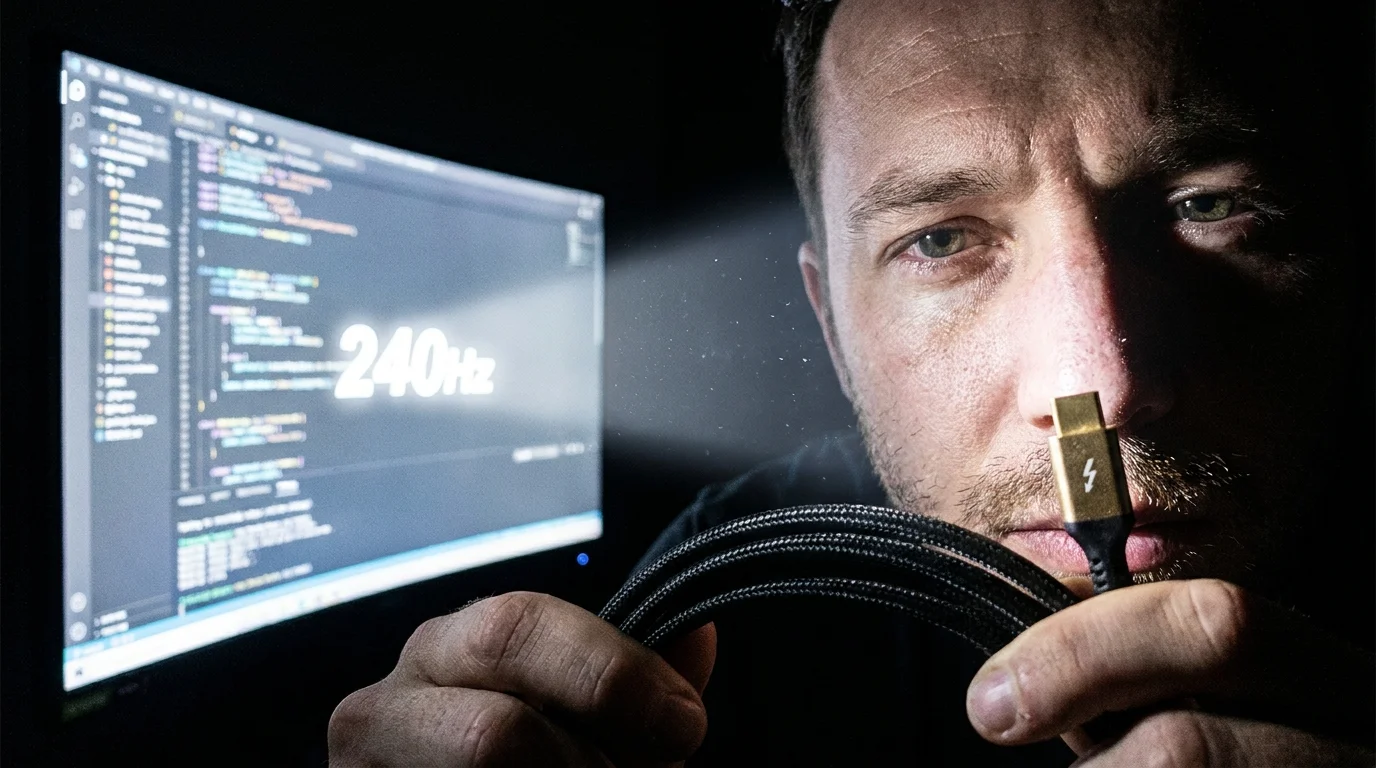
Resting quietly between your dock and your display is a thick braided black cable showing an engraved lightning bolt icon next to a gold-plated connector tip. It looks identical to the cheap, rubbery cord that shipped inside the box of your rechargeable desk lamp. Yet beneath those identical oval shells lies a vast divide in high-frequency signal integrity, thermal dissipation, and real-time electronic certification that dictates whether your workspace stays sharp or continuously stutters into digital exhaustion.
The Symmetry Illusion: Why All Oval Plugs Are Not Equal
The consumer tech ecosystem sold the world on a beautiful lie: a single universal connector that would effortlessly replace every proprietary brick and pin across the planet. While the mechanical footprint of the Type-C interface achieved physical uniformity, it simultaneously created an invisible labyrinth of internal channel routing. When your panel flickers at 120Hz or drops from crisp native resolution into a blurry, downscaled fog, your system is not failing—it is breathing through a pillow to keep from choking on unverified copper lanes.
High-refresh-rate 4K displays demand upwards of thirty gigabits per second of raw, uncompressed data. A standard bargain charging wire features passive copper lines built almost exclusively for direct-current power transmission and sluggish legacy data transfers. When forced to carry high-frequency DisplayPort tunnels alongside system power, electromagnetic cross-talk bleeds across the unshielded pairs. The monitor loses clock synchronization, and the graphics controller immediately resets the link to protect the silicon from raw packet corruption.
Certified Thunderbolt 4 cords operate under an entirely different engineering philosophy. Instead of hoping raw voltage survives the transit down an uncalibrated wire, active micro-controllers continuously balance signal attenuation across every single millimeter of the run. The difference is not aesthetic luxury; it is the physical baseline required to maintain pixel clocks without dropping frames.
- iPhone 18 Pro silicon benchmarks reveal massive compute leaps over standard flagship mobile chips
- Google Assistant routines update derails third party smart home voice triggers across connected devices
- 5G smartphone modems expose remote code execution zero-day demanding urgent firmware patches
- Old Mac mini hardware transforms into silent local NAS storage blocking cloud subscription fees
- Zigbee mesh networks bypass cloud server blackouts keeping local smart switches active
The Lab Bench Reality: Inside Marcus Vance’s Audio-Visual Workspace
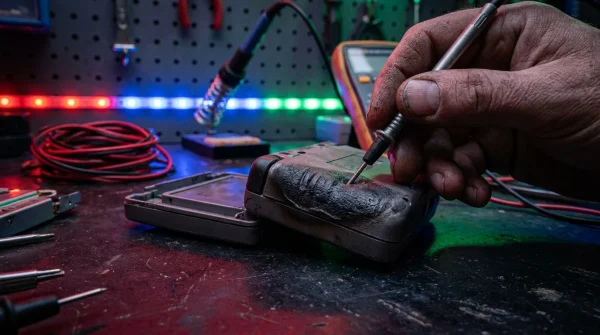
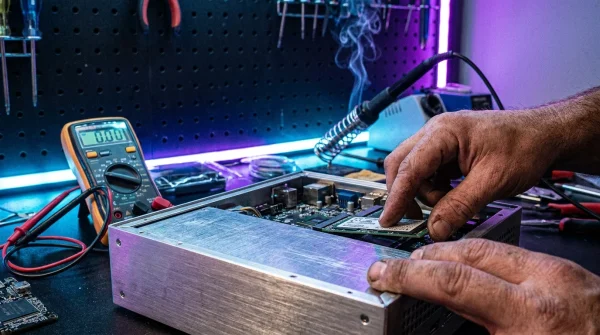
Marcus Vance, a 42-year-old color grading engineer based out of Portland, spent three weeks chasing an intermittent video drop on his reference-grade OLED monitor. Every time his motorized desk rose to standing height, the secondary display would stutter and drop color depth from ten-bit RGB to compressed chroma subsampling. He swapped the host machine, updated the operating system kernel, and replaced an expensive external graphics dock, convinced the issue stemmed from PCIe bus saturation.
The culprit was not a thousand-dollar chassis, but a passive four-foot cable lacking an integrated electronic marker. When Marcus adjusted his desk, minor electromagnetic interference from the desk motor’s power brick radiated into the unshielded run, instantly corrupting the display stream. Swapping that line for a verified active Thunderbolt 4 link sealed the conduit against ambient magnetic noise and permanently eliminated the dropouts within seconds.
Layering Your Workspace: Matching Hardware to Real Display Demands
Understanding which connection your workstation actually requires prevents you from overspending on low-demand accessories while shielding critical video pipelines from uncertified bottlenecks.
For the High-Refresh Ultrawide Setup
If your daily workflow relies on a single ultrawide panel pushing high frame rates or dual 4K monitors daisy-chained through a single workstation dock, bandwidth tolerance is razor-thin. Passive cords cause packet loss that forces your GPU to negotiate lower refresh rates automatically. You need a dedicated 40Gbps Thunderbolt 4 link that explicitly contains dual E-marker chips to sustain bidirectional DisplayPort 1.4 or 2.1 tunneling alongside eighty watts of sustained laptop charging.
For the Single High-Density Creative Station
Color-critical editing on a standalone 5K display demands uncompromised color space integrity without chroma compression. Sub-par cables quietly downgrade color pipelines from uncompressed 4:4:4 to muddy 4:2:2 formats to prevent outright screen crashes. Investing in a short, reinforced Thunderbolt 4 assembly guarantees that what leaves your graphics engine reaches the panel glass with zero sub-pixel interpolation.
For Standard Secondary Utility Displays
When running a basic 1080p horizontal panel reserved purely for text chat or background music players, full protocol overhead is rarely necessary. Standard USB-C video-alt cables can handle these lower pixel clocks easily. However, using these legacy leads on primary workstation hubs introduces ghosting and sleep-wake failures that ripple across the entire operating system interface.
Mindful Cable Calibration: The Zero-Glitch Protocol
Stabilizing your desktop visual feed requires a methodical evaluation of your signal path rather than random hardware swaps. By following a deliberate physical setup routine, you can eliminate signal reflections and secure reliable display synchronization.
- Inspect the connector jacket for the official printed ‘4’ symbol and thunderbolt icon to confirm active silicon certification.
- Avoid sharp ninety-degree cable bends within two inches of the display port connector to prevent internal micro-fractures in the high-speed shielding braid.
- Seat the connector firmly until the metal housing sits flush against the chassis, leaving no exposed gold contacts to gather static charges.
- Isolate your display data cable runs at least three inches away from unshielded AC power bricks and motorized desk power supplies.
- Verify operating system display properties to confirm the panel is negotiating its native bit depth rather than dropping to low-bandwidth legacy modes.
Keep your total passive run length under 2.6 feet if you are using unamplified connections; anything longer carrying 40Gbps data streams must utilize active transceiver silicon inside the connector housing to prevent progressive signal degradation.
The Quiet Peace of an Unbroken Workspace
A workspace should disappear while you work. When equipment operates with absolute electronic stability, your attention stays anchored entirely to the creative or analytical task at hand. The micro-frustrations of flickering backlights, blurry font edges, and mysterious system disconnects are not inevitable quirks of modern computing; they are physical symptoms of a choked bridge.
Investing in the correct physical conduit beneath your monitor is an act of quiet respect for your daily focus. When data, power, and high-frequency clock signals glide effortlessly through properly shielded copper, your desktop transforms from a fragile chain of compromises into a unified, rock-solid instrument.
Signal integrity is not about faster charging; it is about preserving the microscopic timing of every single pixel before it reaches your eyes.
| Connection Type | Bandwidth & Capabilities | Desktop Reliability Impact |
|---|---|---|
| Generic USB-C Charge Cable | 480 Mbps | 60W-100W Power Only | Severe flickering; fails to initialize high-refresh external video streams. |
| USB 3.2 Gen 2×2 Cord | 20 Gbps | DisplayPort Alt-Mode | Acceptable for single 4K at 60Hz; prone to dropping frames on ultrawides. |
| Certified Thunderbolt 4 | 40 Gbps Fixed | Dual Display Tunneling | Zero micro-stutter; maintains full bit-depth and high refresh synchronization. |
Frequently Asked Questions
Why does my screen flicker only when I launch specific graphics apps?
Intensive applications force your GPU to push higher color bit-depths and dynamic refresh rates, which instantly exceeds the bandwidth limits of unshielded passive cables and triggers visual resets.Can a Thunderbolt 4 cable damage a standard USB-C phone or tablet?
No. Thunderbolt 4 includes intelligent fallback silicon that safely identifies downstream device limits and negotiates standard low-voltage charging and basic data rates automatically.Does cable length affect my desktop monitor refresh rate?
Yes. Passive high-speed cables longer than three feet experience dramatic signal decay unless they incorporate active signal-boosting chips directly inside the connector housing.How can I visually tell if my cable has an E-marker chip?
Certified cables feature an engraved lightning bolt icon alongside the numeral ‘4’, signifying tested electronic compliance, proper thermal shielding, and embedded controller chips.Will a better cable fix text that looks blurry on my external display?
If your operating system automatically drops output resolution or sub-pixel chroma sampling to prevent signal collapse over a poor cable, switching to Thunderbolt 4 will restore crisp native rendering.