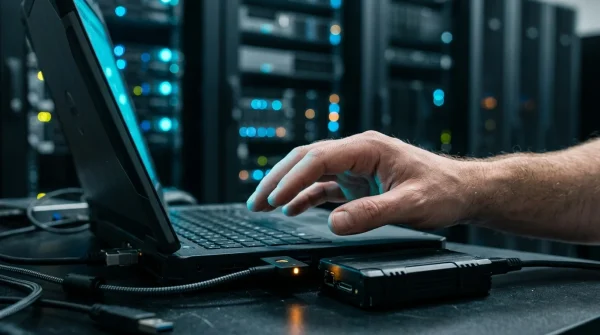
Federal prosecutors have charged a former OpenAI engineer with planting a covert audio-recording device inside an executive conference room at the company’s San Francisco headquarters. According to the U.S. Department of Justice, 35-year-old Abdulrahman Alfozan, a Saudi national who worked on OpenAI’s product team starting in July 2025, was arrested on October 9, 2026, and made his initial appearance in San Francisco federal court on October 13.
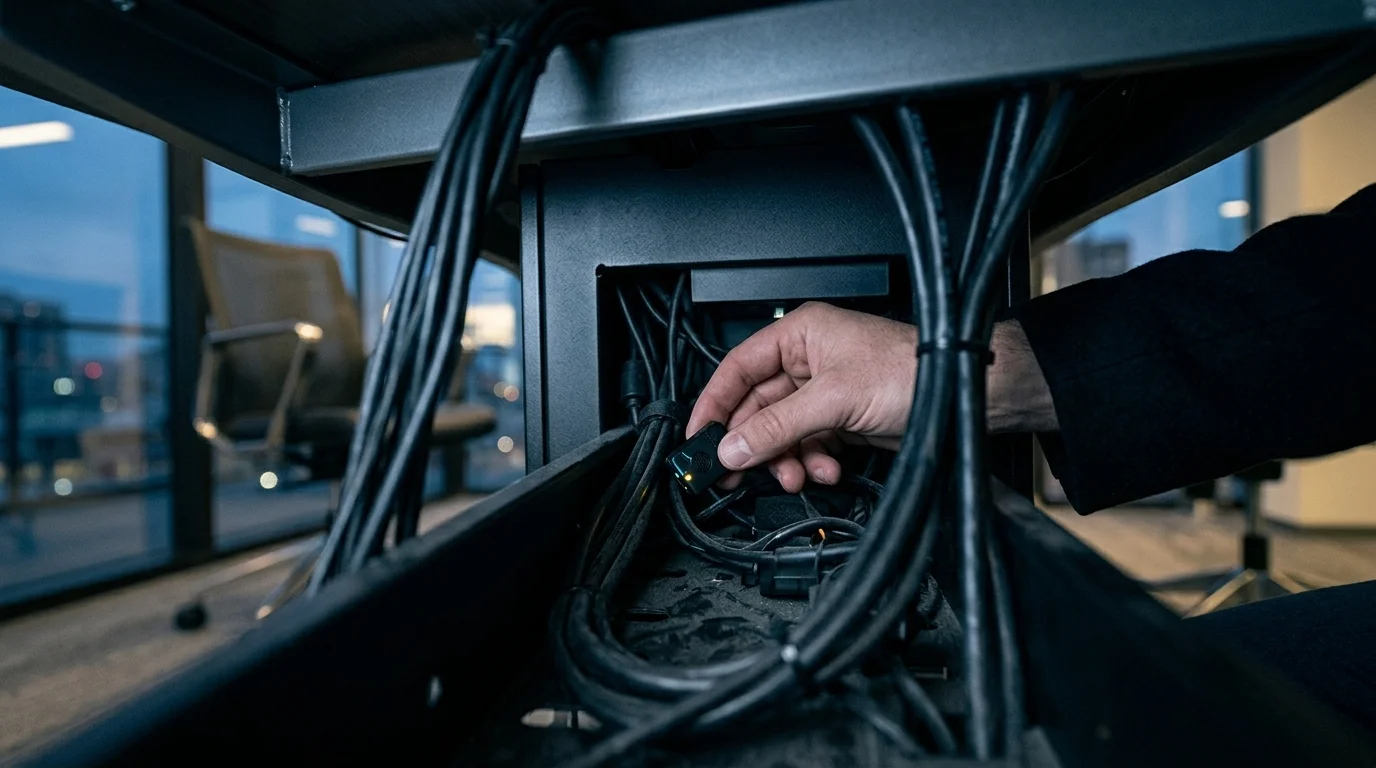
Alfozan faces a federal charge of using or attempting to use an electronic, mechanical, or other device to intercept oral communications. As reported by ABC News, OpenAI discovered the hardware on September 30 wrapped in toilet paper and plugged into a USB port on the back of a television in an executive meeting room. The company restricted Alfozan’s access, placed him on leave during an internal investigation, referred the matter to the FBI, and terminated his employment on October 9.
The Discovery and Technical Details of the Device
Prosecutors allege the recording hardware was installed on or about September 28, two days before OpenAI personnel found it. An FBI affidavit supporting the criminal complaint states that the executive conference room is frequently used by company leadership to discuss proprietary research, product plans, commercial strategy, and external briefings with government officials and business counterparts.
Accounts of the hardware highlight both consumer-grade components and custom evasion measures. According to Nextgov/FCW, the FBI complaint identifies the core hardware as an off-the-shelf camera and audio recording chip that sells online for $14, and notes that security personnel found a second similar recorder inside a bag containing Alfozan’s identification. At the same time, the Justice Department noted that the device’s contents were encrypted, while CNN reported that OpenAI characterized the hardware’s data-transfer mechanism as specifically designed to evade monitoring. Public court filings and reporting do not confirm whether any audio was successfully recorded, decrypted, or transmitted outside the building.
- University of Virginia Students and Faculty Clash Over Classroom AI Rules
- AI Post-Processing Doubles Subseasonal Weather Forecast Skill Two to Six Weeks Out
- Cities Confront AI Fraud, Public-Records Strains, and Unintended Agent Actions
- Cities Confront AI Fraud, Public-Records Strains, and Unintended Agent Actions
- Cities Confront AI Fraud, Public-Records Strains, and Unintended Agent Actions
OpenAI stated that it has no indication Alfozan improperly accessed or exfiltrated model weights, source code, or customer data, according to NBC News. FBI Director Kash Patel alleged in a statement that Alfozan was attempting to “secretly capture sensitive communications about the company’s super intelligence technology,” though the specific criminal complaint focuses strictly on the attempted interception of oral communications.
AI-Assisted Attribution and Investigation
A notable element of the investigation is the role artificial intelligence played on both sides of the alleged incident. In a public statement, OpenAI said it used its own AI models to analyze the discovered hardware, determine where it came from, and identify the specific employee who planted it a few days prior.
While OpenAI credited its internal models with helping attribute the device, the Justice Department and the unsealed FBI affidavit point to traditional physical surveillance evidence as well. According to the affidavit, conventional security camera footage recorded Alfozan near the executive conference room on multiple dates before the bug was found, despite him having no authority to access the room or attend meetings held there. After discovering the device, investigators also captured Alfozan on a hidden camera checking the bug behind the television.
Separately, WIRED reported that the criminal complaint describes Alfozan querying an unspecified productivity agent and an AI chatbot over several weeks in connection with planning the alleged surveillance. The Justice Department’s public press release does not mention the chatbot queries, and those logs alone do not establish a broader motive or confirm that conversations were captured.
Insider Threats Beyond Model Weights
For the broader technology sector, the incident illustrates how physical security and insider threat management are becoming critical concerns for frontier AI laboratories. Historically, cybersecurity discussions around leading AI developers have centered on digital defenses—specifically protecting source code, proprietary training data, and model weights, which are the numerical parameters that dictate how a trained neural network processes information.
Security researchers note that physical access to executive spaces presents an alternative vector for gathering intelligence on strategic roadmaps. Leah Siskind, director of impact and an AI research fellow at the Foundation for Defense of Democracies, told Nextgov/FCW that while AI security is typically pictured as chips, weights, and code, “the stack also includes the rooms where the roadmap gets discussed and the people who walk into them.”
Jam Kraprayoon, a senior researcher at the Institute for AI Policy and Strategy, told the publication that the alleged bugging appeared to be a “fairly crude operation” that did not reach core algorithmic insights or model weights. However, the case has prompted scrutiny of Alfozan’s background and travel plans. Court filings show he had booked a one-way ticket to Saudi Arabia scheduled for earlier this week, and prior reporting noted he was listed as a venture partner at Riyadh-based Raed Ventures and had hosted a roundtable at a Saudi-backed conference in San Francisco in September.
Frequently Asked Questions
What are the legal penalties and next steps in the court case?
Alfozan did not enter a plea during his initial court appearance on October 13 and remains in federal custody pending a detention hearing scheduled for October 19, 2026, according to Reuters. The federal charge is an allegation, and he is presumed innocent unless proven guilty. If convicted, the statutory maximum penalty is five years in federal prison, a $250,000 fine, and three years of supervised release.
Were any OpenAI secrets or audio recordings confirmed stolen?
No. While the Justice Department confirmed that the storage contents on the device were encrypted, public court documents do not establish whether any meetings were recorded, decrypted, or transmitted. OpenAI stated that its internal review found no evidence that source code, model weights, or customer data were accessed or exfiltrated.
Has a motive or external sponsor been established by prosecutors?
Investigators have not publicly established a motive or identified any intended outside recipient for the recordings. While the FBI continues its investigation, the unsealed federal complaint is currently limited to the alleged placement of the listening device inside the San Francisco office.
Sources
- U.S. Department of Justice, Northern District of California – Saudi National Arrested For Installing Surreptitious Audio Recording Device At OpenAI In San Francisco
- ABC News – OpenAI employee accused of planting a bug in the company’s San Francisco headquarters
- Nextgov/FCW – OpenAI bugging case highlights AI’s insider threat problem
- Reuters – FBI arrests Saudi OpenAI engineer over covert recording device, DOJ says
- NBC News – OpenAI employee arrested over hidden listening device, company says
- CNN – OpenAI recording device investigation
- WIRED – An OpenAI Employee Allegedly Used a Chatbot to Help Plant a Recording Device at the Office