Chinese artificial intelligence research lab DeepSeek is expanding its footprint from digital software into physical robotics, agreeing to lead a seed financing round worth tens of millions of dollars for stealth robotics startup Winverse AI. According to Bloomberg reporting republished by Yahoo Finance, the investment values the months-old Hangzhou-based company at approximately $400 million post-money. The move signals a broader strategic push by DeepSeek and its founder Liang Wenfeng to develop underlying intelligence models capable of controlling physical machines in real-world environments.
The financing round also includes commitments from Meituan’s investment arm, Long-Z Investments. While Bloomberg reports that DeepSeek has agreed to spearhead the seed round, secondary Chinese outlets including Guancha and 36Kr note that the transaction has not yet been finalized, and exact details regarding the total funding amount, final valuation, and investor participation could still change. DeepSeek is reportedly deploying capital from its own financing round of at least 80 billion yuan (more than $12 billion) ahead of a potential market debut in early 2027.
From Hardware Acrobats to the ‘Embodied Brain’
DeepSeek’s backing of Winverse AI follows an earlier hardware-oriented investment in August 2026, when the lab acquired a roughly 2% stake in humanoid robot manufacturer Unitree Robotics during its $900 million Shanghai listing. According to Guancha, DeepSeek spent approximately 141 million yuan for 933,400 shares—representing 2.31% of the pre-IPO strategic placement—and signed a memorandum of cooperation to jointly develop general-purpose AI and robotics foundation models.
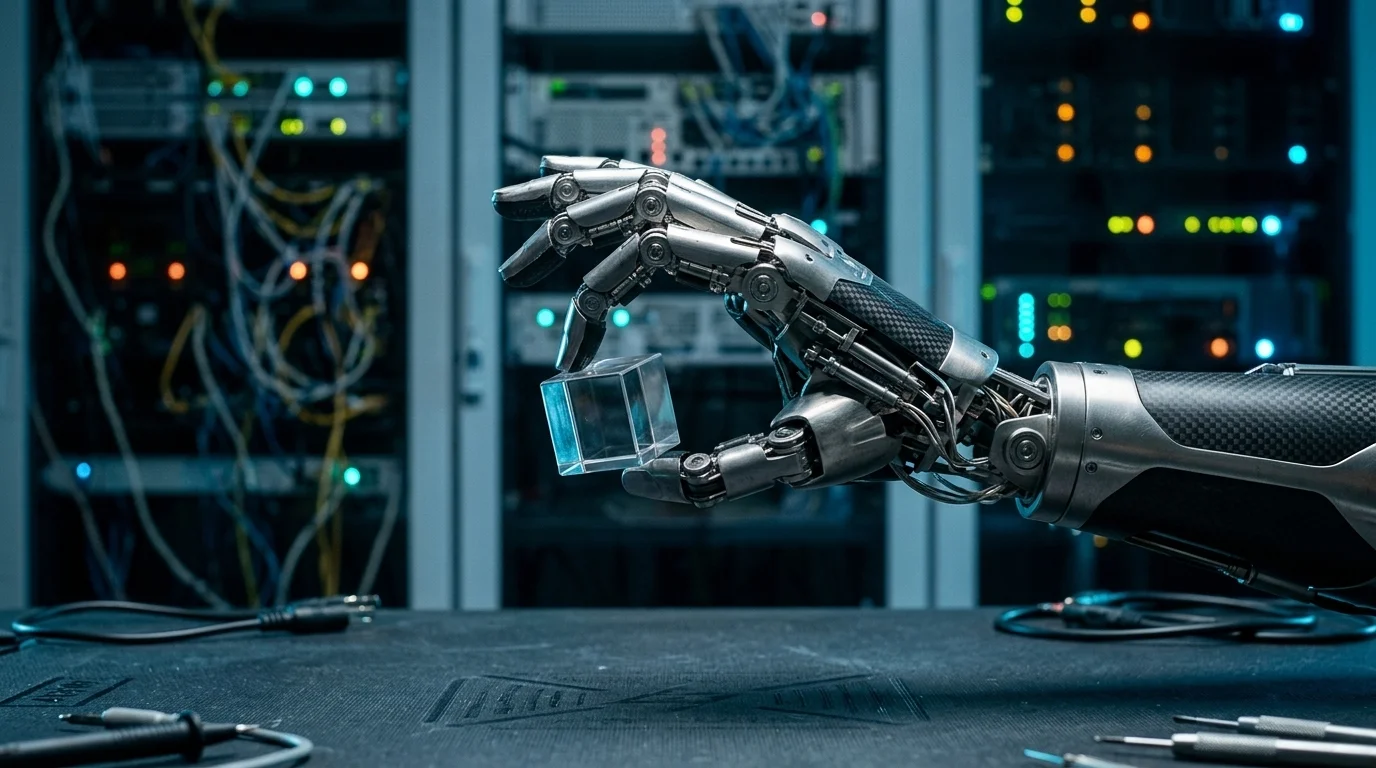
While Unitree specializes in the mechanical limbs, actuators, and motion control systems that allow humanoid robots to walk and perform physical maneuvers, Winverse AI is focused on the software architecture—often referred to in the industry as the “embodied brain.” Founded in 2026 by Hu Han, who departed Tencent Holdings Ltd. in July after leading its Hunyuan vision-language and embodied foundation model teams, Winverse aims to build world models and embodied AI systems. As 36Kr reports, Hu holds a PhD from Tsinghua University, previously worked at Baidu and Microsoft Research Asia, and gained international recognition in 2021 as the co-first and corresponding author of the Swin Transformer computer vision architecture, which won the Marr Prize at the International Conference on Computer Vision (ICCV).
- Riot Games Outlines 2027 Valorant Champions Tour Schedule Including Manila Pacific Cup
- Researchers Find AI Impact on Critical Thinking Depends on How Tools Are Used
- Accenture Limits Central Funding for Anthropic’s Claude AI to $29 Monthly Per Employee
- AP-NORC Poll Finds 64% of Americans Say Artificial Intelligence Is Developing Too Fast
- Wall Street and Economists Clash Over Whether the AI Boom Risks a Financial Crisis
Unlike traditional large language models (LLMs) that process digital text and images to predict the next word in a sequence, world models construct an internal representation of physical laws and spatial dynamics. This allows a robotic system to perceive its surroundings, predict how physical objects will react to force or movement, and autonomously execute multi-step tasks on factory floors or in warehouses rather than merely repeating pre-programmed motions.
Why Software Labs Are Pivoting to Physical AI
DeepSeek’s growing interest in physical robotics reflects a wider shift among leading foundation model developers. According to industry reporting from Sohu and insider accounts relayed by JRJ, Liang Wenfeng has been actively meeting with embodied-intelligence founders to discuss how large models interact with the physical world. Beyond Winverse AI, Sohu reports that DeepSeek is also among the investors backing a startup founded by Yu Tao, the former head of foundation models at LimX Dynamics, which has reportedly reached a $200 million valuation in its second funding round. Insiders indicate Liang is weighing whether to establish a dedicated internal robotics research team at DeepSeek or continue expanding through external equity investments.
Several technical and market catalysts are driving pure-play software labs toward robotics:
- Diminishing Returns in Text and Coding: Industry researchers cited by Sohu note that AI coding capabilities are approaching a plateau of slower incremental growth, prompting model labs to seek new frontiers in spatial and physical intelligence.
- Breakthroughs in Generalization: The September 2026 release of OpenAI’s GPT-6 Astra demonstrated unexpectedly strong general foundation capabilities, convincing software-centric AI labs that large multimodal models can achieve strong generalization in embodied tasks without relying purely on traditional robotics engineering.
- The AGI Roadmap: In May 2026, Liang outlined DeepSeek’s technical progression toward artificial general intelligence (AGI), mapping out a sequence moving from language models to chain-of-thought reasoning, AI agents, continuous learning, self-iteration, and ultimately embodied intelligence.
Supply Chain Advantages Meet Market Consolidation
The convergence of software labs and hardware manufacturers highlights a broader geopolitical divide in robotics development. As analyzed by Guancha and Bloomberg via Yahoo Finance, U.S. technology giants and startups—such as Nvidia, OpenAI, Tesla, Skild AI, Physical Intelligence, and AMD (which announced an $8.2 billion acquisition of spatial intelligence startup World Labs in September 2026)—maintain freer access to advanced semiconductor chips for training massive models.
However, Chinese robotics developers leverage a domestic manufacturing supply chain built alongside the electric vehicle and drone industries. Domestic access to motors, reducers, sensors, and bearings allows rapid hardware iteration. According to a Bank of America Institute report cited by Guancha, the component cost to build a standard humanoid robot in China is projected to fall by roughly half to under $17,000 by the end of the decade, helping Chinese firms capture 97% of global humanoid robot shipments in the first half of 2026. Deploying cheaper hardware into factories early allows companies to collect real-world physical action data—a critical bottleneck for training world models.
At the same time, DeepSeek’s capital injection comes during a period of sharp financial tightening for China’s domestic robotics startups. Following a massive funding surge in the first half of 2026—when domestic embodied AI financing exceeded 90 billion yuan, five times the amount recorded in the same period in 2025, creating over 20 companies valued at 10 billion yuan or more—venture capital enthusiasm cooled in the second half of the year, according to Sohu. With National Development and Reform Commission officials warning against blind investment in August 2026 and roughly 40 to 50 robotics firms bottlenecked in the Hong Kong Stock Exchange’s Chapter 18C listing queue under tighter revenue and technology scrutiny, well-capitalized AI labs like DeepSeek are increasingly viewed by startup founders as vital strategic backers or potential acquirers.
Frequently Asked Questions
Has DeepSeek officially confirmed the Winverse AI investment or launched a robotics division?
No. While Bloomberg (Investing.com) reports that DeepSeek has agreed to lead the Winverse AI seed round at an approximate $400 million valuation, sources note the deal is not yet finalized. Similarly, reports from JRJ that Liang Wenfeng is weighing an in-house robotics team versus external investments reflect insider accounts of ongoing discussions rather than an official corporate announcement.
What is the difference between DeepSeek’s investments in Unitree Robotics and Winverse AI?
Unitree Robotics is primarily a hardware manufacturer specializing in mechanical limbs, motors, and physical locomotion for quadruped and humanoid robots. Winverse AI operates in stealth mode focusing on software—specifically vision-language foundation models and world models designed to act as the cognitive “brain” that helps robots understand physical environments and plan complex tasks.
What are the target applications for these embodied AI partnerships?
According to Yahoo Finance and Guancha, the immediate focus is deploying humanoid and general-purpose robots into industrial settings, such as factory floors and warehouses. Operating in these structured environments allows developers to gather real-world physical interaction data needed to refine their models before attempting broader commercial or household deployments.
Sources
- Yahoo Finance (Bloomberg) – DeepSeek Backs Ex-Tencent AI Scientist’s $400 Million Robot Lab
- Investing.com (Bloomberg) – DeepSeek backs ex-Tencent scientist’s robotics startup Winverse AI
- Guancha – 投完宇树,DeepSeek在具身智能领域又落一子
- 36Kr – Liang Wenfeng Backed Post-1980s Tsinghua PhD Startup: Unicorn Trajectory Hits 2.7 Billion Valuation Milestone
- Sohu – “不如卖给梁文锋”
- JRJ – DeepSeek Reportedly Engages with Embodied Intelligence Startups