Sony Group has not yet finalized a launch window or retail pricing strategy for its next-generation PlayStation 6 console, company leadership confirmed in remarks that have resurfaced alongside a wave of unverified hardware leaks. According to International Business Times UK, Sony Group president and CEO Hiroki Totoki told investors during a May 8, 2026 earnings briefing that the company is still evaluating when to bring its next hardware platform to market and how much it will cost consumers.
The executive comments provide a grounded counterpoint to escalating online speculation regarding Sony’s hardware roadmap. Recent tech reports from GameGPU and Génération NT claim the company is developing three distinct PlayStation 6 configurations, including a standalone handheld codenamed Project Canis and a budget-oriented desktop unit. However, Sony has not authenticated any of these device codenames, form factors, or technical specifications.
Memory Shortages and Component Costs Cloud Pricing
During the simultaneous English interpretation of the May 2026 investor briefing, Totoki stated directly: “We have not yet decided on at what timing we will launch the new console or at what prices.” Sony’s subsequent written Q&A summary reinforced that both the schedule and pricing architecture remain unsettled, though the company noted the summary was not a verbatim translation of the live remarks.
Central to Sony’s cautious posture is the volatile global semiconductor supply chain, specifically regarding memory modules. Sony warned investors that elevated component costs could make next-generation hardware significantly more expensive to manufacture, directly affecting retail pricing and consumer demand. While the company noted it had secured the necessary memory volumes for 2026 with pricing agreed to a certain extent, leadership expects tight supply-demand conditions and high memory prices to persist through 2027.
- Researchers Expose ‘AdFection’ Spyware Campaign Using Targeted Online Ads
- Konami President Says AI Will Not Significantly Shift the Video Game Market
- AI Integration Reshapes Entry-Level Roles, Hiring, and Corporate Staffing
- AI Spending Nears $1 Trillion as Executives Weigh Gains Against Bubble Risks
- Fed Chair Kevin Warsh Says AI Path Will Be Bumpy Before Boosting Wealth
This supply chain pressure is an industry-wide concern. According to OpenCritic, citing reporting from GameRant, Microsoft’s Xbox division faces similar hurdles, with the Xbox CEO stating that the widespread memory shortage will be a factor for future hardware such as Xbox’s rumored Project Helix. To mitigate these expenses, Sony indicated it is examining ways to reduce other hardware production costs, shift sales strategies, and potentially adjust its broader business model.
Outside of official channels, unverified supply chain rumors have painted a turbulent picture of next-generation hardware costs. In an August NeoGAF forum discussion reported by International Business Times UK, hardware leaker KeplerL2 claimed that a $600 price point is “definitely not possible right now” for an alleged PlayStation portable device, pointing to surging LPDDR memory costs driven by data center demand. Separate secondary reporting from NewsBreak also suggested a rumored handheld could cost more than $600, while unconfirmed claims circulating on 163.com floated a speculative bill-of-materials estimate of approximately $760 to $960 and unverified retail price ranges between $900 and $1,200. None of these figures reflect official Sony guidance or verified US retail targets.
Inside the Rumored Three-Console Lineup
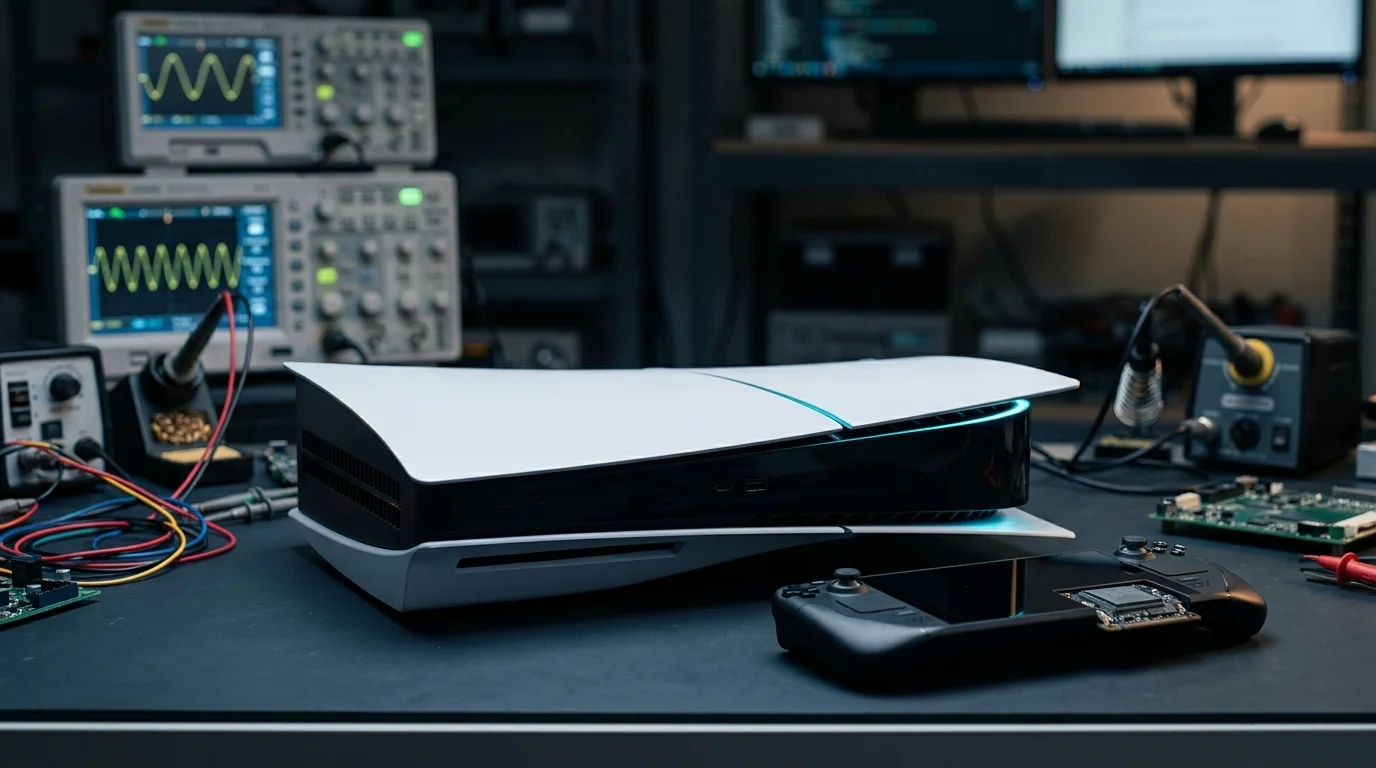
While Sony stays silent on specifics, semiconductor industry rumors suggest the company is exploring a multi-tiered hardware ecosystem developed in collaboration with AMD. According to reports from GameGPU and French tech outlet Génération NT, the leaked lineup consists of three potential devices:
- The Flagship Home Console: A traditional desktop system designed for maximum graphics performance, hardware-accelerated ray tracing, and machine-learning upscaling. Génération NT reports claims that the console could ship without an integrated optical drive—supporting an external disc module instead—and feature up to 32 GB of GDDR7 memory with bandwidth exceeding 768 GB/s, targeting a performance increase of more than 200% over the base PlayStation 5.
- Project Canis (Standalone Handheld): Unlike the cloud-dependent PlayStation Portal, this rumored portable system would run games natively. Preliminary unverified claims suggest its standalone performance could surpass the Xbox Series S, with the ability to boost clock speeds and graphics output when connected to a proprietary dock with enhanced thermal dissipation and direct power.
- PS6 Lite: A rumored entry-level home media box without a screen or battery. According to GameGPU, this compact console would repurpose the power-efficient silicon from the handheld unit to offer consumers a lower-cost entry point for television gaming.
According to Génération NT, these rumored devices would utilize an AMD architecture combining Zen 6 CPU cores with RDNA 5 or UDNA graphics technology. The outlet notes that such instructions-per-cycle (IPC) and cache improvements could theoretically enable native backward compatibility across previous console generations by overcoming historical emulation bottlenecks associated with the PlayStation 3’s Cell Broadband Engine and the PlayStation 2’s Emotion Engine. However, independent reporting tracked by Ground News emphasizes that primary sources have not substantiated that Sony will actually manufacture or release all three models.
Conflicting Forecasts on the Release Window
Because Sony has left its launch schedule open, industry observers and media outlets are divided on when the PlayStation 6 will arrive. Rumors summarized by International Business Times UK and Génération NT point toward a possible 2027 launch window. Conversely, Spanish publication Negocios.com reports that late 2028 is a more plausible scenario, citing analyst Piers Harding-Rolls, who considers a launch prior to 2028 unlikely. Meanwhile, Turkish outlet Karar mentioned discussions of a potential delay to 2028 or 2029 due to component constraints, though the underlying source for that claim remains unverified.
Software studios are already preparing for the eventual hardware transition, regardless of the exact date. Bulkhead co-founder Howard Philpott told IGN, as cited by International Business Times UK, that adapting the studio’s tactical shooter Wardogs for next-generation consoles is expected to be straightforward. “From our perspective, it’s a straight port. So yeah, absolutely is the short answer, to be honest,” Philpott said, expressing a developer expectation rather than confirming receipt of official PlayStation 6 development kits.
Frequently Asked Questions
What factors will determine when Sony commits to a PS6 launch year and price?
Based on CEO Hiroki Totoki’s remarks to investors, memory component availability and wholesale pricing are major variables. With Sony projecting elevated memory prices and tight supply conditions through 2027, the company is evaluating how manufacturing expenses will impact consumer demand before locking in a launch window or retail price.
Are the three reported PS6 devices confirmed products?
No. While tech reports describe a flagship home console, a standalone handheld codenamed Project Canis, and a budget PS6 Lite box, Sony has not confirmed the existence, specifications, or naming of any of these devices. They remain unverified leaks and may reflect early internal prototypes or conflated hardware rumors.
How much of the circulated PS6 price speculation reflects Sony’s actual retail strategy?
None of the figures currently circulating online represent official Sony pricing. Estimates such as a handheld costing over $600 or console retail prices reaching $900 to $1,200 stem from forum leakers and secondary reports discussing unverified component costs and data center memory demand, rather than Sony’s finalized commercial strategy.
Sources
- International Business Times UK – Sony Claims They ‘Have Not Yet Decided’ on PS6 Timing as Speculated Project Canis Leaks Online
- GameGPU – New reports reveal Sony’s plans to release three PlayStation 6 configurations.
- Génération NT – Sony prépare trois modèles distincts pour sa future PlayStation 6
- OpenCritic – PlayStation Officially Comments on PS6 Pricing
- Negocios.com – PS6 apunta a 2028 y su precio podría sorprender
- NewsBreak – PS6 live: Latest PlayStation 6 release date, price and Sony news
- 163.com – PlayStation 6 Hardware Cost and Pricing Report
- Ground News – PS6 Reportedly Has 3 Models From The Main Console To The Cheap Version
- Karar – Console Release Timing Report