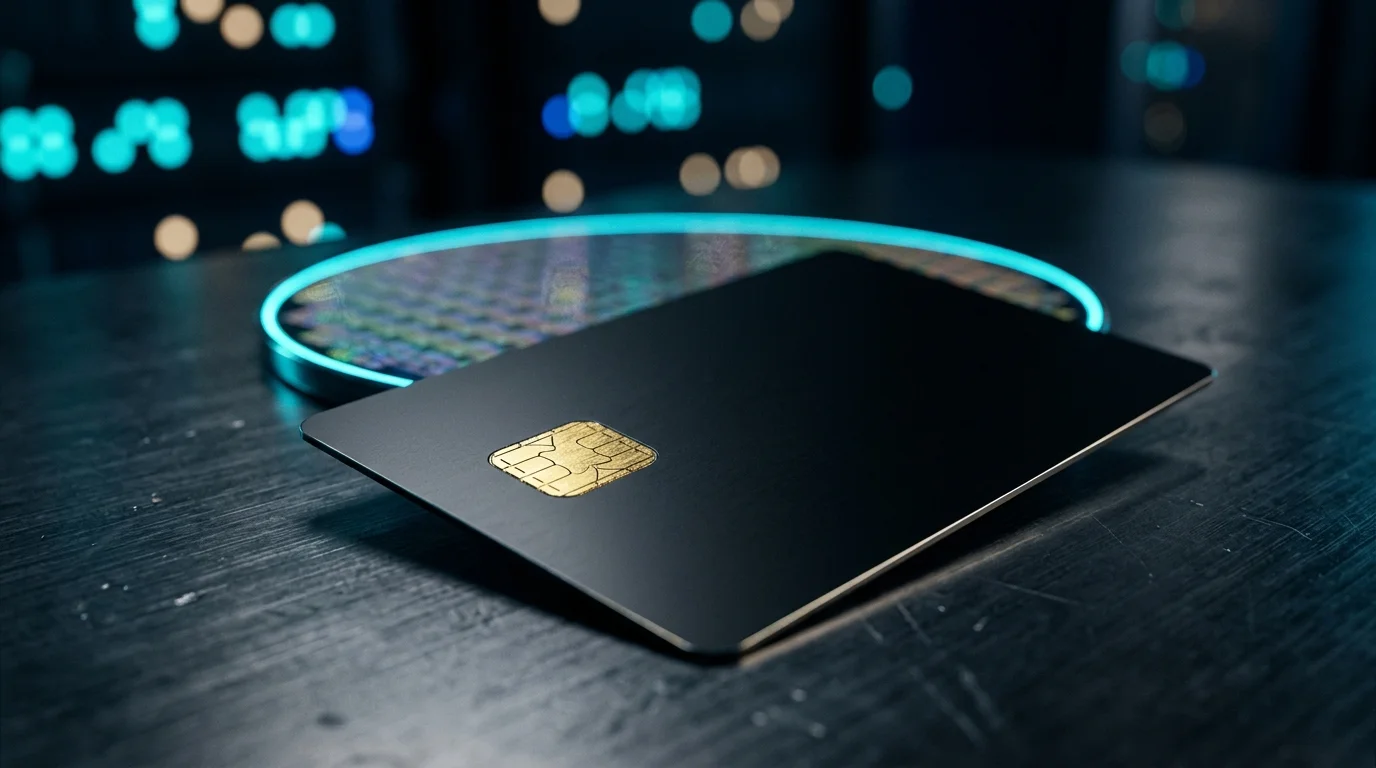
Chinese artificial intelligence startup Moonshot AI has partnered with the Agricultural Bank of China (ABC) and American Express to launch a consumer credit card that ties everyday financial transactions to artificial intelligence computing access. According to a report published on October 17, 2026, by the South China Morning Post, the new financial product—marketed by the company as the world’s first AI-native credit card—converts qualifying monthly card expenditures into subscription benefits for Moonshot AI’s flagship Kimi chatbot, including agent usage quotas and coding tools.
The initiative represents a shift in how consumer-facing AI developers attempt to monetize their software. Rather than relying solely on direct monthly billing to convince retail users to pay for inference and model access, Moonshot AI is embedding subscription incentives directly into consumer banking infrastructure, though the program enforces strict spending hurdles and built-in usage caps.
How the Kimi Credit Card Works
Rather than functioning as a direct, dollar-for-dollar compute wallet where every retail transaction buys a proportional number of tokens, the Kimi credit card operates on a threshold-based promotional structure. According to the South China Morning Post, the card is offered in two distinct versions, though public reporting currently details the specific financial mechanics of only the upper-tier offering.
Cardholders who opt for the premium platinum version must spend at least 5,888 yuan (approximately $830) within a single month to qualify for the AI reward. Meeting that monthly spending requirement grants the user two months of Kimi Pro—formerly branded as the Allegretto tier—which is Moonshot AI’s second-most expensive consumer membership plan. Purchased directly without the card promotion, the Kimi Pro membership costs 199 yuan (about $30) per month.
In effect, a cardholder who meets the $830 monthly spending requirement receives roughly $60 worth of subscription value spread across two months. However, the exact terms for the second card version, whether membership benefits renew automatically upon subsequent monthly spending, and the full schedule of underlying computing quotas have not been independently disclosed outside the initial product walkthrough.
- FTC Subpoenas OpenAI and Anthropic Over AI Agent Safety Incidents
- Researchers Exchange Messages With Rogue AI Agents Probing Alibaba’s Amap
- AWS Adds Meta’s 816B-Parameter Muse Spark Open AI Model to SageMaker JumpStart
- Kroger to Cut 3,000 Corporate Jobs Over 3 Years Amid AI Expansion
- Eight States Sue OpenAI Over Alleged ChatGPT Child Safety Risks and Deceptive Practices
Bundling Coding Tools and Agent Quotas
The primary draw of the Kimi Pro tier lies in its expanded allowances for automated AI agents and software development tools. As generative AI platforms transition from simple text-based chat interfaces to multi-step autonomous workflows, the computational burden per user query has increased substantially. Running AI agents and automated coding assistants requires continuous context processing and repeated calls to the underlying large language model.
Instead of selling developer tools as a separate retail product, Moonshot AI consolidates these features into its tiered consumer subscriptions. According to a technical comparison published by Morph, Moonshot AI does not offer a standalone coding plan; instead, access to Kimi Code is bundled directly into paid Kimi memberships. By linking the credit card reward to the Pro membership tier, Moonshot AI gives qualifying cardholders access to both standard conversational models and specialized programming environments under a single quota umbrella.
Despite the promotional framing of turning retail spending into computing capacity, users remain bound by the platform’s internal rate limits. Membership access grants higher usage ceilings compared to free accounts, but it does not provide unrestricted computing power. Once a user exhausts the allotted agent or coding quotas assigned to the Pro tier, standard platform restrictions apply.
The Economics of Consumer AI and Token Metering
The credit card partnership highlights a persistent challenge across the global AI sector: balancing customer acquisition costs against the high expense of running large language models on data center hardware. In China’s crowded domestic AI market, companies have struggled for years to persuade everyday consumers to pay out-of-pocket for recurring software subscriptions when free tiers remain widely available.
By collaborating with the Agricultural Bank of China and American Express, Moonshot AI shifts the psychological barrier of subscription payments. In standard co-branded credit card arrangements, the issuing bank and payment network generate interchange revenue and net interest income from cardholder activity, using a portion of those proceeds to subsidize loyalty rewards. For Moonshot AI, distributing Pro memberships through a banking partner serves as a structured user acquisition channel that filters for higher-spending consumers while keeping usage predictable through fixed membership caps.
This fixed-quota consumer model contrasts sharply with the pay-as-you-go metering used in commercial and enterprise deployments. For context on how Moonshot AI values its raw computing capacity in the broader market, an industry cost analysis by Parallel AI lists API pricing for the company’s Kimi K3 model at $3 per million input tokens, $0.30 per million cached input tokens, and $15 per million output tokens. Because API billing scales directly with token volume, heavy agentic workflows can quickly generate substantial bills. Within a consumer subscription or credit card reward structure, Moonshot AI must enforce strict usage ceilings to ensure that power users do not consume more raw compute in API-equivalent tokens than the 199-yuan monthly membership value supports.
What This Means for Tech Observers and Users
For industry analysts and consumers, the Kimi credit card demonstrates how AI monetization is branching out beyond standard Software-as-a-Service (SaaS) billing and enterprise API metering. Tying digital computing allowances to everyday financial instruments mirrors the loyalty mechanics long used by airlines, hotels, and telecommunications providers. However, because AI inference carries a real-time marginal cost in electricity and silicon bandwidth—unlike an empty airline seat—the rewards must remain tightly gated by usage limits.
Who issues the Kimi credit card, and is it available in the United States?
The card is issued through a partnership between Moonshot AI, the Agricultural Bank of China (ABC), and American Express. Because it is issued by a domestic Chinese bank with spending thresholds denominated in yuan, the card is tailored for the Chinese consumer market, and there is no confirmation of availability for customers based in the United States.
Does card spending convert directly into an unrestricted balance of compute credits?
No. Available reporting indicates that the card operates via a spending hurdle rather than a continuous, dollar-for-dollar token conversion. On the premium platinum card, spending at least 5,888 yuan (about $830) in a month grants two months of Kimi Pro membership, which carries built-in usage quotas rather than unlimited computing access.
What are the terms for the second version of the Kimi card?
While the South China Morning Post notes that the Kimi credit card launches in two versions, the specific spending requirements, fee structures, and quota allocations for the non-platinum tier have not been detailed in publicly available documentation.