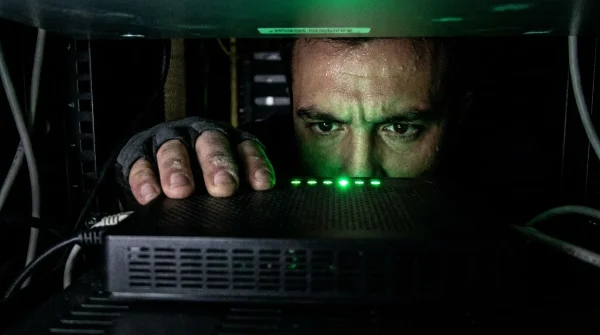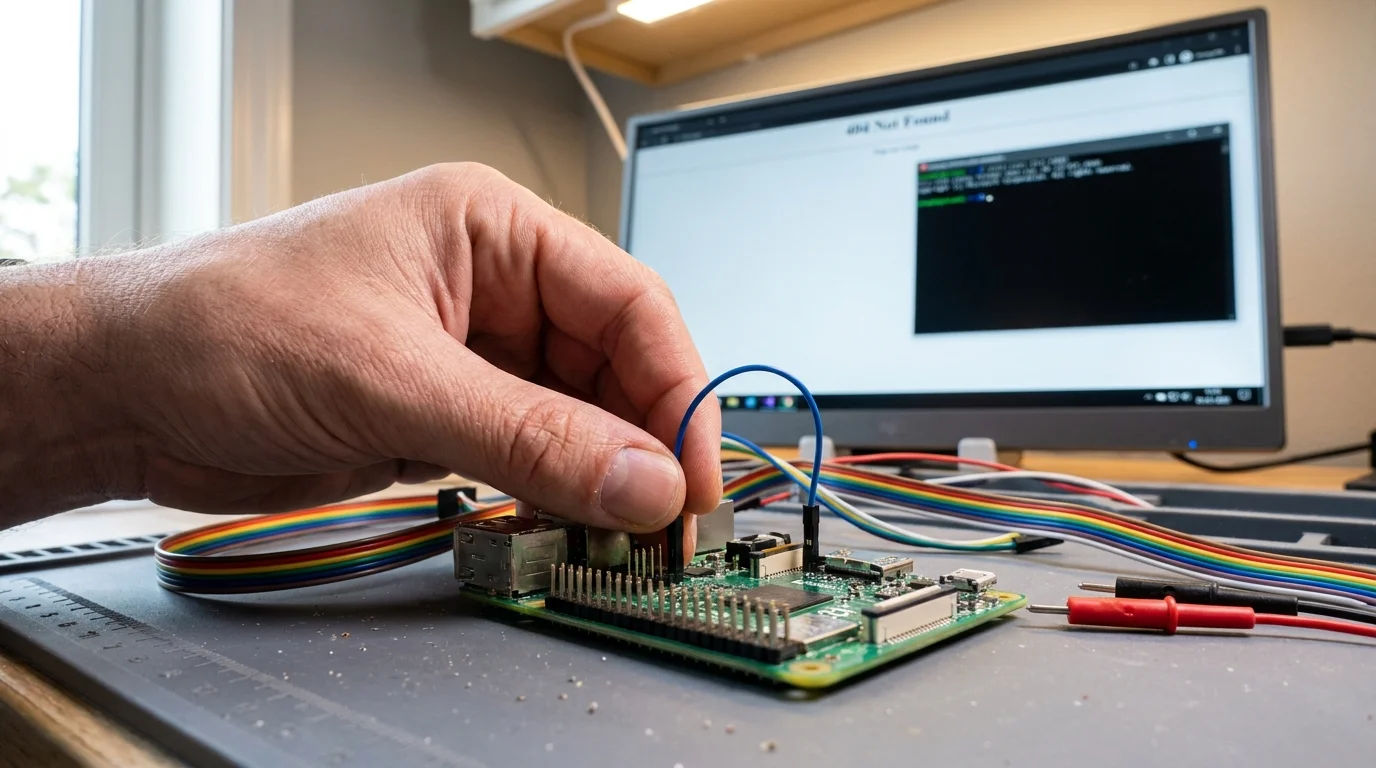
The glow of your monitor hits differently at two in the morning when a command prompt stalls on an unexpected fetch error. You expect the usual hum of background dependencies updating, the familiar cascade of green compilation flags scrolling down your split-pane terminal. Instead, a harsh string of crimson text appears: repository unavailable due to intellectual property takedown notice. You refresh the remote URL in your browser, met only by the stark, sterile silhouette of a 404 error page floating on an ink-black background.
For years, public code platforms felt like immutable bedrock. You pushed commits, merged pull requests, and logged issues with the quiet confidence that code written in public daylight was immune to sudden evaporation. But that comfort rested on a fragile assumption about modern platform sovereignty. When the legal machinery of corporate hardware giants turns its focus toward reverse-engineering tooling, centralized hosting evaporates overnight, leaving entire development ecosystems scrambling for missing dependencies and broken submodules.
The recent sweep of DMCA notices targeting Nintendo Switch emulation codebases has cracked the facade of open-source safety. What seemed like an untouchable ecosystem of public tinkering has abruptly shifted. Projects that powered game preservation, custom firmware testing, and hardware research have vanished from public discovery feeds, sending shockwaves through developer channels. The sudden silence across major public hubs marks not an end to the work, but a rapid retreat behind perimeter walls.
The Illusion of the Public Safe Haven
We often treat modern cloud repositories as digital commons, public libraries where anyone can read, copy, and iterate. In reality, they are privately managed corporate platforms operating under strict legal compliance frameworks. When a corporate entity files a formal notice alleging that a codebase circumvents proprietary encryption keys or facilitates unauthorized hardware execution, the host platform does not hold a trial. Automated compliance mechanisms strike first, purging trees, forks, and automated build pipelines in a single administrative stroke.
Understanding this dynamic requires a shift in how you view code custody. Relying entirely on a centralized platform for your source control is like storing your family heirlooms in a storage locker with a digital lock owned by someone else. The convenience of one-click collaboration masks the underlying vulnerability of centralized moderation. The moment a project gains enough traction to catch institutional attention, public visibility turns from an asset into an existential vulnerability.
Marcus, a 34-year-old embedded systems architect who has maintained low-level graphics patches for emulation layers over the past six years, watched his entire downstream dependency chain unravel in an evening. He had structured his local workflows around automated cloud workers that fetched upstream forks on every build. When those upstream trees disappeared without warning, his local continuous integration pipeline collapsed. It took three days of manual patch archaeology just to reconstruct his project’s compilation history from disconnected local drive caches.
- Nothing Phone transparent industrial aesthetic sparks an industry shift away from boring glass
- Google Gemini architecture shifts strictly toward offline local processing nodes
- Samsung Galaxy S24 battery drain stops with one modem adjustment
- Tesla Cybertruck angles exist solely to bypass pedestrian safety regulations
- Apple Watch Ultra hides a crucial navigation sensor inside
The Architecture of Private Offline Networks
The developer response to this institutional clampdown has not been surrender; it has been a rapid architectural migration. Maintainers are shifting away from centralized discovery platforms toward decentralized, self-hosted, and air-gapped development environments designed to withstand platform-level deletions.
For the Independent Contributor
If you primarily review code or submit occasional patches, your workflow now centers on lightweight, private mirror topologies. Instead of cloning directly from web repositories, developers are keeping pristine local bare mirrors. You pull changes through encrypted peer-to-peer tunnels or direct SSH handshakes rather than navigating public web interfaces, ensuring that no remote policy update can delete your local commit history.
For Core Maintainers and Build Teams
Core development teams are standing up sovereign infrastructure. By utilizing self-hosted solutions running on private virtual servers or physical home racks, teams regain complete custody of their issue trackers, build artifacts, and pull request reviews. Self-hosted Git instances provide immunity from mass platform takedowns, though they shift the burden of infrastructure security and uptime squarely onto the team’s shoulders.
Mindful Steps to Harden Your Local Development Stack
Decoupling your workflow from centralized platforms does not require complex enterprise infrastructure. It requires deliberate habits and a disciplined approach to source preservation.
Begin by auditing your dependency trees. Never allow your build scripts to fetch submodules from single-point-of-failure public endpoints without maintaining a verified local cache.
- Convert working clones into bare mirrors: Run
git clone --mirrorto capture every branch, tag, and reflog entry rather than just the active working tree. - Deploy a lightweight local forge: Spin up a local containerized Gitea or Forgejo instance on your local network to maintain pull request history and issue tracking off the public grid.
- Automate air-gapped snapshots: Set up automated jobs that export bundled repository states (
git bundle create) onto encrypted, offline storage media at regular intervals. - Migrate continuous integration: Move away from cloud-hosted runners in favor of local automation daemons that execute builds without external network calls.
Your tactical toolkit should remain minimal: a dedicated micro-server running an Alpine Linux base, an encrypted storage volume formatted with ZFS for instantaneous snapshots, and an authenticated wireguard mesh for sharing commit access with verified peers.
The Quiet Resilience of Sovereign Code
The push toward private offline networks reveals an enduring truth about the nature of software: code is fundamentally text, and text cannot be eradicated once it has been read. While corporate sweeps can dismantle public forums, clear web rankings, and automated cloud infrastructure, they cannot purge the local drives and private meshes of developers who value software preservation.
Stepping back from the convenience of centralized platforms forces you to cultivate a healthier relationship with your tools. When you control your build pipelines, your repository trees, and your communication channels, you are no longer a tenant on borrowed infrastructure. You become a true custodian of the technology you build and study, insulated from the shifting tides of corporate enforcement.
The resilience of an open-source project is not measured by its star count on a public hub, but by its ability to compile without an internet connection.
| Key Point | Detail | Added Value for the Reader |
|---|---|---|
| Repository Custody | Public cloud hosts enforce DMCA notices immediately without adjudication. | Protects your team from sudden project deletion and lost commit history. |
| Self-Hosted Forges | Local instances (Forgejo, Gitea) run on private networks behind encrypted tunnels. | Maintains pull requests, code reviews, and issue tracking sovereignly. |
| Git Bundling | Standard git bundle command packages entire repositories into single portable files. |
Enables air-gapped backup and peer-to-peer distribution without central servers. |
Frequently Asked Questions
Are developers legally allowed to run private Git servers for emulation code?
Yes. Hosting your own source control server on private hardware is entirely legal. Copyright and anti-circumvention laws govern specific code implementations, but owning and operating sovereign development infrastructure is a standard engineering practice.What happens to open-source forks when a parent repository is taken down?
On centralized platforms, taking down a root repository typically disables or deletes all public forks attached to that network graph. Maintaining independent remote mirrors is the only reliable way to preserve fork access.What is the simplest tool for backing up a complete Git repository?
The built-ingit bundlecommand is the most effective tool. It packages all commits, branches, and tags into a single portable binary file that can be cloned just like a remote repository.Does moving to private networks slow down project development?
It can reduce public contribution volume because casual drive-by contributors cannot easily discover the project. However, core development speed often remains stable as active maintainers coordinate via private mesh networks.How can I protect my local build environments from remote dependency loss?
Configure your package managers and submodules to resolve from local directory caches or private mirror registries rather than public cloud repositories during compilation.