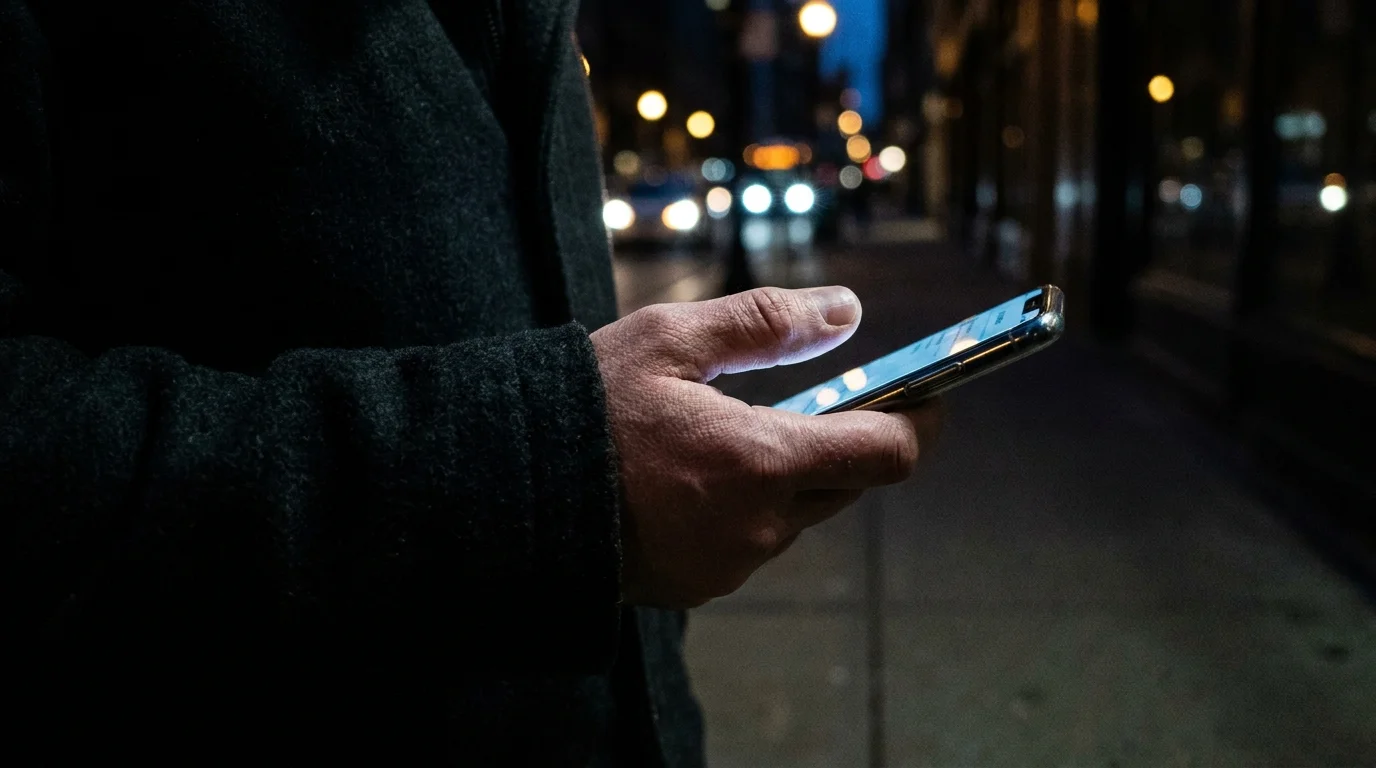
A sharp ring breaks the quiet hum of a Tuesday afternoon kitchen. The screen of your phone lights up against the counter grain, displaying the recognizable typography of a standard incoming call: Citibank Fraud Department, paired neatly with the official 1-800 number printed on the back of your credit card. Your thumb naturally slides to answer, primed by the physiological prickle of adrenaline that accompanies any threat to your livelihood.
On the other end, the voice is calm, unhurried, and perfectly trained in corporate cadence. There is no chaotic call-center clamor in the background, only the muted murmur of simulated administrative efficiency. The representative recites the last four digits of your card, names your home city, and asks if you authorized a $1,482 wire to an electronics retailer in Miami ten minutes ago. When your breath catches and you answer no, the trap springs shut with clinical precision.
We grow up trusting visible signatures: the wax seal on formal mail, the official insignia on an envelope, the digital marquee of modern telephone caller ID. Yet that digital marquee is remarkably flimsy. It is not an unalterable signature; it is an unprotected digital postcard that anyone with basic internet telephony software can rewrite before it hits your pocket.
The Anatomy of the Optical Illusion
Telephone networks were engineered half a century ago on an architecture of assumed institutional trust. When an automated branch exchange dials a number, it transmits two distinct packets of data: the billing number, which tells the carrier who pays for the transmission, and the presentation number, which populates the glowing pixels on your handset. Scammers manipulate the presentation tier with simple software switches, projecting a spotless corporate facade across miles of fiber optic cable while operating from a dark room thousands of miles away.
Think of your caller ID not as an etched metal badge shown by an officer at your front door, but as a hand-drawn name tag taped over someone else’s coat. The modern telecom exchange passes that name tag along without verifying the wearer underneath. When an urgent voice warns that your checking balance is draining away, your survival instinct fixes on solving the financial problem, causing you to treat that flimsy paper tag as ironclad proof.
The scammer does not even need to crack your banking password independently. They induce you to surrender it voluntarily by manufacturing an artificial fire drill. They state that to cancel the fraudulent transaction, they must send a temporary authentication passkey to your device. Seconds later, a legitimate SMS alert arrives from Citibank’s automated server. The voice on the phone asks you to read back the six-digit code to verify your identity. By reading that code, you do not cancel a charge; you hand over the exact secondary key the attacker needs to reset your password and empty your accounts.
- Beats Studio Buds regain crisp treble clarity once users clear crusty wax mesh
- iPhone System Data traps bloated cache logs forcing unnecessary cloud storage upgrades
- Anker Space A40 earbuds deliver rich studio sound while bypassing expensive flagship pricing
- Apple Significant Locations logs precise bedroom coordinates until privacy switches block tracking
- Overnight phone charging roasts delicate lithium cells beneath thick insulated phone cases
The Tale of Marcus Vance
Marcus Vance, a 48-year-old architectural draftsperson in Columbus, Ohio, lived through this precision play on an ordinary Thursday morning. He was sitting at his drafting table, marking blueprint margins with a mechanical pencil, when his phone buzzed with Citibank’s verified customer service digits. The caller knew his full address, his debit card expiration date, and even the branch where he had opened his account fifteen years prior.
“The agent never pressured me,” Marcus recalled later during an internal review. “He sounded tired, professional, and patient. He told me he was freezing the account to protect my funds, but needed me to confirm the two-step prompt on my screen so he could submit the fraud dispute ticket. He even warned me to never share my PIN with anyone, which completely disarmed my skepticism.” In under four minutes, Marcus handed over two separate verification codes. By the time he walked down to his local branch thirty minutes later to pick up a replacement debit card, his savings account had been transferred through three external clearing houses.
Dissecting the Attack Layers
Sophisticated phone fraud operates on predictable human psychological profiles. Depending on your relationship with digital banking, attackers shift their tempo to exploit different vulnerabilities.
For the Constant Mobile User
If you manage your balances hourly from an app, attackers rely on notification fatigue. They trigger password reset requests in rapid succession, flooding your phone with push alerts. When they call, they position themselves as the rescuer stopping the digital avalanche, prompting you to approve an in-app biometric prompt just to make the relentless alerts stop.
For the High-Balance Saver
If you maintain substantial balances in savings or retirement vehicles, attackers leverage institutional formality. They present complex case reference numbers, transfer you between multiple “senior specialists,” and create the impression of a massive federal compliance operation. Their goal is to convince you to initiate an immediate outbound wire transfer to a “secure clearinghouse vault” managed by the Federal Reserve—an account that belongs entirely to their syndicate.
The Inbound Verification Protocol
Neutralizing this attack requires abandoning the instinct to cooperate on incoming calls. True security relies on a single operational truth: inbound communications cannot be trusted, no matter what your screen claims.
- Sever the Line Immediately: The moment a caller claims to represent your financial institution regarding unauthorized transactions, hang up without negotiating or explaining. Legitimate security teams log notes on your account file; your refusal to speak will not derail legitimate automated fraud blocks.
- Enforce the Air-Gap Delay: Do not use redial. Scammers can occasionally keep open copper connections alive on landlines, or manipulate return routing. Wait sixty seconds, or toggle airplane mode on your cellular device to clear the line buffers entirely.
- Dial the Physical Plastic: Pull your debit or credit card from your wallet. Manually key the customer service telephone number physically stamped into the plastic polymer on the reverse side.
- Navigate Inward: When the official automated attendant answers, ask specifically for the fraud disputes desk. State clearly: “I received an incoming alert regarding unusual activity; please review my recent system audit logs.” If an actual threat existed, the real bank agent will see the flagged transaction immediately on their console.
- Treat One-Time Codes as Vault Keys: Read incoming SMS prompts literally. Every bank message includes automated phrasing such as “Don’t share this code with anyone. Our employees will never ask for it.” Take those words as absolute truth. Bank staff have zero operational need for your incoming session tokens.
A Calmer Relationship with the Screen
Modern telecommunications have inadvertently turned our phones into open microphones that strangers can ring at will. Reclaiming peace of mind does not require paranoia or abandoning digital banking tools. It requires replacing reflexive compliance with deliberate friction.
When an urgent call arrives, the silence between rings is yours to control. By refusing to treat a buzzing screen as an infallible authority, you strip attackers of their leverage before they utter a single word. Genuine security is never rushed; true institutional safety always survives the sixty seconds it takes for you to hang up the phone, flip your card over, and dial back on your own terms.
“True fraud prevention is not about reacting faster to urgency; it is about having the courage to hang up on an apparent emergency to verify its reality.”
| Key Point | Detail | Added Value for the Reader |
|---|---|---|
| Caller ID Spoofing | Presentation data packets are manipulated via VoIP software. | Explains why screen names match official contacts perfectly without your phone being hacked. |
| One-Time Passcode (OTP) Theft | Attackers initiate legitimate actions that trigger authentic bank SMS texts. | Clarifies that genuine verification codes are meant for you alone, never for telephone agents. |
| Inbound Verification Rule | Always terminate incoming security calls and redial the physical card number. | Guarantees that your communication connects exclusively to the real bank infrastructure. |
Frequently Asked Questions
Can a scammer bypass my account if I only answered the phone but said nothing?
No. Merely answering an incoming call will not compromise your credentials or bank accounts. However, speaking confirms to automated dialers that your number is active, which can increase the frequency of future targeting attempts.Why does the caller already know my address and the last four digits of my card?
Attackers compile personal profiles from corporate data breaches sold on underground forums. Having this fragmentary data allows them to sound legitimate while fishing for the remaining credential: your password or one-time passcode.What should I do if I accidentally read an SMS passcode to an incoming caller?
Hang up instantly. Open your bank’s official mobile app or website on a separate connection, immediately change your primary account password, and call your bank’s emergency fraud line using the number on your card to freeze outbound transfers.Will Citibank or other major banks ever legitimately call me about fraud?
Yes, automated systems or fraud analysts may call to confirm if you made a specific purchase. However, legitimate representatives will simply ask for a “yes” or “no” confirmation regarding the merchant and amount—they will never demand your password, PIN, or multi-factor code.Can mobile carrier spam-blocking features stop these spoofed bank calls?
While carrier features like STIR/SHAKEN protocols flag many unauthenticated numbers as “Scam Likely,” determined attackers regularly lease legitimate local numbers or bypass filters. Technical filters reduce volume, but your personal verification habits remain the final line of defense.