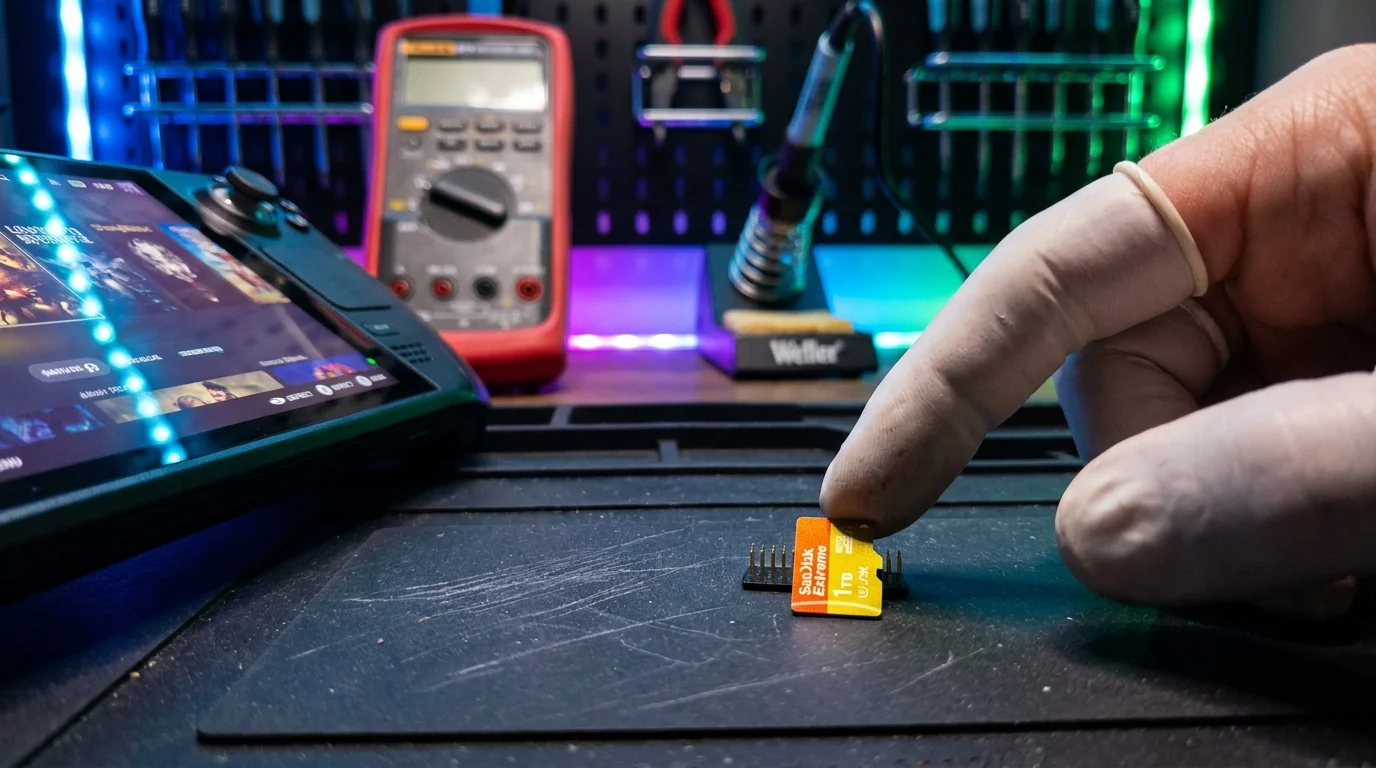
The soft glow of your handheld screen cuts through the quiet dark of a late midnight session. Beside the thumbstick, a bright yellow micro-SD card rests on the desk, its metallic contacts catching the spill of light from a display that insists your internal drive is completely full. You just uninstalled three massive, eighty-gigabyte titles to prepare for an upcoming release, yet the storage bar barely budged. Instead, a swollen bar labeled "Other" occupies twenty, thirty, or even fifty gigabytes of space on your high-speed solid state drive.
This is the quiet tax of handheld PC gaming. When you pull a game from your library, SteamOS removes the core executable and game assets, but it routinely leaves behind thousands of tiny, pre-compiled graphical instructions. These small footprints quickly accumulate into massive storage bottlenecks, turning a responsive console into a constrained digital workspace.
Understanding where these phantom gigabytes hide requires peering beneath the polished interface of Game Mode. Once you recognize how the underlying operating system manages translation layers and graphical pre-caching, clearing this clutter becomes a quick ten-minute ritual rather than a source of persistent frustration.
The Phantom Library: How Shaders Colonize Solid State Drives
Modern PC games are built for a staggering variety of desktop graphics cards. To prevent your handheld from stuttering whenever a new visual effect appears on screen, SteamOS automatically downloads and compiles shader caches before you even press start. Think of it like a restaurant kitchen where the sous-chef chops every vegetable hours before service; the dinner rush runs smoothly, but the prep bowls claim every square inch of your counter space.
When you uninstall a title, the system often treats the compatibility layer—the unique Windows emulation environment known as a Proton prefix—as sacred ground. It preserves your graphics caches and configuration files in case you decide to reinstall the game next month. Over several seasons of downloading, testing, and deleting games, your internal solid-state drive ends up housing obsolete shader archives for software that hasn’t existed on your device for months.
The Lab Perspective: Why the Cleanup Isn't Automatic
Marcus Vance, a 34-year-old embedded systems hobbyist and firmware tinkerer from Seattle, noticed this phenomenon while benchmarking budget handheld hardware. After rotating through dozens of community testing titles over six months, his 512GB NVMe drive showed over 70 gigabytes consumed by non-game data. "Valve designed Proton to prioritize user data retention and stutter-free visuals over aggressive hygiene," Marcus notes. "The operating system errs on the side of caution. If it isn’t 100 percent certain a configuration file is dead weight, it preserves it indefinitely. You have to step in and act as your own janitor."
- Sonos multiroom audio ecosystems trap home speaker setups behind proprietary cloud servers
- Samsung Smart TV tracking features secretly expose private viewing data through telemetry
- Claude 3.5 Sonnet automation tools force messy text notes into working software
- macOS Sonoma wallpaper animations trigger jerky window lag across external monitors
- ChatGPT down alerts force tech infrastructure teams into local failover models
Triage by Hardware Profile
Not every handheld setup suffers from cache bloat in the exact same manner. Tailoring your storage maintenance to your specific hardware layout keeps your device breathing freely without risking lost save files.
For the 64GB Base Model User
If you are operating on a stock 64GB eMMC drive, shader bloat is not an inconvenience; it is a critical system halt. Even if all your games reside on external cards, the default behavior sends all shader and Proton data straight to the internal drive. Moving these folders requires linking internal directories directly to your high-capacity micro-SD card through directory symlinks, ensuring the base drive never chokes on background compilation files.
For the High-Capacity NVMe Swapper
If you upgraded your internal drive to 1TB or 2TB, cache bloat presents as a slow, creeping rot rather than an emergency. Over a year of aggressive game rotations, accumulated shader caches quietly consume tens of gigabytes of your fastest storage blocks. A seasonal purge of orphaned App IDs restores drive health and optimizes write longevity.
For the Multi-Card Collector
Swapping between multiple high-capacity memory cards is one of the greatest conveniences of portable gaming, but it multiplies prefix clutter. Every time you insert a card and launch a game, a corresponding prefix is verified on the host storage. When cards are rotated or loaned out, those directories remain permanently orphaned on the internal drive.
Mindful Purging: Reclaiming Your Lost Gigabytes
Restoring your storage does not require wiping your console or starting over from scratch. By switching over to the underlying Linux desktop, you can quickly isolate and remove obsolete caches with surgical precision.
Tactical Toolkit:
- Desktop Mode (Hold power button > Switch to Desktop)
- Dolphin File Manager (Enable 'Show Hidden Files' via the hamburger menu)
- Primary Shader Path:
~/.local/share/Steam/steamapps/shadercache/ - Primary Compatdata Path:
~/.local/share/Steam/steamapps/compatdata/ - Decky Loader with the 'Storage Cleaner' plugin (Automated GUI method)
To clear these archives manually, navigate through the file paths listed above. Each folder inside matches a specific Steam App ID—a numeric identifier unique to each game. Simply cross-reference the number on SteamDB and delete folders belonging to uninstalled titles. If you prefer an automated path, installing Decky Loader allows you to manage and purge these isolated folders directly from the handheld quick-access menu without ever leaving Game Mode.
The Peace of a Calibrated Machine
Handheld computing grants us the freedom to carry expansive worlds in our backpacks, but mechanical awareness remains the price of portable power. Taking ten minutes every few months to clear digital debris transforms your relationship with your device. When you slide a freshly formatted card into the slot, knowing every gigabyte of internal storage is lean, uncluttered, and ready to perform, the hardware feels lighter in your hands.
"System hygiene on open platforms is not about chasing benchmark scores; it is about keeping your hardware fully responsive to your intentions."
| Storage Layer | Default Behavior & Hazard | Actionable Strategy |
|---|---|---|
| Internal eMMC (64GB) | Fills rapidly with background shaders, causing system update failures. | Symlink shader directories to your external micro-SD card. |
| Internal NVMe (512GB+) | Silently collects orphaned prefixes over months of game rotations. | Run a bi-monthly purge via Decky Storage Cleaner. |
| Removable Micro-SD | Leaves behind persistent local prefixes when games are deleted off-device. | Audit local compatdata folders against active game installs. |
Frequently Asked Questions
Will deleting my shader cache hurt game performance?
It will not harm your hardware, but the game will need to recompile graphics data during your first subsequent play session, which may cause brief visual micro-stuttering.Does purging the compatdata folder delete my cloud save files?
If a game relies exclusively on local saves without Steam Cloud support, deleting its compatdata folder will erase progress. Always verify cloud sync before deleting prefixes.Why doesn't SteamOS clean these files automatically during an uninstall?
Proton prefixes contain game-specific configuration registries and potential save states; the operating system protects them to prevent accidental data loss.Can I redirect all shader downloads to my micro-SD card safely?
Yes, using symbolic links in Desktop Mode allows you to route shaders to external memory, though load times may slightly increase compared to NVMe speeds.How do I find which numerical folder belongs to which game?
Search the game name on SteamDB.info to locate its unique App ID, which matches the folder names inside your shadercache and compatdata directories.