The sudden hum of the refrigerator kicks back in, cutting through an unnatural silence. Outside your window, the streetlights flicker back to life, steadying into their familiar sodium glare. The neighborhood outage has passed, the microwave clock blinks a relentless midnight, and you exhale, expecting your living space to return to its quiet digital rhythm.
Instead, the hallway pendant stays completely dark, while your bedside lamp begins an anxious, rhythmic throb. You tap the screen on your phone, opening your automation dashboard, only to meet a wall of grayed-out icons reading unreachable device network timeout errors. The hardware is physically intact, yet your Kasa smart bulbs sit entirely estranged from the wireless signal washing over the room.
You instinctively open the app again, hoping a software retry will coax them back. It fails. The digital layer you spent months setting up feels fragile, reduced to an expensive set of dead incandescent threads simply because the local electrical grid hiccuped for three seconds.
Yet nothing inside the glass or tiny driver circuit is broken. The hardware is simply running an ancient, defensive reflex designed long before your router finished rebooting.
The Stunned Guard: Why Power Spikes Trigger Amnesia
To understand why these fixtures freeze, picture a diver surfacing too fast. When wall power abruptly collapses and surges back, electrical current does not return as a gentle, clean creek. It crashes into the driver board like a tidal wave of micro-voltage spikes, causing tiny onboard capacitors to drain unevenly.
Budget smart bulbs preserve cost by omitting dedicated battery-backed memory modules. Instead, they rely on tiny flash storage registers that register electrical interruptions as deliberate manual input. When municipal power flickers two or three times within a half-second span before settling, the internal microcontroller registers those chaotic micro-bursts as an intentional factory reset command.
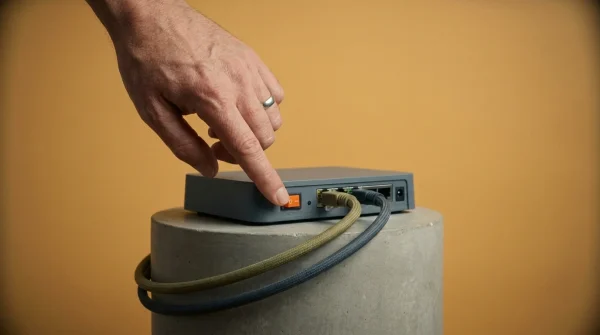
The bulb panics. It abandons its stored network credentials and throws its internal radio into an open pairing state, awaiting instructions that never come. Meanwhile, your router is still spending three long minutes initializing channels, checking DNS routing, and negotiating band steering. By the time your Wi-Fi is broadcasting cleanly, your lighting has already timed out its search, curling inward like a defensive pill bug.
- International travel eSIMs block expensive carrier roaming fees and restore fast foreign navigation
- Echo Dot speakers record private room conversations until users disable audio history permissions
- Galaxy camera settings strip aggressive digital sharpening to rescue grainy evening photos
- Coffee shop Wi-Fi networks intercept unencrypted login tabs without private DNS toggles
- Dual monitor arms eliminate hunched neck stiffness and clear tangled desk cables
Field Notes from the Workbench
Marcus Vance, a 42-year-old low-voltage integration specialist from Raleigh, North Carolina, encounters this exact frustration during autumn thunder seasons. He routinely fields dozens of panic calls from homeowners convinced their lighting hardware burned out during lightning storms.
“Clients assume a power spike fried the microprocessor inside the base,” Marcus explains as he examines a stack of returned units on his bench. “In reality, the bulb simply woke up forty seconds before the home router did. It tried to phone home, hit dead air, assumed it had been moved to a new house, and went to sleep in setup limbo. Nine times out of ten, you do not need a wrench or a warranty claim; you just need to teach the switch how to breathe.”
Diagnosing the State: The Three Recovery Profiles
Smart lights react differently depending on the age of their firmware and their physical socket design. Identifying the exact failure mode prevents you from resetting schedules you spent weeks refining.
For the Soft-Pulsing Beacon
If your lamp cycles between amber and white or pulses a dull glow, the device is stuck in soft AP mode. It is screaming for a handshake that your router is currently refusing to offer. Do not delete the bulb from your mobile app. The configuration profile is still preserved inside the phone cache, waiting for the hardware address to reappear on the 2.4 GHz spectrum.
For the Stubbornly Dark Enclosure
Fixtures completely unresponsive to app toggles usually suffer from a locked-up low-cost logic gate. A quick transient spike leaves the tiny driver in a safe-mode state, refusing to draw mains current until residual electrical capacitance completely bleeds out. Cutting direct physical circuit power for several uninterrupted seconds is the only route to drain those tiny holding wells.
For the Phantom Offline Light
Sometimes the light burns bright white, functioning like an ordinary dumb bulb, yet stubbornly displays an offline badge inside your smart home dashboard. Here, the internal radio timed out during router boot-up and simply disabled its receiver to prevent thermal throttling. It will never reconnect on its own until manually forced to send an initial outbound broadcast ping.
The Mindful Recovery Cadence
Restoring these fixtures requires abandoning random, frustrated wall toggles. You must communicate with the microcontroller using its native rhythm.
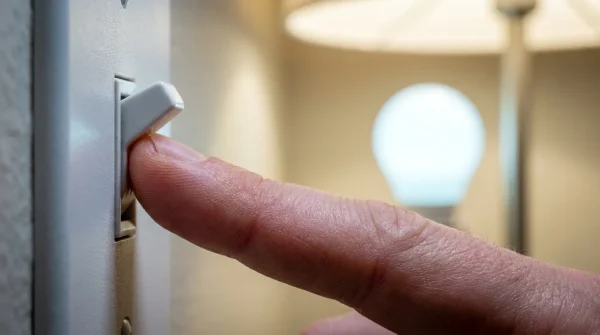
Toggling a toggle switch too rapidly blurs together inside the bulb’s power supply, failing to register clear state changes. Flip it too slowly, and the internal counter resets to zero. Precision matters far more than speed.
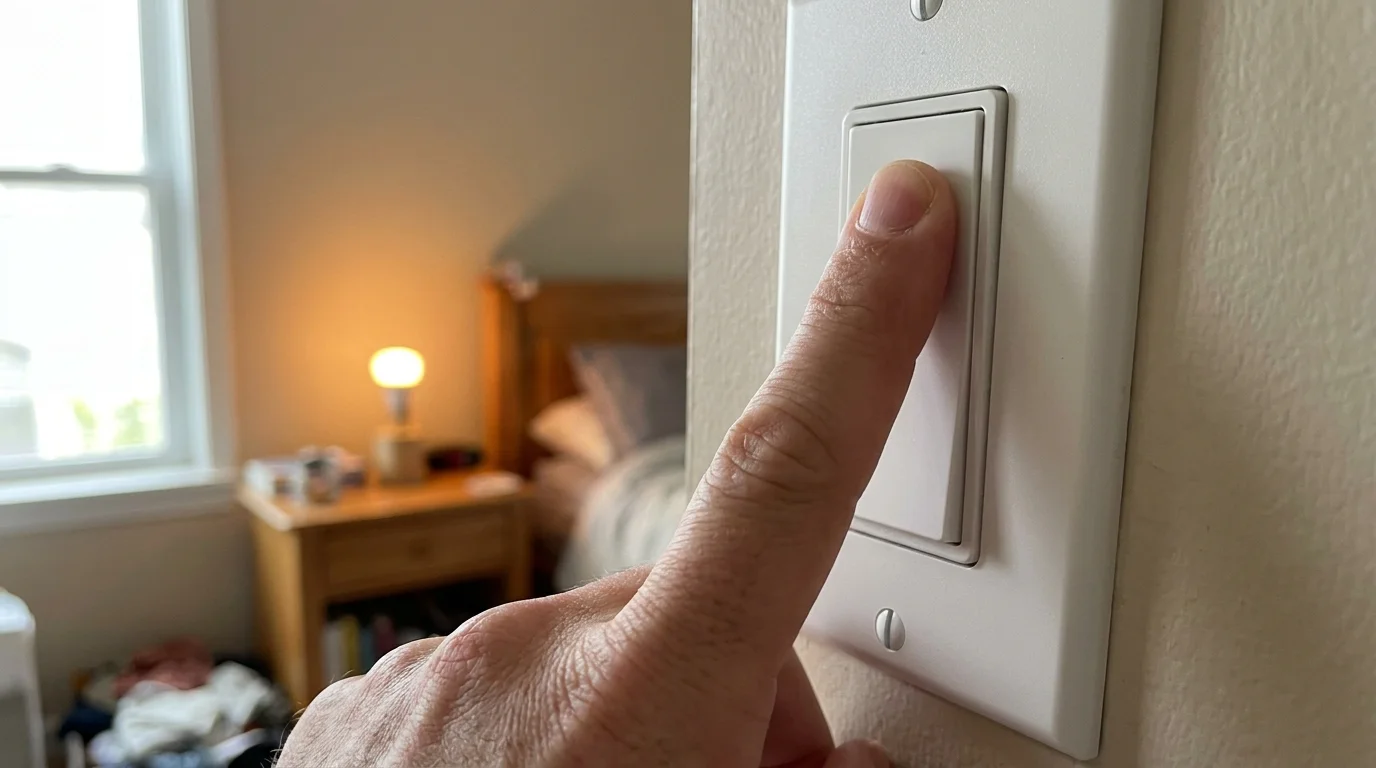
- Kill the primary current: Turn the wall switch off and let it sit dormant for a full fifteen seconds to allow capacitor discharge.
- The waking rhythm: Flip the switch on, pause one full second, then flip off, pausing one full second.
- The target sequence: Repeat this rhythmic cycle exactly five times for standard Kasa hardware, stopping decisively in the ‘On’ position.
- Observe the telltale response: Watch the glass envelope; it will blink rapidly twice, signaling that the networking logic has wiped transient errors and reopened listening ports.
- Broadcast reconnection: Open your home network app and allow forty seconds for the bulb to latch onto your router’s 2.4 GHz channel.
The Tactical Toolkit:
- Cadence timing: Exactly 1,000 milliseconds per toggle phase (use an internal ‘one-one-thousand’ count).
- Network band isolation: Force router output to a dedicated 2.4 GHz channel during stubborn reconnections.
- Safety cutoff window: 15 seconds of dead silence before beginning manual toggles.
Once you match the hardware’s expected tempo, the reconnect takes less effort than hunting down a ladder to read small serial numbers stamped on the socket base.
The Restored Living Space
Living alongside automated technology often feels like managing a delicate ecosystem where one small disturbance unravels daily convenience. When an outage hits, it reveals the thin line between a thoughtfully automated sanctuary and a frustrating array of uncooperative gadgets.
Understanding how basic electricity talks to tiny embedded processors shifts your perspective from annoyance to quiet confidence. You stop feeling held hostage by transient power blips or software glitches. With a simple, measured flick of a physical switch, you master the circuit, breathing calm order back into the quiet corners of your living room.
“Smart home devices are not fragile brains; they are simple machines waiting for humans to speak their mechanical language.”
| Key Point | Detail | Added Value for the Reader |
|---|---|---|
| Capacitor Memory Drain | Voltage drops leave tiny residual charges inside logic boards. | Explains why a 15-second total power cutoff clears stubborn freezes. |
| Desynchronized Boot Loops | Light fixtures boot in 4 seconds; home routers take up to 180 seconds. | Prevents premature hardware disposal by diagnosing network timing lag. |
| The Rhythmic 1-Second Cycle | Five measured switch toggles trigger internal radio discovery routines. | Restores full Wi-Fi automation without wiping room names or schedules. |
Frequently Asked Questions
Why do smart bulbs lose Wi-Fi after short power flickers?
Rapid, repeated electrical cuts mimic the physical switch sequence used to reset factory defaults, causing bulbs to drop Wi-Fi settings.Does a power outage permanently damage the internal memory?
No, modern bulbs utilize non-volatile storage that retains settings; the hardware simply gets stuck waiting for router handshakes.Why can’t I reconnect my bulb using the 5 GHz band?
Almost all Kasa smart bulbs contain low-power Wi-Fi radios that operate solely on the 2.4 GHz band for maximum range through walls.Will using a physical wall switch degrade my smart bulb over time?
Standard switching causes no internal harm, though cutting wall power constantly prevents automated cloud schedules from firing.How can I prevent bulbs from unpairing during future storms?
Assigning static DHCP IP addresses inside your home router settings ensures bulbs reconnect the second your network finishes rebooting.