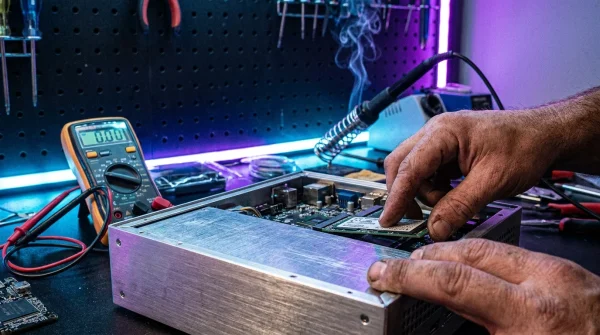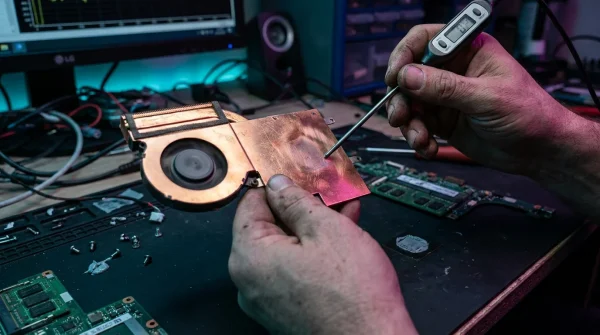
A sharp, high-pitched turbine whistle pierces the quiet of your late-night workspace. Your palms rest lightly against the anodized aluminum chassis, feeling the aluminum transition from cool metal to an uncomfortably warm plate. A hot stream of copper-scented air pushes across your desk as the dual cooling fans wind up to six thousand revolutions per minute, desperately attempting to exhaust heat from beneath the silicon die.
On paper, your machine is a computing monster. The spec sheet promises blisteringly fast compute ceilings, backed up by gleaming single-run synthetic benchmark runs that topped review charts last week. You saw the bar graphs stretching across the screen, promising desktop-grade performance inside a chassis barely thicker than an ink pen.
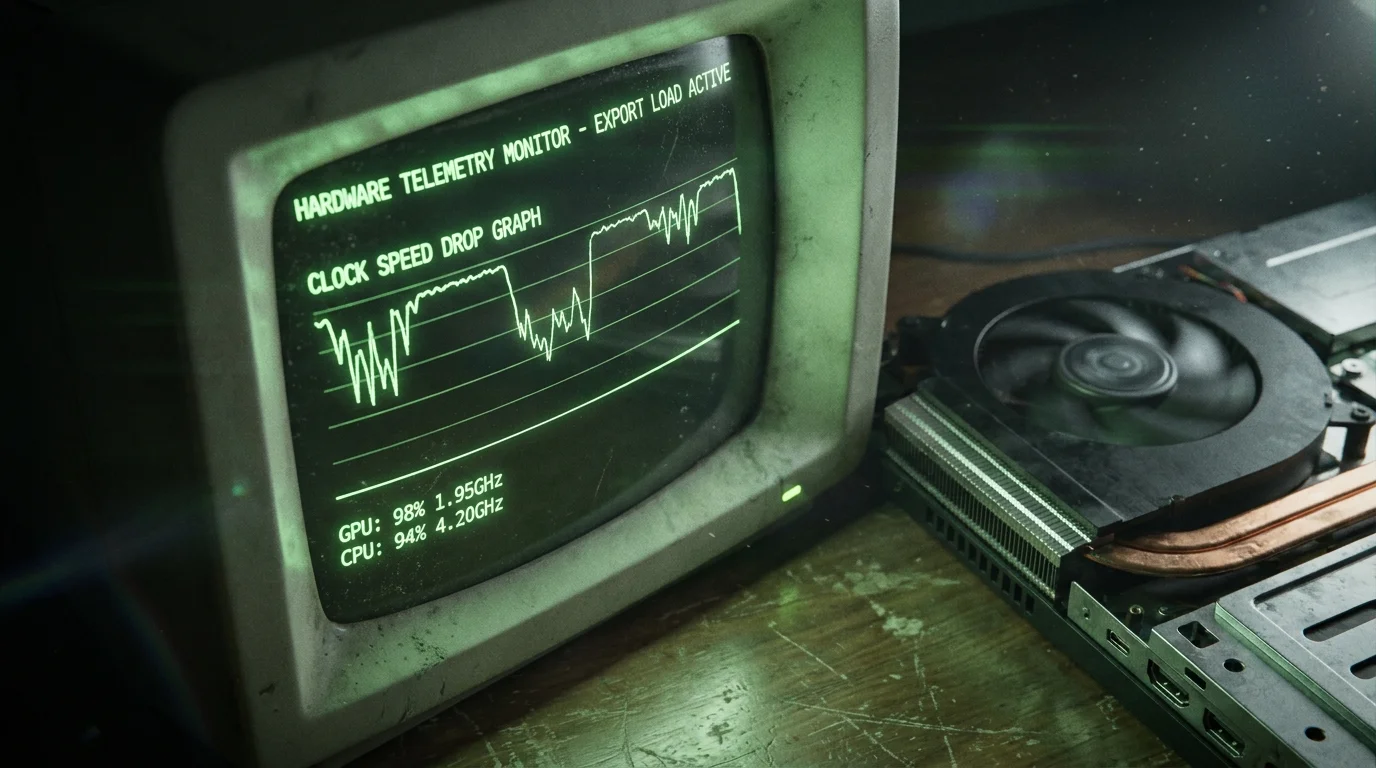
Yet twelve minutes into an intensive 4K timeline export, the playback timeline stutters. The promised multi-gigahertz speed quietly collapses, dragging down clock frequencies to preserve component integrity. Synthetic benchmark runs measure sprints, but production rendering is an exhausting cross-country marathon.
The Illusion of the Sixty-Second Sprint
Modern system architecture relies on short-burst power algorithms known as short-term power limits. When you launch a brief synthetic test, the processor surges past its nominal thermal design threshold, pulling staggering wattage for forty-five to sixty seconds before internal junction temperatures brush against 212 degrees Fahrenheit. The benchmark completes, spits out a record-breaking score, and settles down before heat ever saturates the heat pipes.
Think of it like a sprinter holding their breath: impressive across a hundred meters, but completely unsustainable when asked to jog five miles with weight on their back. In the real world of professional export queues, the cooling assembly quickly reaches its saturation threshold. When that happens, the machine throttles back hard, dropping its continuous power allocation down to a fraction of its burst ceiling to keep the chip from cooking itself.
Marcus Vance, a 38-year-old post-production colorist based in Austin, discovered this reality the hard way during a commercial delivery. After trading his bulky workstation for a sleek new machine powered by the flagship chip, his short-burst render previews felt instantaneous. Yet, during full-pass ProRes 4444 exports lasting twenty minutes or longer, his render times doubled halfway through as the fans screamed and clock speeds sank into conservative survival modes.
- Adobe Premiere Pro bloats scratch disks with gigabytes of hidden media cache files
- Apple MagSafe chargers throttle third-party charging speeds trapping users in proprietary pucks
- Windows 11 Recall captures unencrypted desktop snapshots requiring instant group policy disablement
- Discord desktop app triggers sluggish gaming frame drops over hardware acceleration bloat
- Obsidian note vaults paired with local Ollama scripts format messy markdown files
The Thermal Reality Across Workflows
Not every creator strains silicon in identical ways. Understanding how continuous thermal saturation impacts your specific workflow helps you sidestep the synthetic marketing trap.
For Long-Form Video Editors: Multi-stream 4K and 8K workflows rapidly overwhelm small vapor chambers. Once the initial power burst expires five minutes into an export, raw compute throughput drops noticeably, turning what looked like a fifteen-minute export into a thirty-five-minute wait.
For 3D Artists and Simulation Engineers: Ray tracing and complex particle simulations require absolute computational stability. Sustained thermal package drops introduce frame-to-frame rendering inconsistencies and provoke thermal throttling spikes that can cause software-level timeline crashes.
For Code Compilation and Batch Processing: Large codebase builds generate intense, cyclical heat waves. While shorter compilation tasks finish before heat becomes problematic, large full-project builds will see diminishing clock speeds as thermal resistance builds up in the chassis.
Taming the Heat: The Tactical Toolkit
You do not have to accept aggressive throttling as an unalterable reality. A few deliberate system adjustments can smooth out volatile thermal spikes and create reliable, predictable export pipelines.
- Cap the Short-Term Power Boost: Lowering maximum burst wattage in your hardware management utility prevents instant heat spikes and keeps your vapor chamber from saturating immediately.
- Establish a Symmetrical Power Baseline: Set your continuous sustained wattage to match your chassis’ actual cooling capability, eliminating erratic performance fluctuations during multi-hour rendering jobs.
- Enforce an Aggressive Early Fan Curve: Set your fans to spool up at 140 degrees Fahrenheit rather than waiting for critical thresholds, maintaining heat dissipation headroom before the copper pipes heat-soak.
- Elevate the Intake Vents: Raising the rear chassis by even half an inch increases fresh intake airflow by up to twenty-five percent, directly lowering junction temps.
By bringing burst power closer to sustained capability, predictable continuous performance replaces volatile speed cliffs. Your fans run with a smoother, lower-pitched hum, and your software export timers reflect genuine finishing times instead of deceptive theoretical estimates.
The Bigger Picture
Chasing peak synthetic benchmark scores is an exhausting cycle engineered by marketing teams focused on spec sheets rather than real desks. True professional capability lives in predictability, low noise floors, and hardware that delivers the exact same throughput at hour four as it did in minute one.
When you stop viewing your workstation through single-pass scores and begin managing its long-term thermal capacity, your entire creative rhythm shifts. You gain dependable timelines, quieter export sessions, and hardware that lasts years longer because it is no longer cooking itself for the sake of a temporary score.
Real productivity is defined by how fast your computer finishes hour-long tasks, not how hard it can flex for sixty seconds.
| Performance Metric | Synthetic Benchmark Reality | Sustained Workload Truth |
|---|---|---|
| Power Draw (Watts) | Draws maximum burst wattage for brief, sixty-second test windows. | Drops to baseline continuous power limits once copper saturates. |
| Clock Consistency | Reports top boost clocks during cool chassis start-up. | Dips significantly as die temperatures reach thermal limits. |
| Workflow Impact | Creates misleading expectations for real-world projects. | Demands active thermal tuning for predictable, stable exports. |
Frequently Asked Questions
Why do synthetic benchmarks show such high performance if the chip throttles?
Synthetic tests typically run for very short intervals, allowing the processor to consume maximum boost wattage before thermal heat soak forces power reductions.Will thermal throttling permanently damage my machine?
Modern processors contain built-in protective safeguards that throttle speeds before hazardous temperatures occur, though sustained high heat accelerates fan wear and battery degradation.Can software updates resolve aggressive thermal drops?
Firmware and driver updates can optimize power distribution profiles, but physical cooling limits ultimately dictate how much sustained wattage a chassis can dissipate.Does elevating the laptop actually make a measurable difference?
Yes, providing unobstructed airflow to bottom intake grilles can reduce internal package temperatures by four to eight degrees Fahrenheit under continuous load.Is continuous power tuning safe for everyday users?
Adjusting power limits downward through official vendor software is completely safe and often extends the lifespan of internal components by reducing heat stress.