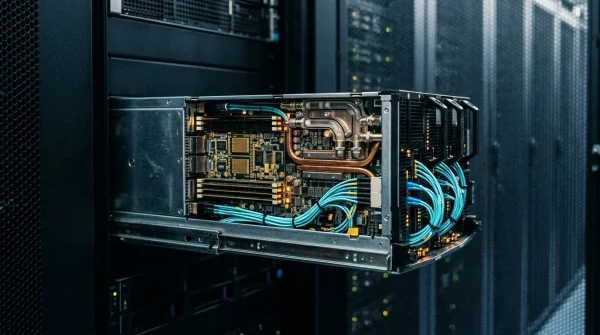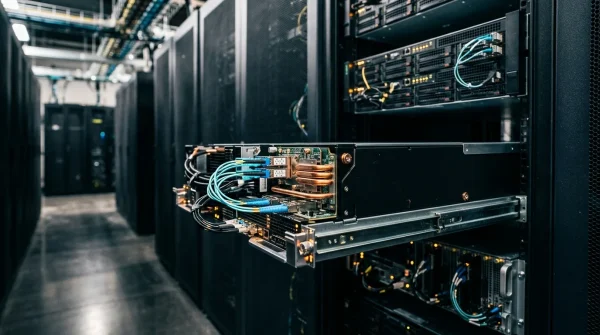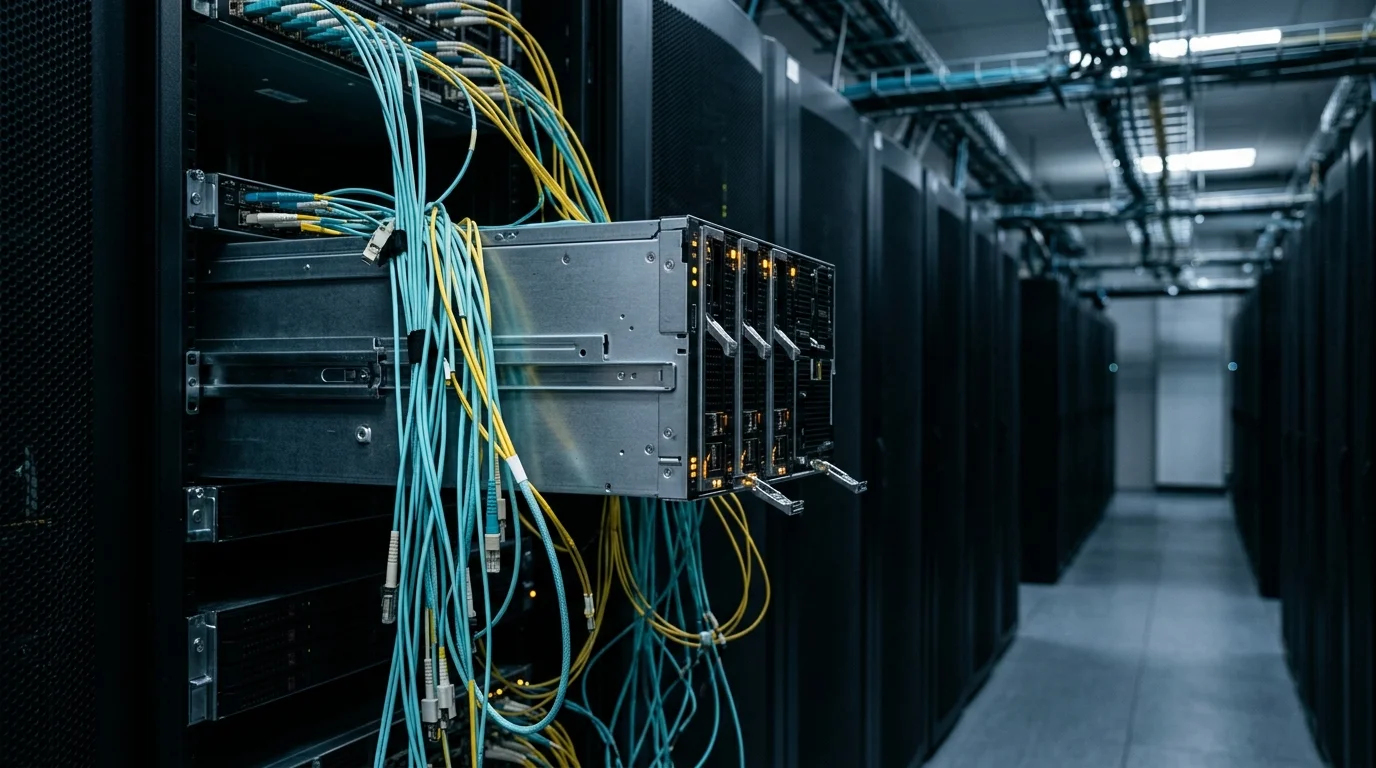
Artificial intelligence infrastructure spending is outpacing expected revenue at a rate that puts more than $3.5 trillion in investments at risk of impairment by 2030, according to a newly published analysis from market research firm Gartner. The report warns that the financial gap between massive data center build-outs and actual enterprise returns will trigger severe consolidation, forcing more than 80% of specialized “neocloud” providers to lose their independence by the end of the decade. Following the forecast’s release this week, shares of pure-play AI cloud operators—including CoreWeave, IREN, and Nebius Group—dropped as investors reassessed the viability of standalone GPU-rental business models.
The warning highlights a growing structural challenge in the AI economy: while capital expenditure on graphics processing units (GPUs) and specialized facilities continues to accelerate, attributable software and consumer revenue is trailing far behind the levels required to make those hardware investments profitable.
The Multi-Trillion-Dollar Revenue Gap
Gartner’s analysis centers on the math required to justify current capital expenditure plans. According to The Register, Gartner senior director analyst Will Sommer noted that AI providers are projected to spend nearly $1 trillion on infrastructure in 2026 alone, followed by an additional $6 trillion between 2027 and 2030. That brings total anticipated spending to roughly $7 trillion through the end of the decade.
To cover that capital outlay, pay associated financing costs, and achieve a standard 12% return on invested capital (ROIC)—a threshold widely viewed by corporate finance teams as the baseline for acceptable performance—AI data center operators would need to generate a cumulative $8.5 trillion in revenue through 2030, according to Yahoo Finance (citing Bloomberg).
The projections for actual income fall well short of that mark. While Bloomberg and The Register report that Gartner forecasts no more than $3.6 trillion in attributable enterprise and consumer AI revenue over that period, TechTarget summarizes the expected AI revenue generation at $3.5 trillion. Under either calculation, the industry faces an income ceiling that is less than half the required $8.5 trillion target.
- Beats and Pokémon Launch Special-Edition Pikachu and Mimikyu Pill Speaker for $149.99
- CoreWeave Shares and Bonds Slide Amid Mounting AI Infrastructure Debt Concerns
- China’s CXMT Claims DRAM Architecture Advance, Triggering Global Memory Stock Selloff
- Google Launches Gemini 4 Argon AI Model for Developers, Enterprises, and Subscribers
- US and South Korean Chip Stocks Tumble Amid CXMT Progress and Broadcom Warnings
Reports also vary slightly depending on the time horizon examined. While Bloomberg and TechTarget emphasize the more than $3.5 trillion in infrastructure investment exposed to impairment risk by 2030, The Register notes that Gartner’s underlying report—titled “Prepare for AI Market Consolidation: Capital Write-Downs Could Exceed $4 Trillion by 2032”—projects that total capital write-downs could surpass $4 trillion by 2032, the earliest year the firm believes AI sales might profitably cover planned capital spending.
Hardware depreciation compounds the balance-sheet risk. As chipmakers release faster, more power-efficient GPU architectures on annual cycles, older data center silicon loses value rapidly. If operators cannot recoup their initial hardware costs before newer chips displace existing clusters, they face mandatory accounting write-downs on assets whose book value can no longer be recovered.
Why Neoclouds Face the Highest Exposure
The financial pressure is not distributed evenly across the tech sector. Diversified hyperscalers such as Microsoft, Alphabet, and Amazon possess massive, high-margin core businesses in traditional cloud computing, enterprise software, advertising, and e-commerce. Those revenue streams give tech giants the financial cushion needed to absorb lower short-term returns on AI capital expenditures.
By contrast, independent “neoclouds”—specialized infrastructure operators that emerged specifically to rent out GPU capacity for AI training and inference workloads—are directly exposed to compute pricing and utilization rates. Gartner predicts that intense cost pressures and a lack of product differentiation will force more than 80% of these neocloud providers to cease operating independently by 2030.
As reported by Yahoo Finance, Sommer pointed out that while many neocloud operators are attempting to build higher-margin software layers and managed services on top of their raw hardware to mimic full-stack cloud providers, the economics of the sector make it difficult for everyone to succeed. “All of them want to be the full-stack. They can’t all be,” Sommer said. “For every dollar that’s spent on compute, only a fraction of that is going to the owners of compute.”
Gartner’s findings echo previous industry warnings. Last year, consulting firm McKinsey & Company similarly cautioned that specialized AI cloud providers needed to move up the technology stack and diversify their offerings to avoid becoming commoditized hardware landlords. Meanwhile, broader financial markets have shown growing sensitivity to AI debt loads; last month, SoftBank Group encountered higher borrowing costs while seeking additional funding for OpenAI.
Market Reaction: Specialized Cloud Stocks Slide
Equity markets reacted swiftly to the consolidation warning on Thursday, pulling down publicly traded neoclouds at a much sharper rate than broader technology benchmarks. According to 24/7 Wall St., investors appeared to reprice the specialized AI cloud sector as a single block built on shared funding assumptions:
- IREN Limited (NASDAQ: IREN): Shares fell 5% to $28.94. Originally a cryptocurrency miner, IREN has pivoted its data centers to liquid-cooled AI cloud capacity. Despite noting that its capacity for the year is largely sold out and securing top-tier partner status with its primary GPU supplier, the company has flagged customer concentration and hardware supply constraints in its risk disclosures.
- CoreWeave (NASDAQ: CRWV): Shares dropped 5% to $62.26. Operating as a large-scale pure-play GPU cloud provider for major AI labs and tech firms, CoreWeave carries a substantial debt load relative to its equity.
- Nebius Group (NASDAQ: NBIS): Shares declined 4% to $177.68. While backed by a strategic equity investment from a leading chipmaker and long-term contracts with a major social media company, Nebius relies heavily on a concentrated group of large customers for bulk revenue.
By comparison, broader market funds saw much milder pullbacks. The First Trust Cloud Computing ETF (NASDAQ: SKYY)—which holds CoreWeave among its larger positions—fell 3% to $159.92, while the large-cap Invesco QQQ Trust (NASDAQ: QQQ) dipped just 1% to $719.84.
What It Means for Enterprise IT Buyers
For chief information officers (CIOs) and enterprise architecture teams, Gartner’s forecast introduces vendor-longevity risk into infrastructure planning. However, Sommer clarified in comments to TechTarget that an 80% loss of independence among neoclouds does not mean the physical data centers or GPU clusters will vanish.
“That doesn’t mean that compute assets are just going to disappear — ceasing independent operations may include acquisition, it may include partnerships, or it may include outright failure,” Sommer explained. “Not every single company that disappears is going to fail.”
Even if a neocloud is acquired rather than liquidated, vendor consolidation creates operational friction for enterprise customers, including potential contract renegotiations, API migrations, and shifts in support tiers. According to TechTarget, these variables—combined with high cloud token costs, data security requirements, and data gravity—are altering how companies view the classic “build versus buy” infrastructure calculation.
“For the first time in really a generation, the math is starting to move toward ‘build’ and away from ‘buy’ or ‘partner,'” Sommer told TechTarget, noting that maintaining in-house AI infrastructure is beginning to make financial sense for more organizations. To manage ongoing compute scarcity and cloud cost pressures, some enterprises are also adopting hybrid approaches—running smaller, specialized AI models locally on on-premises servers or high-end edge hardware, such as GPU-equipped laptops and Mac Minis, depending on the specific workload and hardware utilization rates.
Sources
- Yahoo Finance – AI Race Puts $3.5 Trillion at Write-Down Risk, Gartner Warns
- Bloomberg – AI Race Puts $3.5 Trillion at Write-Down Risk, Gartner Warns
- 24/7 Wall St. – AI Cloud Stocks Sink as Gartner Warns Most Neoclouds Won’t Survive Independently: IREN and CoreWeave Fall 5%, Nebius Drops 4%
- The Register – The AI math isn’t mathing as infrastructure spending forecast to outstrip expected revenue
- TechTarget – Gartner forecasts massive AI infrastructure write-downs