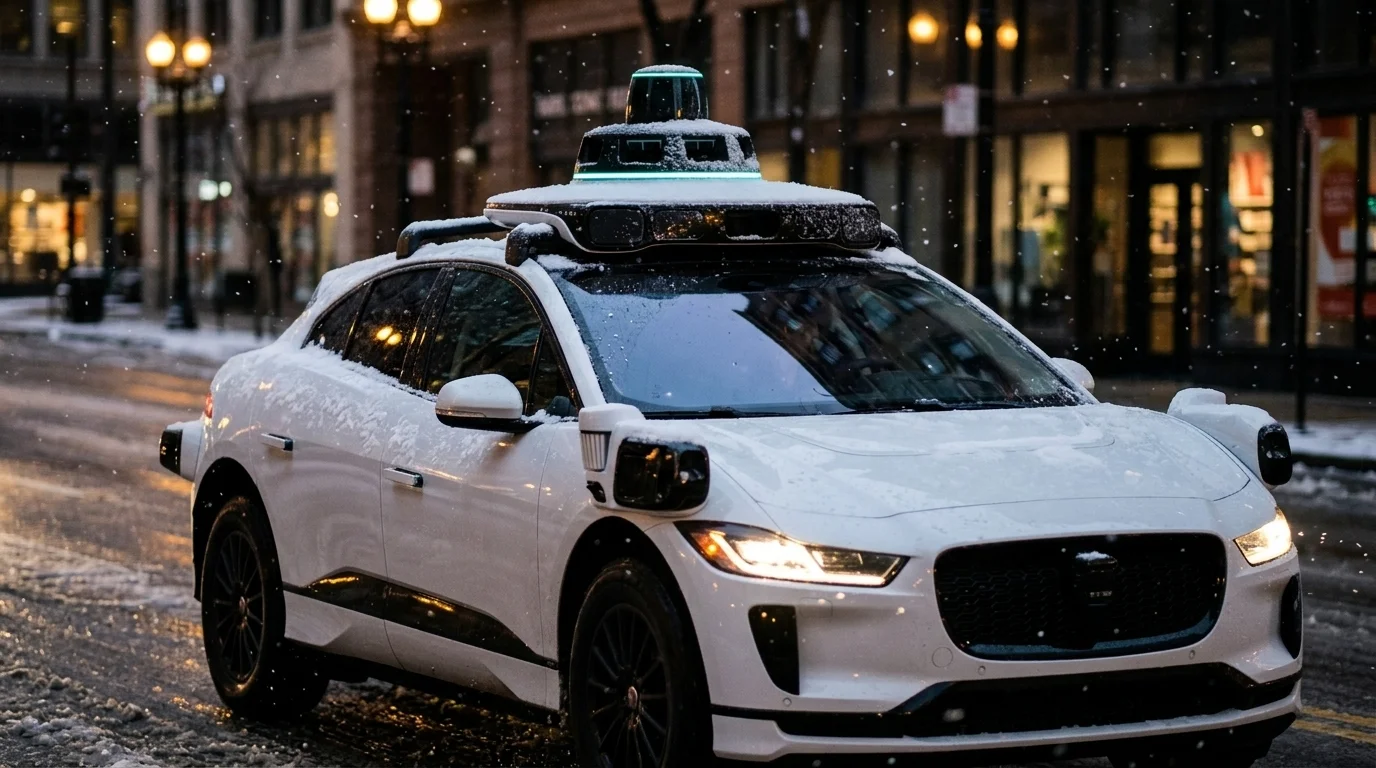
Alphabet’s autonomous driving unit, Waymo, announced plans on October 16, 2026, to expand into Canada, setting a target to launch a commercial robotaxi service in Toronto by 2028. The California-based company received approval from the Ontario provincial government to begin road testing under the province’s automated vehicle pilot program. In the coming days, Waymo will deploy more than a dozen vehicles in Canada’s largest city with human specialists behind the wheel to create high-definition street maps and validate its autonomous driving software against local traffic patterns and harsh winter weather.
Phased Rollout and Fleet Operations
Waymo’s entry into Toronto follows the standard deployment model the company has used to scale its operations across the United States and abroad. According to TechCrunch, the company operated in just three commercial markets two years ago before accelerating its expansion in March 2025 with deployments in Austin and Atlanta. Waymo now runs commercial robotaxi services in 15 U.S. cities and conducts testing in London and Tokyo. The Globe and Mail notes that the broader Waymo fleet consists of 4,000 fully autonomous vehicles servicing more than 30 cities, citing internal company data showing its vehicles were involved in 95 percent fewer crashes causing serious injury or worse across more than 400 million fully autonomous kilometers (about 248.5 million miles) driven compared to human drivers.
In Toronto, the initial phase is strictly limited to manual driving and data collection. Trained autonomous specialists will operate the vehicles at all hours of the day and night across all days of the week. Once the high-definition mapping is complete, Waymo plans to transition to autonomous testing with safety operators remaining in the driver’s seat before eventually removing human drivers to carry paying passengers.
To manage the physical infrastructure required for a commercial fleet, Waymo is partnering with Toronto-headquartered Element Fleet Management. The companies stated that the collaboration will support hundreds of local jobs across fleet maintenance, validation driving, customer service, and daily operations. According to CP24, a spokesperson for Ontario’s transport minister indicated that the provincial rollout includes a commitment to a jobs plan specifying projected positions and hiring timelines.
The expansion also builds upon Waymo’s existing financial and industrial ties to Canada. The Canada Pension Plan Investment Board participated in two funding rounds for the company in 2020 and 2021 totaling more than $3 billion. Additionally, Ontario-based auto parts giant Magna International was an early investor and serves as a key manufacturing partner constructing an Arizona plant that builds Jaguar and Zeekr electric vehicles for Waymo’s fleet.
- U.S. Retailers Face Backlash Over AI Pricing Tools as States Enact New Rules
- Riot Games Overhauls Valorant Esports With 15 Host Cities and 2027 Manila Pacific Cup
- RentAHuman Platform Tests the Reality of AI Agents Hiring Human Workers
- Norfolk Deploys Amazon AI to Answer Thousands of Non-Emergency Municipal Calls
- Anthropic CEO Dario Amodei Says Company Culture Takes Up to 40% of His Time
The Engineering Challenge of Canadian Winters
Toronto represents the northernmost market Waymo has attempted to enter, presenting severe environmental hurdles for hardware and software largely commercialized in warm, dry climates like Phoenix and Los Angeles. Autonomous vehicles rely on a combination of cameras, radar, and lidar sensors to map their 3D surroundings and feed data into onboard computers. Snow, slush, and ice directly interfere with these perception systems.
Whether Waymo’s technology is ready for a Toronto winter remains a central question, with differing accounts of the system’s current capabilities. According to The Globe and Mail, Waymo maintains that it has spent years testing in diverse snowy and icy environments and already operates in below-freezing temperatures, including frost and hail, across multiple cities. Conversely, CBC reports that Waymo told a technology publication in August 2025 that it had not yet validated the Waymo Driver for fully driverless operation in snowy conditions.
Academic robotics experts point out that operating in cold air is fundamentally different from navigating active snowstorms. Steven Waslander, professor and director of the University of Toronto’s Robotics Institute, told CBC that winter weather is the primary differentiator for Toronto, noting that Waymo has not yet demonstrated winter capabilities commercially. Krzysztof Czarnecki, an engineering professor at the University of Waterloo, explained that accumulating snow and ice can physically block cameras and sensors, while heavy precipitation degrades object detection. Snow banks also obscure lane markings, curb edges, and street signs, while human drivers and pedestrians alter their behavior unpredictably on slick roads.
Those technical limitations have already restricted other autonomous operators in the region. U.S. startup Gatik, which operates 50 autonomous delivery trucks for grocery retailer Loblaws in the Toronto area, halts its self-driving operations during heavy rain or snow.
Regulatory Hurdles and Market Impact
Beyond the engineering hurdles, Waymo’s 2028 target depends on provincial regulatory changes that have not yet been finalized. While Waymo stated it received approval to test under Ontario’s Automated Vehicle Pilot Program—which began in 2016 and was updated in 2019 to permit driverless testing under specific conditions, according to CBC—this permit only covers testing rather than commercial ride-hailing. Electrek reports that the underlying framework, Ontario Regulation 306/15, is scheduled to be revoked on October 13, 2027. With no replacement framework yet announced by the province, Ontario will need to establish new legal pathways before Waymo can legally charge passengers for driverless rides in 2028.
The jurisdictional split between provincial and municipal authorities is already drawing scrutiny. Toronto Mayor Olivia Chow raised safety concerns regarding the deployment, noting that the legislation and permissions governing autonomous vehicles are controlled by the province rather than the city. Meanwhile, incumbents in Toronto’s ride-hailing market are preparing for competition. Uber, which has partnerships with more than 30 autonomous vehicle firms including Toronto-based startup Waabi Innovation Inc. (which raised $750 million earlier in 2026), urged regulators to establish clear safety standards and prepare for labor impacts, estimating that paid driverless rides in Ontario remain at least two years away.
Despite labor and regulatory friction, Canadian automotive industry leaders view the pilot as a boost for domestic technology workers. Flavio Volpe, president of the Automotive Parts Manufacturers’ Association, told The Canadian Press that Waymo’s local presence validates Ontario’s mobility technology sector, noting that the company employs hundreds of engineers across North America with roots in Ontario universities.
Frequently Asked Questions
What legal framework governs Waymo’s testing in Ontario?
Waymo is currently operating under Ontario’s Automated Vehicle Pilot Program (Ontario Regulation 306/15). This framework grants permission for manual mapping and supervised testing, but it is currently scheduled to expire on October 13, 2027. For Waymo to launch a commercial, paid passenger service in 2028, the Ontario government will need to extend or replace this regulation with rules explicitly authorizing commercial driverless ride-hailing.
Can Waymo’s self-driving cars handle Toronto snowstorms?
While Waymo states it has tested vehicles in snowy environments and operates in below-freezing temperatures in several cities, reporting indicates the company had not fully validated its software for driverless commercial operation in heavy snow as of late 2025. The upcoming Toronto testing phase is designed to gather the sensor and training data required to handle snow-covered roads, obscured signage, and reduced visibility.
Who regulates self-driving taxis in Toronto?
Vehicle testing permits and highway traffic laws are controlled at the provincial level by the Government of Ontario, rather than the City of Toronto. However, any future commercial deployment will require coordination between provincial regulators and municipal officials regarding local street work, curb access, and emergency response protocols.
Sources
- Waymo – Hello Toronto! Waymo is En Route
- CBC – Waymo is coming to Toronto. Will its self-driving cars be winter-ready?
- CBC – Waymo autonomous driving robotaxi Toronto 2028
- TechCrunch – Waymo’s robotaxis are headed to Canada
- The Globe and Mail – Self-driving taxi company Waymo to launch in Toronto, plans to begin service in 2028
- The Canadian Press – Waymo to launch robotaxis in Toronto under pilot program for self-driving vehicles
- Electrek – Waymo Toronto Canada Robotaxi 2028
- CP24 – Waymo to launch robotaxis in Toronto: This is how the pilot program works