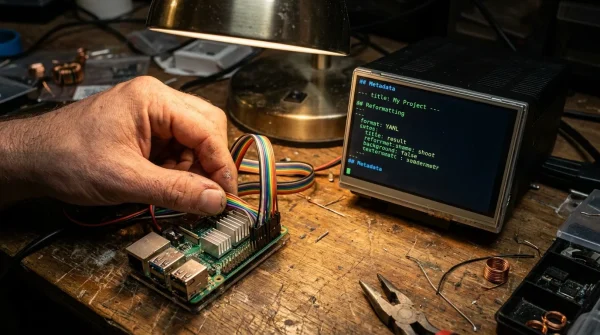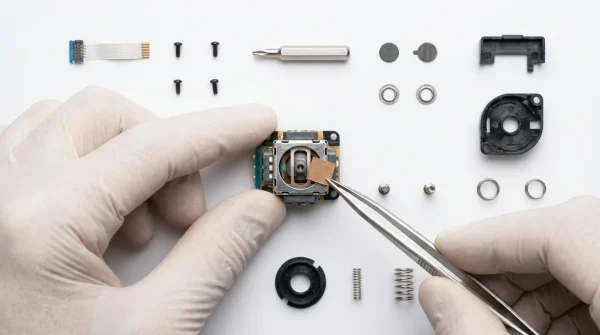
The kitchen table turns into an operating room the moment the heating pad warms the anodized aluminum backplate. You sit beneath the sharp throw of an LED desk lamp, staring at an iPad mini 6 that stubbornly refuses to stay awake past lunch. The compact slate feels perfect in your palm, yet the lithium cell inside has grown wheezy, gasping for voltage after three years of daily note-taking and video playback.
The default consumer impulse whispers that it is time for a trade-in. The shiny allure of a modern tablet generation beckons, carrying a price tag well north of five hundred dollars. But underneath that seamless glass and purple metal shell lies a machine whose processing muscle remains absurdly capable. The only true casualty of time is a flat, sealed chemical sandwich.
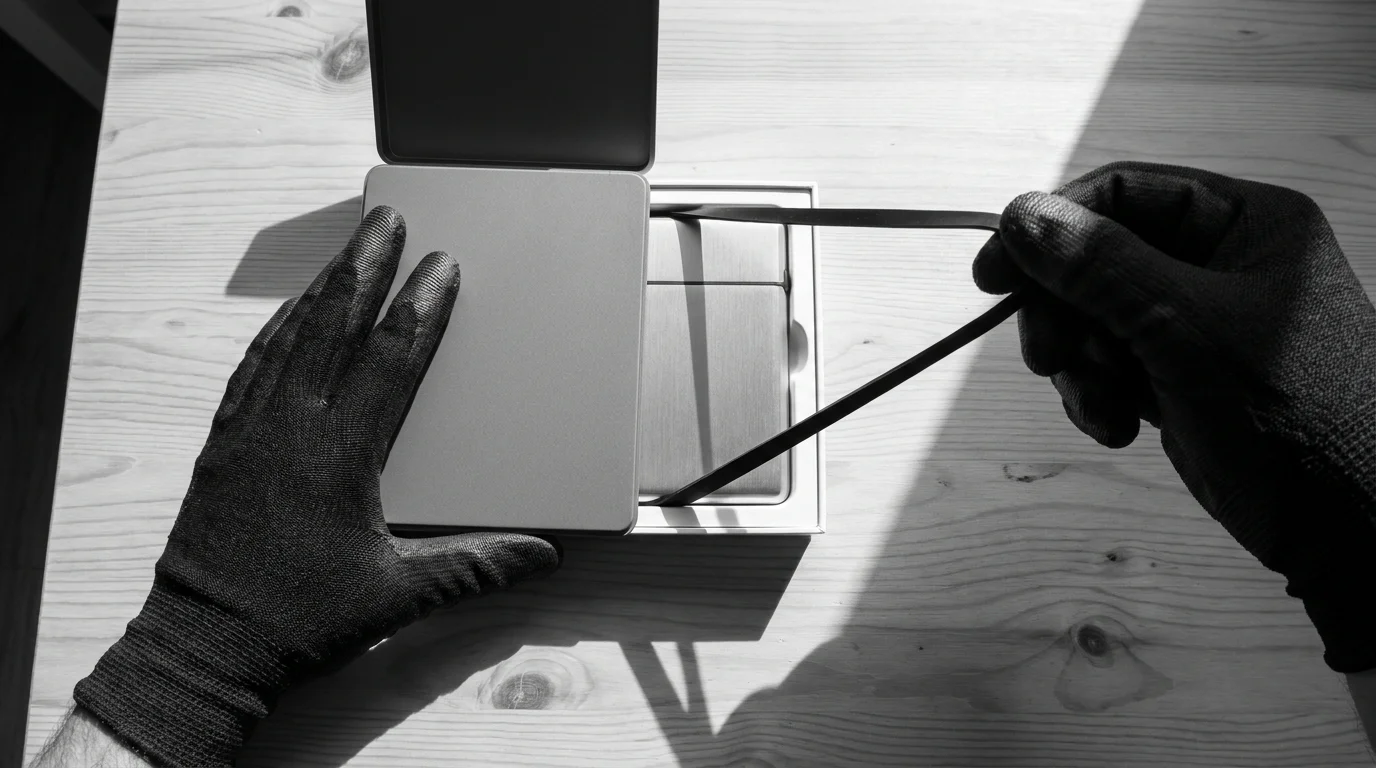
As you ease the suction cup against the perimeter glass, a thin guitar pick slips through the softened perimeter gasket. The screen tilts up, revealing the internal architecture. There, tucked beneath the logic board bracket, sit tiny black stretch-release tabs. A stretched black rubber adhesive strip releasing cleanly from an aluminum housing makes a distinct, soft hiss—the sound of planned obsolescence surrendering to simple physics.
The Illusion of the Disposable Pocket Computer
Consumer tech marketing relies on a specific form of sleight of hand. When a compact tablet begins dropping fifteen percent charge over a twenty-minute coffee break, we tend to blame the entire device. We conflate chemical wear with hardware obsolescence, treating an entire high-precision computing instrument like a spent disposable battery.
Think of your tablet not as a sealed black box, but as a high-performance sports car where the tires have simply lost their tread. You would never scrap a lightweight chassis and a pristine engine just because the rubber went bald. Yet, official store service routes often treat compact slates as non-serviceable units, handing you a steep out-of-warranty replacement invoice that nearly matches the original retail cost.
The reality is far more grounded. Modern industrial pull-tabs are engineered to shear laterally, giving up their tenacious grip when pulled flat and slow. Once those twin adhesive bands slide out, the old lithium pouch lifts away freely, leaving a pristine metal tray ready for fresh energy.
- GIMP image editor strips bloated Photoshop subscription fees while matching core layer masking
- Hugging Face Chat tools format messy meeting transcripts into clean actionable summaries
- Mac mini M4 hardware launch forces relocated power buttons onto awkward bottom chassis panels
- T-Mobile 5G standalone spectrum shifts force older smartphone modems into sudden dropped calls
- Intel Core processors expose critical microcode vulnerability demanding urgent motherboard BIOS patches
The Workshop Secret on Elm Street
Marcus Vance, a 42-year-old electronics technician who runs a quiet repair bench in suburban Columbus, sees dozens of these compact workhorses arrive every month marked for the recycling bin. Owners bring them in convinced the motherboard has degraded.
“People assume the A15 silicon is slowing down because apps stutter when the battery voltage sags under load,” Marcus explains while wrapping an adhesive tab around the shaft of a nylon spudger. “The chip is throttling simply to prevent the depleted cell from browning out. Once you slide thirty dollars worth of fresh cells and new pull-tabs into that housing, the tablet runs identically to the day it left the assembly line. You just saved four hundred dollars on an upgrade you did not need.”
Evaluating Your Battery Strategy: Three Practical Paths
Restoring battery health is not a one-size-fits-all equation. Your ideal route depends entirely on your mechanical confidence, your tolerance for risk, and your budget.
For the Hands-On Pragmatist
If you have ever swapped a phone screen or assembled small mechanical models, the DIY adhesive pull route offers total independence. High-grade aftermarket replacement packs cost between $28 and $38, bundling pre-cut stretch-release adhesive strips and basic opening tools. You control the timing, keep your data intact on your desk, and eliminate repair turnaround waits.
For the Risk-Averse Professional
If the thought of slicing through perimeter display adhesive gives you cold sweats, independent neighborhood repair shops bridge the gap. Most reputable third-party technicians charge between $75 and $95 for labor and parts combined. You bypass the retail giant’s $119 out-of-warranty fee while still keeping hundreds of dollars out of the trade-in cycle.
For the Zero-Friction Purist
If preserving official service logs matters most, the manufacturer route remains available. At roughly $119 plus tax, the brand will typically swap the entire unit for a refurbished model if battery health reads below eighty percent. It is cleaner, but it costs four times the raw component price and demands complete device wipes and cloud restoration headaches.
The Mindful Swap: Step-by-Step Execution
Approaching tablet repair demands calm hands and measured pacing. Rushing through adhesive softening is the only true hazard.
- Thermal Preparation: Warm the outer edges of the display with a thermal pack or low-temp heat gun (no higher than 160°F) for three minutes to relax the perimeter seal.
- Display Separation: Anchor a suction handle near the front camera edge, gently lifting until a seam appears. Insert a thin plastic pick, slicing only around the bezel perimeter without probing deep into the display flex cables.
- Cable Isolation: Unscrew the metal cowl over the battery connector first. Disconnect the power terminal using a plastic spudger before touching any display ribbons.
- The Pull-Tab Technique: Grab the exposed black adhesive tabs with blunt tweezers. Roll the tape slowly around the tweezers at a flat, 15-degree angle relative to the chassis. Never yank upward; slow lateral tension makes the adhesive release without snapping.
- Cell Seating & Sealing: Lay down fresh pull-tab strips, press the replacement battery firmly into the tray, reattach the power lead, and test display boot before laying down perimeter gasket tape.
The Tactical Toolkit
Gather these specific items before loosening a single screw to ensure a smooth, low-stress repair session:
- Flat-tipped ESD-safe tweezers (for uniform pull-tab rolling).
- A low-temp heat pad or iOpener set to 150°F–160°F.
- Plastic opening picks (0.2mm thickness to avoid internal component collision).
- High-grade 90% Isopropyl alcohol (one drop softens snapped pull-tabs instantly).
- Pre-cut perimeter frame adhesive and a 5124mAh replacement cell.
Preserving Value in a World of Quick Upgrades
Reclaiming an existing tool brings a quiet satisfaction that unboxing a new model never quite matches. When you pull those adhesive strips and breathe a fresh three-year life cycle into an iPad mini 6, you break free from the perpetual upgrade carousel. The screen remains crisp, the form factor remains unmatched, and your wallet remains undisturbed.
“True consumer tech mastery is not about buying every incremental silicon refresh; it is about keeping exceptional hardware performing at peak spec for a fraction of retail cost.”
| Service Route | Average Direct Cost | Financial & Practical Payoff |
|---|---|---|
| DIY Pull-Tab Replacement | $28 – $38 | Maximum cost savings, zero downtime, zero data migration needed. |
| Independent Local Tech | $75 – $95 | Low personal risk, fast turnaround, supports neighborhood repair infrastructure. |
| Official Store Out-of-Warranty | $119 – $139 | Guaranteed OEM hardware swap, but requires full data backup and cloud restore. |
| Full Generational Upgrade | $499 – $649 | Unnecessary expense for minor performance bumps when current silicon handles daily tasks effortlessly. |
Frequently Asked Questions
How do I know if my iPad mini 6 battery actually needs replacing?
Check your charging habits and symptoms. If the battery percentage jumps erratically, drops suddenly below 30%, or if the battery setting reports heavy background drain with minimal screen-on time, chemical wear has set in.What happens if an adhesive pull strip breaks during removal?
Do not panic and never pry the lithium pack with metal tools. Place two drops of 90%+ isopropyl alcohol underneath the stuck corner, wait two minutes for the solvent to dissolve the bond, and gently slide a plastic card underneath.Will a battery swap erase my apps, photos, or personal data?
A physical battery replacement does not touch your internal NAND storage. However, creating a complete encrypted local or cloud backup before opening any electronic device remains an essential safety habit.Does replacing the battery restore original processing speed?
Yes. Modern operating systems throttle peak processing clocks when an aged cell cannot supply stable voltage. A fresh cell eliminates brownout safeguards, restoring smooth UI animations and responsive app launches.Can I use a higher capacity aftermarket battery?
Stick to cells matching the original OEM specification of 5,124 mAh (19.3 Wh). Unverified “high-capacity” batteries frequently misreport telemetry data and present swelling risks inside compact aluminum enclosures.