The interstate hum fades behind you as you pull into a brightly lit concrete apron off I-95. It is past midnight, the air smells of damp asphalt and roadside pine, and your battery meter sits uncomfortably low at eight percent. You step out into the chill, unholster the heavy, liquid-cooled charging cable, and click it into the vehicle’s port. The pedestal’s digital screen flashes an invitation to pay, directing your eyes down toward a neat square decal positioned right beneath the interface.
You point your smartphone camera at the pixelated grid, tapping the yellow link that pops onto your screen without a second thought. A convincing, branded payment portal opens, asking for your credit card number, expiration date, and billing ZIP code. You tap submit, expecting the familiar mechanical clunk of contactors closing inside the charger. Instead, the screen stays frozen on a loading loop, while miles away, an automated script registers your financial credentials into an offshore harvesting server.
We have spent years trusting physical fixtures as inherently secure simply because they are bolted to sixty tons of poured concrete. Yet across rural rest stops, grocery store parking lots, and municipal plazas, counterfeit vinyl decals layered over metal are silently intercepting drivers who only want to get home. What looks like official highway infrastructure is increasingly serving as an unmonitored bulletin board for predatory code.
The Anatomy of the Paper Interceptor
For decades, card skimming was a mechanical craft that required micro-drills, false plastic bezels, and hidden magnetic read heads spliced into point-of-sale terminals. Modern charging pedestals eliminated magnetic stripes to make payments safer, but in doing so, they created an unexpected vulnerability: the absolute trust drivers place in a printed URL. When you scan a code in the wild, you are not touching the charging company’s encrypted network; you are letting a stray piece of printed paper dictate where your mobile browser travels.
The deception works because charging networks rely on a patchwork of legacy hardware. While flagship urban hubs boast integrated tap-to-pay terminals, thousands of highway corridor stations rely on adhesive instructions to route users to web apps. Scammers take advantage of this low-tech approach by printing industrial-grade stickers that match the network’s exact Pantone colors, typographic hierarchy, and logo placement, slapping them directly over the pedestal’s authentic markings.
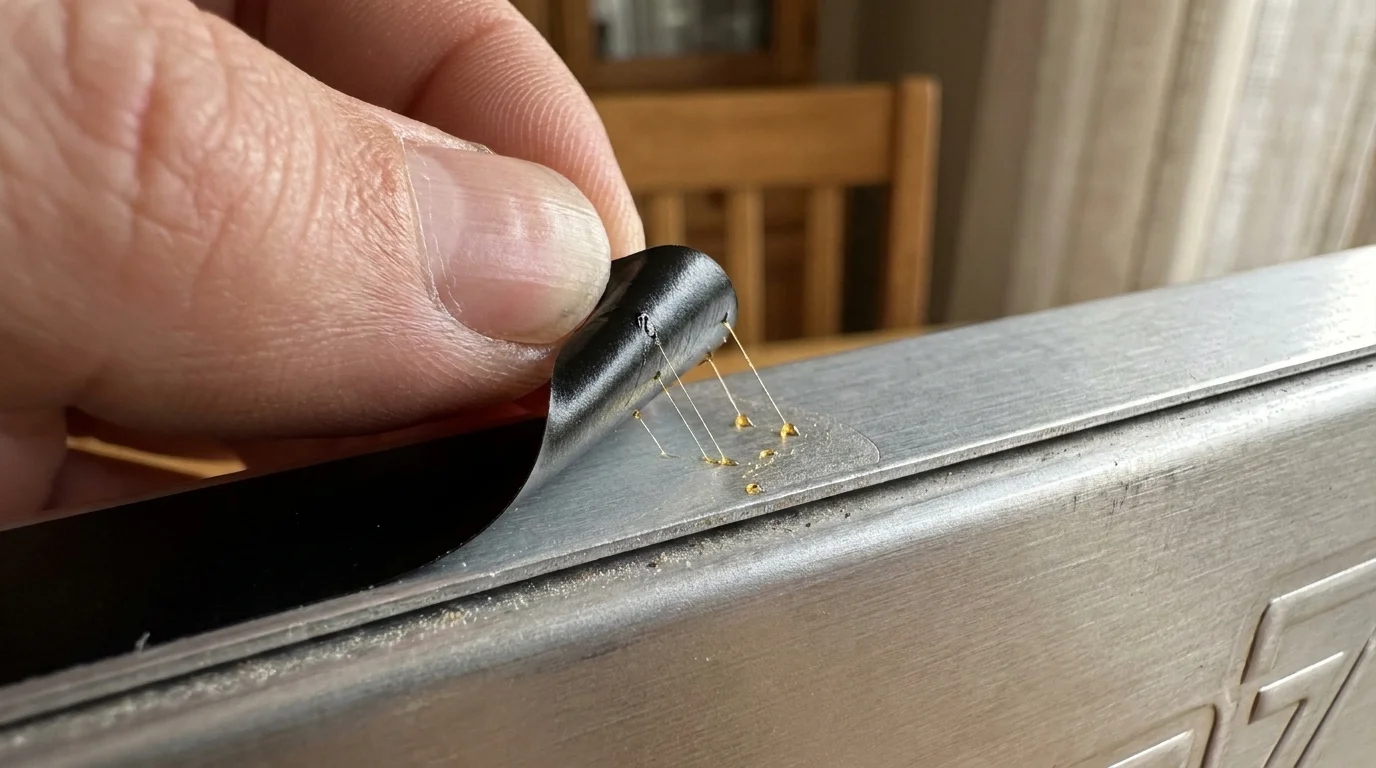
When you run your thumb across the housing, you can feel the trap before you see it. An authentic charging instruction is almost always silkscreened directly onto the powder-coated enclosure or anodized into a flush aluminum faceplate. A trap reveals itself through tactile contrast: a peeling matte vinyl edge sitting slightly askew over durable, factory-embossed metal beneath.
- Kasa smart bulbs trap lighting schedules in endless flickering loops after sudden power outages
- Sonos Roam wireless speakers force urgent battery safety advisories after blistering heat reports
- Android Do Not Disturb toggles block chaotic app pings while permitting family rings
- Xbox Series X vents trap thick carpet lint triggering loud fan whine
- TSA power bank rules force oversized lithium bricks out of checked luggage
Voices from the Field: The Rest Stop Audit
Marcus Vance, a 44-year-old high-voltage field technician based out of Columbus, Ohio, spends his weeks maintaining non-networked commercial chargers along regional logistics corridors. Last November, while performing routine firmware diagnostics across a twenty-stall plaza, Marcus noticed something odd about the pedestals nearest the tree line: every single QR code sticker had a subtle, glossy sheen that did not match the weather-beaten, matte finish of the surrounding aluminum casing.
Using a razor scraper, Marcus lifted one corner to discover a perfectly intact, genuine factory code trapped underneath a counterfeit overlay routing payments to an unregistered domain in Eastern Europe. Over four days of inspecting sixty-two highway stations, he peeled off twenty-seven malicious overlays that had survived undisturbed through weeks of torrential rain and snow. His field logs confirmed that bad actors monitor maintenance schedules, targeting remote stations where security cameras are angled toward parking bays rather than the physical payment faces of the chargers.
Vulnerability Profiles: How Scams Target Different Drivers
The Interstate Long-Hauler
Drivers navigating tight road-trip timelines are the primary targets for rogue decals. When you arrive at a station late at night with screaming children or a pet in the back seat, your cognitive bandwidth is drained. Scammers rely on this fatigue, knowing you will quickly type in credit card details on a spoofed mobile page rather than spend ten minutes troubleshooting why an app failed to launch automatically.
If you find yourself on long-distance routes, never rely on roadside sticker prompts to initialize a session. Pre-load trusted network applications into your mobile wallet before leaving your driveway, and initiate the charge exclusively via the app’s geofenced station locator.
The Urban Curbside Commuter
Municipal street chargers and multi-family parking garage pedestals suffer from high public foot traffic and minimal surveillance. In dense neighborhoods, thieves frequently blanket entire rows of curbside Level 2 chargers with fake municipal parking stickers that promise discounted electricity rates. These stickers often mimic regional transportation department branding down to the localized municipal seal.
Because Level 2 sessions take several hours, victims rarely notice the fraud immediately. The spoofed site simply displays a generic timer, leaving you to walk away assuming your vehicle is charging normally while your credit line is compromised.
The Tactile Defense: Mindful Steps at the Pedestal
Protecting your financial data at public charging stalls requires shifting from visual trust to physical verification. Before opening your smartphone’s camera, take three seconds to inspect the charging housing using your fingertips.
Counterfeiters work quickly under cover of darkness, which means their stickers rarely align perfectly with the original factory borders. Follow this simple physical audit whenever you plug in:
- Run your fingernail along the decal perimeter: If you feel a raised lip or notice double-layered vinyl over an aluminum plate, do not scan it.
- Inspect the surface finish: Factory decals are treated with industrial UV inhibitors that age evenly with the pedestal; brand-new, blistered, or peeling stickers are red flags.
- Bypass camera scanning entirely: Open the official charging network app directly and enter the four-to-six-digit pedestal identifier printed on the digital screen.
- Rely on native RFID or NFC taps: Use a dedicated physical network RFID card or your phone’s contactless payment chip against the illuminated reader icon instead of navigating to an external webpage.
Keep a compact tactical toolkit in your center console: a small pocket flashlight to inspect charger housings at dark rest stops, a pre-ordered pair of physical network RFID cards, and bookmarked direct phone numbers for the primary charging networks operating along your route.
The Bigger Picture: Reclaiming Friction in a Frictionless World
The modern payment landscape has conditioned us to view any hesitation as an inconvenience. We demand split-second transactions, seamless taps, and automated background handshakes, forgetting that every layer of friction we eliminate removes a checkpoint where human judgment can intervene. Adhesive phishing succeeds not because drivers are careless, but because technology companies have trained us to obey whatever square pattern sits in front of our eyes.
Reintroducing a brief moment of physical mindfulness at the charging pedestal does more than protect your bank account; it grounds you in your surroundings. When you take that extra second to feel the cold aluminum, verify the hardware, and deliberately choose your payment method, you replace blind automation with quiet, confident control over the tools that power your journey.
The safest connection on any public charging pedestal is the physical one carrying the high voltage, not the paper sticker asking for your billing address.
| Key Point | Detail | Added Value for the Reader |
|---|---|---|
| Physical Decal Inspection | Counterfeiters paste thin, matte or glossy stickers over factory plates. | A quick tactile scrape of the border instantly detects layered scams. |
| In-App Pedestal Search | Entering station IDs manually bypasses external web redirection entirely. | Eliminates the possibility of landing on spoofed payment domains. |
| Hardware RFID Cards | Direct radio-frequency cards communicate solely with backend network servers. | Guarantees payment data is never exposed to unvetted mobile browsers. |
Frequently Asked Questions
How can I tell if a QR code sticker on an EV charger is fake?
Look for raised edges, misaligned borders, or bubbling that indicates an adhesive decal has been layered over the original surface. Authentic markings are typically printed directly onto the metal or fit into a dedicated recessed frame.What happens if I accidentally scan a malicious charging decal?
The code will redirect your browser to a cloned phishing site designed to capture your credit card information and personal details. If you submitted card details, immediately freeze the card through your banking app and notify the station operator.Does using Apple Pay or Google Pay on a scanned link protect me?
Not necessarily. While native wallet buttons can obscure your raw card number, spoofed phishing pages often present fake forms that bypass standard digital wallet prompts to harvest your direct card and billing data.Why don’t charging network operators remove these stickers faster?
Highway charging stations are spread across thousands of miles of unstaffed rest corridors, meaning technicians may only visit a site once every few weeks. Bad actors exploit these long maintenance intervals to place stickers after routine audits.What is the safest way to pay at an unfamiliar charging station?
Use a dedicated RFID membership card issued by the charging network, tap your phone directly against the built-in contactless payment reader, or manually type the charger ID into the network’s official mobile app.