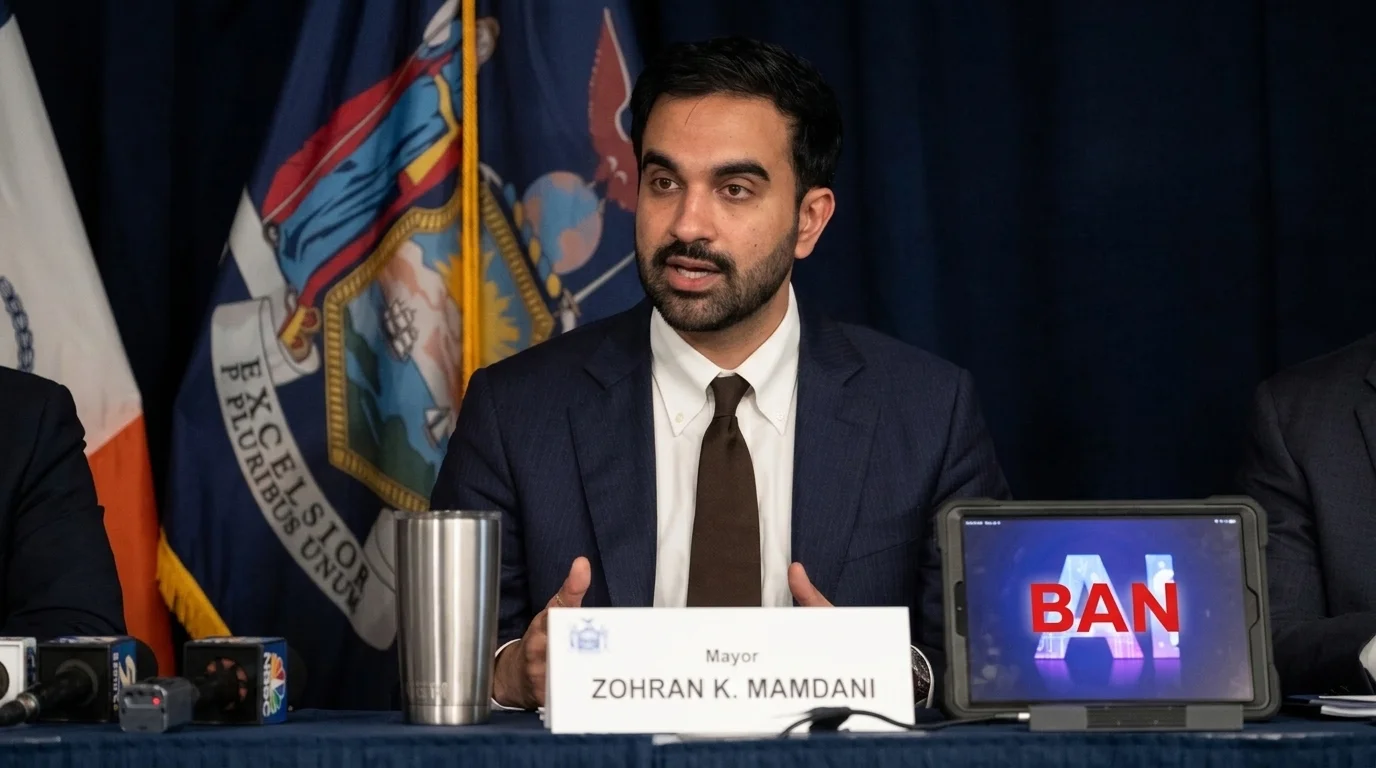
New York City Public Schools has implemented a one-year moratorium on student-facing generative artificial intelligence for students in early childhood programs through eighth grade for the 2026–2027 academic year. Announced on September 2, 2026, by New York City Mayor Zohran Mamdani and Schools Chancellor Kamar Samuels as students returned to classrooms, the policy restricts access for more than half a million—and by some estimates nearly 600,000—young learners across the nation’s largest school district. City and school officials stated the pause is designed to give the district time to evaluate how the technology affects child development and foundational critical thinking skills before allowing widespread classroom integration.
Scope of the Restriction: Ban vs. Moratorium
While initial headlines broadly characterized the measure as a sweeping ban on artificial intelligence, detailed reporting clarifies that the directive is narrower in both scope and duration. According to ABC7 San Francisco, the policy specifically targets student-facing generative AI software and companion chatbots for students in 2-K and pre-school through eighth grade.
Reports also differ slightly on the exact number of students affected, though they align on the grade levels covered. ABC7 San Francisco noted the restriction applies to more than half a million students, while Fast Company reported that the policy affects nearly 600,000 students across pre-K, elementary, and middle school levels. Furthermore, rather than a permanent prohibition on every form of artificial intelligence, the Associated Press—as republished by the Lewistown Sentinel—and Fast Company both note that the measure is a one-year assessment period to study how children interact with the software.
City officials characterized the move as the most expansive AI moratorium in the United States, though that comparative ranking reflects the administration’s own description rather than an independent national audit. In his statement to ABC News, Mayor Mamdani pushed back against rapid commercial adoption in classrooms, stating that “the tech industry wants us to believe that A.I.-powered early education is not only inevitable, but necessary. We do not see it that way.”
Chancellor Samuels echoed that stance, emphasizing that the district intends to restore core problem-solving skills required for graduation. “We’re standing firmly in our decision to not conflate innovation with more tech, and we’re going to lead over the next year with evidence and make sure technology serves learning — not the other way around,” Samuels stated.
- AI Skills Carry Nearly $18,000 Wage Premium as Data Questions 120,000 AI Job Cuts
- Public Radio Affiliates Air Plain-English Guide to Decode Complex AI Jargon
- DHS Orders Federal Agencies to Remove Chinese AI Platform DeepSeek Over Security Risks
- Hackers Actively Exploit ‘Plex2Shell’ Flaws in Unpatched Plex Media Servers
- Users Turn to AI Coding Tools and ‘tv-vibehack’ to Strip Ads From Smart TVs
High School Exemptions and Classroom Enforcement
The generative AI moratorium does not extend to New York City’s high school students. Instead of restricting access for grades 9 through 12, the district announced it will provide twice-yearly AI literacy classes. District leaders stated these sessions are structured to help older teenagers evaluate the software critically before coming to rely on it for academic work.
The directive also does not explicitly bar educators from using artificial intelligence behind the scenes. Across the United States, federal initiatives from the White House have encouraged teachers to utilize AI responsibly to streamline administrative workloads. As reported by ABC7 San Francisco, educators in other jurisdictions, such as Texas teacher Lori Garrett, have already integrated AI tools to draft lesson plans, organize classroom data, and provide feedback on student assignments.
However, key operational questions remain unanswered regarding how New York City Public Schools will enforce the middle and elementary school ban in practice. Available public reporting does not detail the specific technical or disciplinary protocols the district will deploy—leaving it unconfirmed whether the administration relies primarily on network-level domain blocking, software procurement removals, classroom monitoring by teachers, or formal disciplinary codes.
Broader Pushback on Screen Time in Education
The generative AI pause is the latest in a series of moves by New York City officials to curtail digital dependence during the instructional day. Last year, the public school system instituted a bell-to-bell cell phone ban to limit personal device distractions and encourage students to build interpersonal connections.
The debate over educational technology in New York extends well beyond generative chatbots. According to an October 19, 2026 report by The 74, city officials have also banned individual digital devices for students in pre-K through second grade and recommended formal screen-time limits for grades three through eight, while City Council members have pushed for a return to paper-based standardized testing options.
These local restrictions coincide with growing national scrutiny over youth technology exposure. At the federal level, the Department of Health and Human Services recently convened childhood development experts to evaluate the harms of excessive adolescent screen use, with Dr. Stephanie Haridopolos, director of health communications at the Office of the Surgeon General, advocating for stronger safety guardrails around both social media and AI.
Despite the high profile of New York City’s moratorium, formal governance of classroom AI remains rare across the rest of the state. An October 13, 2026 investigation by News From The States found that most school districts in New York had not yet established any official AI policy, making New York City’s explicit grade-level boundary a notable exception in an largely unregulated landscape.
Frequently Asked Questions
Which students and tools are covered by the New York City AI ban?
The policy is a one-year moratorium for the 2026–2027 school year covering nearly 600,000 students from 2-K and pre-K through eighth grade. It specifically prohibits student-facing generative AI software and companion chatbots, while high school students remain exempt and will instead take twice-yearly AI literacy courses.
How will schools enforce the restriction and what are the penalties?
Public reporting and statements released by the mayor’s office and the school district have not yet specified the exact technical enforcement mechanisms, whether restrictions apply to homework on personal devices, or what disciplinary consequences students might face for violations.
How will the district evaluate AI during the one-year pause?
Mayor Zohran Mamdani and Chancellor Kamar Samuels stated the district will spend the 2026–2027 academic year studying the developmental and educational impacts of generative AI, focusing on evidence of whether the technology actively supports student learning and critical thinking. The specific metrics or exemptions for assistive and accessibility tools have not been publicly detailed.
Sources
- ABC7 San Francisco – New York City Public Schools banning AI use through middle school starting this year
- Associated Press (republished by Lewistown Sentinel) – NYC bans AI for students through 8th grade
- Fast Company – We can’t keep guessing whether AI helps students learn
- News From The States – We Tried To Collect Every New York School District’s AI Policy. Most Didn’t Have One.
- The 74 – State Officials Consider Returning to Paper Exams for NYC