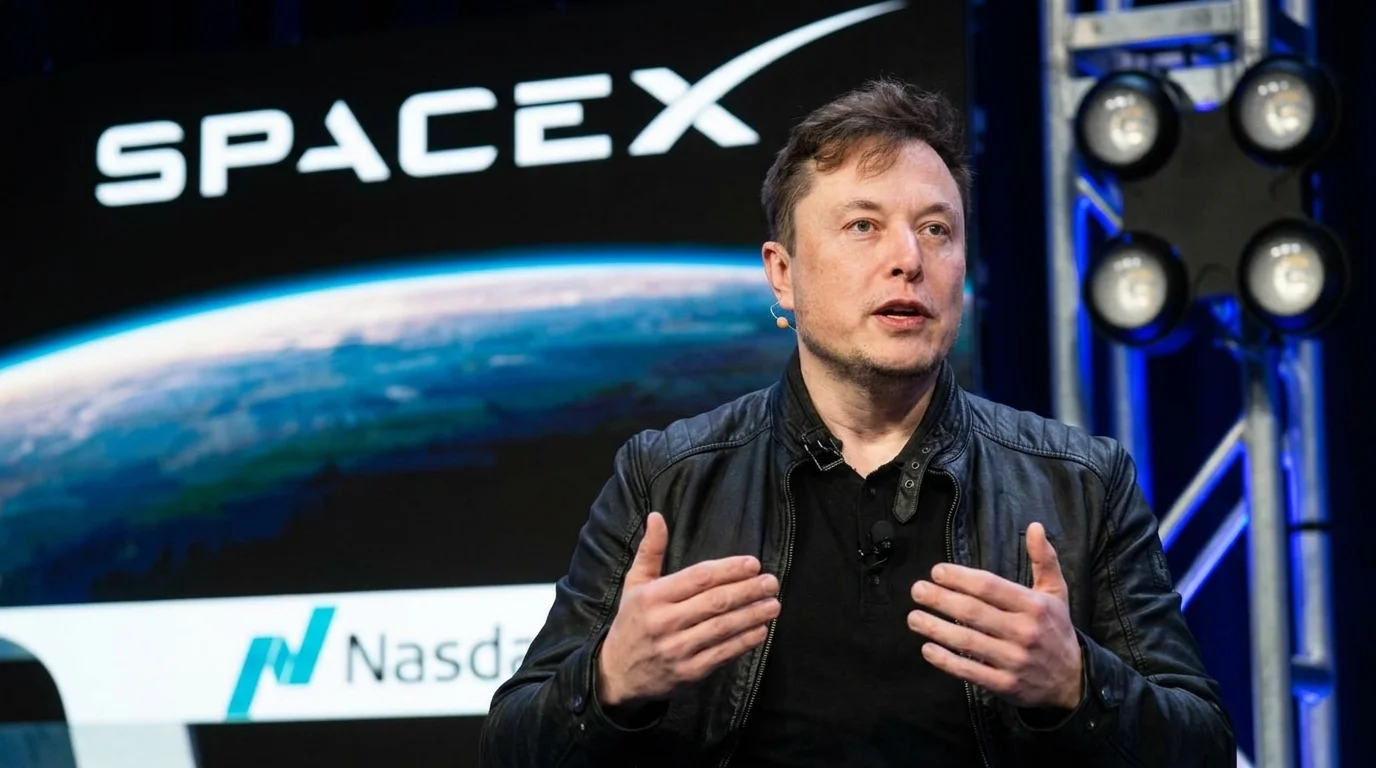
SpaceX CEO Elon Musk and artificial intelligence developer Anthropic have outlined competing proposals to distribute billions of dollars in corporate equity to the public as scrutiny grows over AI-driven economic disruption. On Sunday, Oct. 18, 2026, Anthropic announced plans to commit 5% of its shares to a new company-owned Public Benefit Fund, pending shareholder approval. Following that announcement, Musk posted on X on Monday, Oct. 19, pledging to personally give one share of SpaceX stock to every child in the United States in 2027.
Both announcements arrive as tech executives face mounting questions from policymakers and the public over how rapid automation will affect the labor market. While Anthropic is proposing a centralized corporate vehicle to fund nonprofits and targeted economic relief, Musk is advocating for direct individual ownership, stating on X that handing over stakes in the future economy directly to the public is the better approach.
Competing Models for Distributing Tech Wealth
The Exchange began Sunday when Anthropic detailed the structure of its new Public Benefit Fund. According to Fox Business, the company is starting the fund with 5% of its shares and may contribute up to an extra 2%—subject to board discretion—for every 50% increase in the company’s valuation above a set baseline. When combined with an 80% equity donation pledge from its co-founders and an employee donation-matching program active since its founding, roughly 20% of Anthropic’s total shares are slated for public benefit initiatives.
Rather than establishing a traditional 501(c)(3) charity, Anthropic structured the fund as a wholly owned limited liability corporation (LLC), a model similar to the Chan Zuckerberg Initiative established by Mark Zuckerberg and Priscilla Chan in 2015 with 99% of their Facebook shares (then valued at about $45 billion). According to the Los Angeles Times, Anthropic stated that the LLC structure allows for greater flexibility, such as making large grants to nonprofits or issuing direct distributions to specific populations, while stipulating that no funds will be used for lobbying or political donations.
The financial scale of these commitments fluctuates based on private and public market valuations. While CNN reported that Anthropic’s 5% stake commitment was worth about $48 billion at its latest private valuation, the Los Angeles Times and Fortune note that Anthropic is seeking an initial public offering as soon as November at a potential valuation of up to $2 trillion.
- Revolut and Lloyds Users Hit by App Outages and Declined Card Payments
- IOP Publishing Launches Diamond Open-Access Journal ‘AI Horizons’ for Science Research
- Carnegie Mellon Opens Applications for Free AI Certificate Program in Africa
- PlayStation 6 RAM and Storage Costs Exceed $680 Per Console, Leaker Claims
- Credit Markets Flag AI Debt Risks as Oracle Faces $118 Billion Stress Test
Musk criticized Anthropic’s fund model on Sunday, recommending that the AI firm give shares directly to the public before announcing his own plan on Monday. SpaceX—which oversees the xAI chatbot in addition to its spacecraft and Starlink satellite internet operations—went public in June at $135 a share, valuing the Starbase, Texas-based company at $1.77 trillion in the largest IPO in history.
Estimates of the total value of Musk’s pledge vary slightly depending on stock price fluctuations and population data. According to CNBC, U.S. Census data showed 72 million children under 18 as of July 1, 2025, which would value the giveaway at approximately $10.5 billion based on SpaceX’s Friday closing price of $146.03. Meanwhile, Fortune and the Los Angeles Times cite census estimates of about 73 million children and Monday’s closing price of $147.96 per share, placing the total value between $10.7 billion and nearly $11 billion.
According to an August SEC filing cited by CNBC, Musk owns roughly 4.8 billion SpaceX shares—rising to 6.4 billion when including unvested awards and stock options, representing a 48.4% beneficial stake. With Musk’s net worth standing at $908.5 billion, ABC News notes that an $11 billion stock grant represents roughly 1.2% of his personal wealth.
AI Economic Disruption and the Push for Public Equity
The motivation behind both equity pledges is closely tied to mounting anxiety over how artificial intelligence will reshape the global workforce. According to a 2024 International Monetary Fund (IMF) assessment cited by the BBC, nearly 40% of jobs worldwide could be affected by AI, with that figure rising as high as 60% in advanced economies.
In its Sunday statement, Anthropic acknowledged that while AI may generate substantial economic value, it also risks causing instability for workers. As reported by ABC News, Anthropic has already committed $200 million to study and address labor-market disruption, but the company stated that the pace of AI progress may require larger interventions. Other AI developers have announced similar initiatives; rival OpenAI operates the OpenAI Foundation, which plans to invest $1 billion over a year-long period into life sciences, disease research, and labor market initiatives.
However, industry analysts note that corporate equity commitments also serve strategic purposes. Fortune points out that Anthropic’s pledge of unissued shares could help build public goodwill ahead of its planned IPO, and because the fund is an LLC rather than a traditional charity, CEO Dario Amodei and company leadership retain control over how the capital is deployed. Meanwhile, Musk’s pledge comes during a period of heavy political spending; since July, he has donated more than $276 million to Republican groups ahead of the 2026 midterm elections, including $158 million to the Senate Leadership Fund in September.
Implementation Mechanics: How Trump Accounts Factor In
While Musk stated that his 2027 stock grant would be “the first of many,” he provided no operational details on how the shares would be transferred or how eligibility would be verified. Observers and investors have pointed to the federal “Trump Accounts” program as a potential distribution channel. Brad Gerstner, head of Altimeter Capital and founder of Invest America, praised Musk’s announcement on X and suggested the shares could be routed through the accounts.
Launched in July 2026, the federal Trump Accounts program provides a $1,000 government-funded investment account for qualifying U.S. citizens born between 2025 and 2028, allowing families, corporations, and individuals to contribute additional assets. Last week, SpaceX President Gwynne Shotwell pledged to donate SpaceX shares to more than 2 million children through the Trump Accounts program, noting on X that distribution would place extra emphasis on residents near the company’s central Texas facilities.
According to Fortune, a Sept. 30 rule change by the U.S. Treasury has made stock donations to Trump Accounts significantly more advantageous for billionaires. Under the revised rules, individuals can donate stock directly—provided recipients hold the shares for at least five years—allowing donors to deduct the full market value of the shares without paying capital gains taxes on their appreciation. By contrast, when Michael and Susan Dell donated $6.25 billion to the accounts last year, the contribution was made in cash.
For families receiving these grants, direct stock ownership carries specific constraints:
- Holding Restrictions and Volatility: Under the Sept. 30 Treasury rules for Trump Accounts, recipients are locked into a mandatory five-year holding period, preventing families from selling if an individual company’s stock price drops.
- Tax Liability: While donors avoid capital gains taxes by gifting shares directly, recipients will be required to pay income tax when the stock is eventually sold.
- Conflict-of-Interest Rules: Mandatory share distributions into children’s accounts could create compliance headaches for parents whose employers restrict family ownership of specific equities.
Unresolved Questions for the Public
Will Musk publish binding eligibility rules for the SpaceX share giveaway?
As of Oct. 20, neither SpaceX nor Musk’s family office has released formal eligibility criteria. It remains unclear whether “every kid in America” applies strictly to U.S. citizens, permanent residents, or any child under age 18 residing in the country, or how those outside the 2025–2028 birth window for federal Trump Accounts would receive shares.
How will Anthropic’s Public Benefit Fund be governed?
Anthropic has not yet disclosed the governance structure for its LLC fund or the criteria for selecting beneficiaries. Because the commitment consists of unissued corporate equity rather than liquid cash, the actual financial impact will depend on shareholder approval, future stock sales, and how leadership divides resources between traditional nonprofits and direct payments to affected workers.
Sources
- Fox Business – Elon Musk pledges to give every child in America a SpaceX share next year
- Fortune – Billionaires are giving your kid stock. Should you say thank you?
- Los Angeles Times – SpaceX, Anthropic plan to share wealth with the public amid concern AI could trigger job losses
- ABC News – Elon Musk vows to give a share of SpaceX stock to every US child
- CNBC – Elon Musk says he’ll give a SpaceX share to every child in America next year
- CNN – Elon Musk children SpaceX shares X post
- BBC – AI job exposure and tech wealth distribution