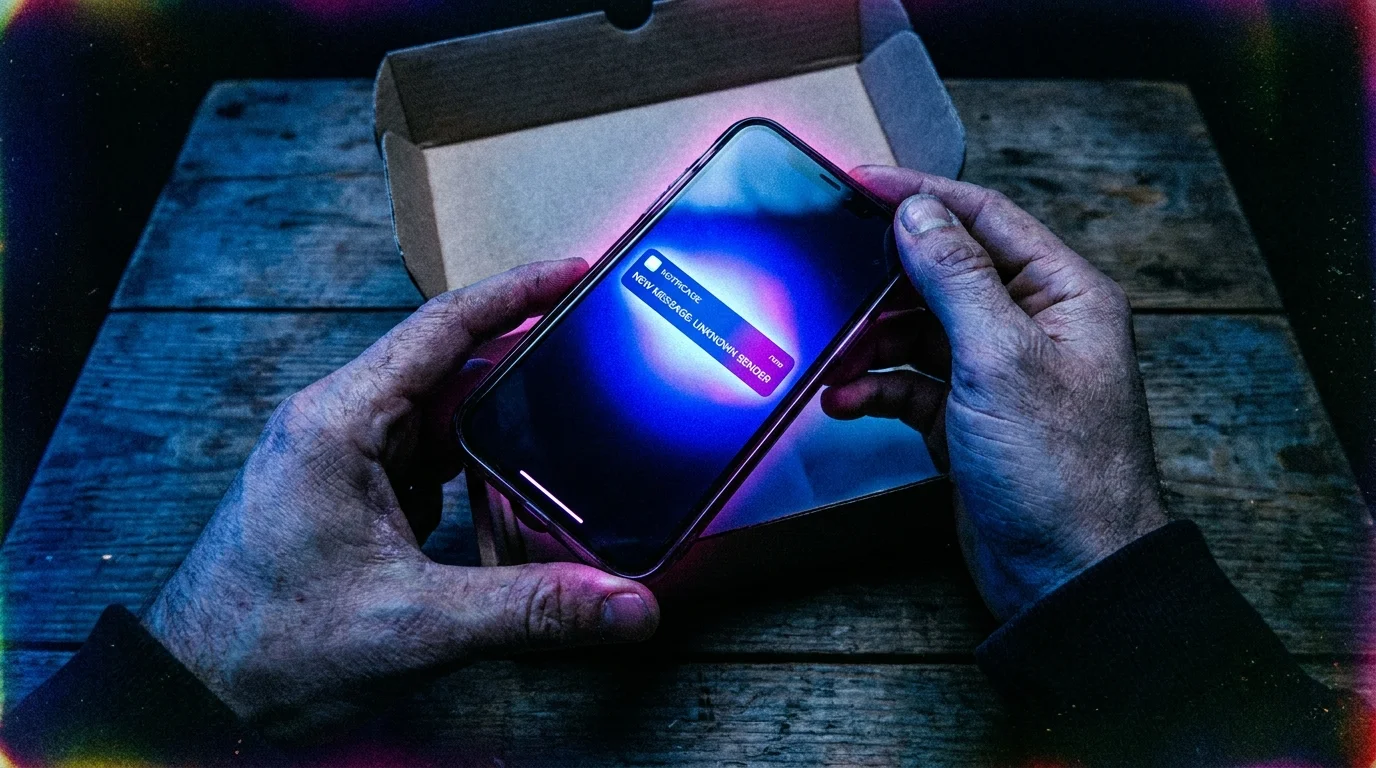
The sudden, sharp rattle of a phone buzzing against a bare kitchen countertop has a way of cutting straight through the quietest evening. In the pale glow of the lock screen, black-and-white typography demands your immediate attention: ‘Citi Alert: Did you approve a Zelle transfer of $3,450.00 to an external account? Reply YES or NO to confirm.’ Your pulse spikes before your mind can even process the hour. You tap the screen awake, your thumb hovering in hesitation over the glass.
When you open the notification, the sense of dread only tightens. This is not some strange, twelve-digit international phone number. You are staring at your existing, years-old conversation thread with Citibank. Scrolling upward reveals genuine one-time login codes, actual card activation confirmations, and fraud notices from purchases you made two summers ago.
Every instinct honed by years of digital life tells you this screen is authentic. Fear makes you want to react instantly, to tap back a frantic ‘NO’ and slam the door shut on an invisible thief draining your checking account. Yet that instinctive reaction is the exact tripwire the attackers are waiting for you to strike.
What sits on your glass display is not a system failure on your part, but a calculated psychological ambush. Understanding why that message sits inside a genuine bank thread changes how you defend your savings forever.
The Anatomy of the Thread Betrayal
To make sense of why your phone groups a criminal solicitation alongside legitimate banking history, you have to realize that text messaging was never designed with security in mind. SMS is fundamentally built on an open protocol from the late twentieth century, where your mobile operating system acts like a hyper-organized mail clerk who sorts letters based solely on the return address printed on the envelope.
When an SMS aggregator sends a dispatch using Citibank’s short code—say, a five-digit number like 248422—your mobile operating system does not verify cryptographic signatures or perform a digital handshake. It simply looks at the metadata sender tag, checks your local database, and slips the new card into the pre-existing drawer. Scammers exploit web-to-SMS gateways and international routing vulnerabilities to stamp counterfeit return addresses on their digital envelopes. The envelope looks flawless, but the letter inside carries poison.
By replying to that prompt, you do not stop a transfer. There is no wire leaving your account at that moment; your money is resting precisely where you left it. Instead, hitting ‘NO’ alerts an offshore boiler room that your line is active, your panic button is engaged, and your psychological defenses are compromised. Within ninety seconds, your phone will ring with a spoofed customer service caller ID, and a calm, polite voice will offer to help you ‘reverse the fraudulent transaction’ by coaxing your one-time passwords and credentials straight out of your mouth.
- AirPods Pro acoustic mesh demands delicate adhesive putty lifts to stop muffled speaker crackle
- JLab Go Air Pop earbuds strip bloated flagship markups while delivering punchy bass rumble
- Samsung Customization Service traps private daily location traces behind quiet background tracking toggles
- Car dashboard Qi charging pads trigger scorching windshield heat degrading delicate phone battery cells
- WhatsApp Companion Mode multi-device linking strips clunky phone mirroring delays across desktop monitors
The View from the Telecommunications Trenches
Marcus Vance, a 42-year-old network vulnerability auditor based in Chicago, spends his working weeks examining how modern telecommunications protocols crumble under targeted social engineering. Last November, his own spouse received the exact Citi wire warning while they were making dinner.
“The sophistication is no longer in the malware; it is entirely in the theatrical staging,” Marcus explains. “Criminal syndicates lease access to gray-market VoIP portals and carrier-testing interfaces overseas. They fire off tens of thousands of these alerts simultaneously. They don’t need a database breach at the bank. They only need you to believe your operating system’s sorting algorithm is proof of origin. When the victim sees historical text messages sitting directly above the panic message, their critical reasoning shuts down.”
Three Profiles of Exposure: Know Your Vulnerability Layer
Not every account holder meets this threat in the same state of mind. Depending on how you manage your daily finances, the attack alters its cadence to match your life rhythms.
For the Mobile-First Professional
If you conduct your entire financial life from a glass slab between meetings, your reflex is speed. You clear badges, resolve notifications, and clear unread counts systematically. For you, the scam relies on muscle memory. Rushing through routine confirmations causes you to treat the text like a simple operational hiccup rather than a high-stakes interrogation.
For the Shared Household Manager
If you juggle joint checking accounts, family credit cards, and recurring utility bills, your immediate assumption upon seeing a four-figure debit notice is that your spouse, partner, or college-age child made an emergency purchase or incurred a billing error. The syndicates deliberately select amounts between $1,800 and $4,500 because they mimic tuition payments, emergency repairs, or appliance replacements, preying on household confusion.
For the Infrequent Digital User
If you rarely open banking apps and rely primarily on physical cards, receiving an SMS notification creates extreme disorientation. The fear of technology itself becomes the weapon. Scammers exploit your unfamiliarity with automated banking mechanisms, relying on high-pressure language to guide you toward giving up account access under the guise of ‘protective re-enrollment.’
The Outbound Rule: A Mindful Defensive Protocol
Neutralizing this attack requires giving up the urge to resolve the situation inside the incoming communication channel. When panic knocks on the door, your best move is silence.
Adopt the Outbound Rule: treat every incoming interactive alert as unverified theater, regardless of what thread it occupies. Break the stimulus-response cycle by stepping entirely out of the text screen.
- Never touch the reply field: Do not reply ‘NO’, ‘STOP’, or ‘HELP’. Any response flags your number as receptive, queueing your phone for an immediate inbound social engineering call.
- Flip the physical card: Pull your plastic debit or credit card from your wallet. Locate the embossed, tiny customer support number printed across the backside. This is your only trusted tether to the institution.
- Initiate clean contact: Dial that physical number manually from a keypad. When the automated banking system answers, you bypass whatever spoofed infrastructure is targeting your screen.
- Inspect your real dashboard: Log into the official Citibank app or website via a separate, trusted browser session. If an actual fraud hold exists, it will be clearly flagged across your primary account overview.
Keep a clear distinction between passive reading and active engagement. A notification is merely an invitation; you are under no obligation to accept the sender’s terms of engagement.
Preserving Digital Equanimity
Living in a connected world means accepting that your phone number is a public-facing door. Telecommunication backbones will eventually modernize, carriers will gradually patch short-code injection vectors, and regulators will continue their slow march against spoofing portals. But your true line of defense will always be the space between stimulus and response.
When your screen blinks with impending financial catastrophe, take a slow breath. Refuse to be hurried by synthetic urgency designed by a stranger thousands of miles away. True financial control is not about reacting instantly to every digital tremor; it is about knowing how to pause, close the application, and verify the facts on your own terms.
The fastest way to dismantle a digital trap is to step out of the channel the attacker chose for you.
| Key Point | Detail | Added Value for the Reader |
|---|---|---|
| Thread Spoofing | SMS protocol groups messages by sender label rather than cryptographic proof. | Explains why malicious alerts appear directly under legitimate bank notices. |
| Interactive Baiting | Replying ‘NO’ or ‘YES’ alerts scammers to dispatch an immediate voice call. | Prevents the immediate psychological trap that precedes credential theft. |
| The Outbound Rule | Only resolve account warnings through the phone number on your physical card. | Establishes a permanent, un-spoofable standard for every financial inquiry. |
Frequently Asked Questions
Why does the scam text appear in the exact same thread as my real bank codes?
Mobile operating systems automatically organize incoming text messages by the alphanumeric caller ID provided in the transmission header. Attackers use gray-market messaging portals to disguise their output with your bank’s legitimate short code, tricking your phone into filing the message under the existing conversation history.What happens if I already replied ‘NO’ to the text?
Do not panic, but prepare yourself. Replying confirms to the attackers that your number is monitored by an attentive human. You will likely receive a phone call shortly from someone pretending to be a fraud specialist. Block incoming calls from unknown or spoofed numbers and call the bank directly.Will Citibank ever legitimately text me about fraud?
Yes, banks frequently send automated fraud notifications. However, a legitimate automated alert will never direct you to take an inbound call where an agent asks for your online banking password, PIN, or one-time verification passcode.Can scammers steal my money just because I opened the text?
No. Merely viewing an SMS text message on an updated, modern smartphone cannot compromise your bank account. Theft only occurs if you reply, click an external link, or divulge sensitive authentication data during a follow-up interaction.How do I report these messages?
Forward the unsolicited message to 7726 (which spells SPAM on your keypad). This alerts your mobile carrier’s fraud analysis division to the routing origins, helping them flag and sever the rogue SMS gateway feeding the scam.