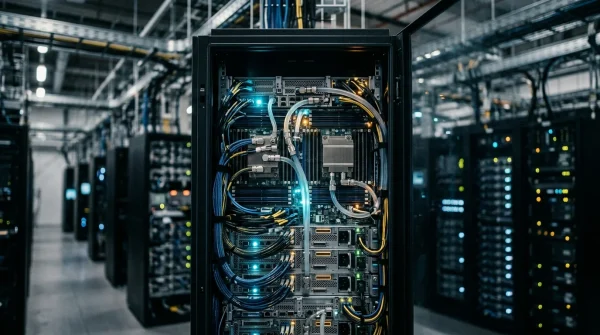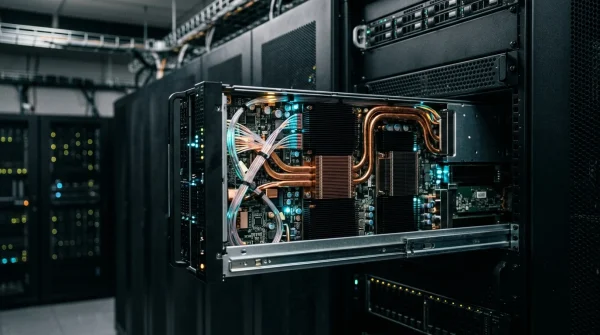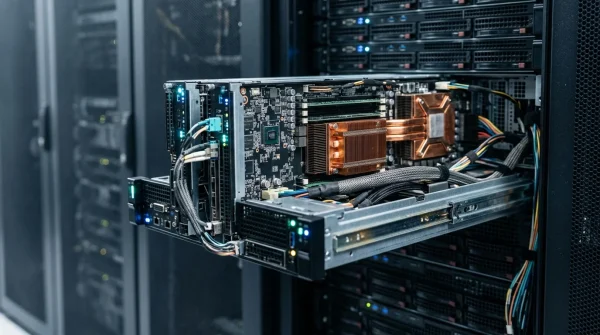
Microsoft has terminated its agreement to back a major artificial intelligence data center in Loughton, Essex, dealing a significant setback to one of the United Kingdom’s flagship computing infrastructure initiatives. According to Reuters and the BBC, which cited an initial report from Britain’s Telegraph newspaper on October 18, 2026, the US tech giant pulled out of the facility being developed by British cloud provider Nscale following repeated project delays and severe power supply constraints.
The Loughton facility was first announced in 2025, when Nscale pledged £2 billion to build and open what the UK government heralded as the country’s largest sovereign AI data center. Microsoft was slated to serve as the site’s anchor tenant, utilizing a planned supercomputer at the location. Only a month prior to the withdrawal, Microsoft had indicated that a portion of its broader $30 billion (£22 billion) UK investment commitment would go toward funding the Loughton supercomputer.
Grid Bottlenecks and Differing Reports on the Exit
At the core of the Essex site’s difficulties is a severe bottleneck in local electrical infrastructure. The data center was originally scheduled to receive its power supply by the end of 2026 ahead of a planned 2027 opening. However, national power grid officials recently informed Nscale that grid electricity for the facility is not expected to be available until the 2030s. Earlier doubts about the construction timeline had also surfaced in March, when reporting revealed the proposed location remained an operational scaffolding yard.
While the infrastructure delays are well-documented, accounts differ regarding Microsoft’s exact rationale for terminating the contract. According to AOL, Microsoft pulled out of the project specifically over concerns about power supplies after a month of scrutiny regarding the lengthy wait for grid capacity. Conversely, Reuters notes that the original Telegraph report did not specify why Microsoft withdrew from the deal, though it highlighted the multi-year power delays. Microsoft declined requests for comment from both Reuters and the BBC, leaving its internal strategic decision unconfirmed on the public record.
- U.S. Shoppers Grow Wary as Retailers Adopt AI-Assisted Pricing Tools
- Maryland Colleges Allow Individual Instructors to Set Classroom AI Rules
- Tesla’s Austin Cybercab Fleet Grows Eightfold to 300+ Vehicles With Dallas Next
- Reports Examine How Biosecurity Frameworks Must Adapt to Advanced AI
- AI Data Center Boom Strains Insurance Capacity as InsurTech Funding Concentrates
Commercial Impact on Nscale and UK AI Ambitions
The departure of Microsoft creates an immediate commercial hurdle for the Essex project, though perspectives on its ultimate viability vary. According to BBC reporting, Nscale insists it still plans to build the facility, which is expected to create 250 permanent jobs when it eventually opens. In statements provided to news outlets, an Nscale spokesperson emphasized that the company remains committed to both the Loughton site and the broader UK market, noting that engineers are currently exploring alternative power sources as well as additional British expansion sites.
At the same time, AOL reports that Microsoft was the only publicly announced customer for the Essex data center, leaving the project without an anchor tenant. The loss comes at a sensitive moment for Nscale, an Nvidia-backed “neocloud” provider that competes against infrastructure peers such as CoreWeave, Nebius, Crusoe, and Lambda. Nscale has scaled rapidly since its launch, growing from $100 million to more than $103 billion in total contracted value over two-and-a-half years.
The company, which counts former UK deputy prime minister Nick Clegg and former Meta chief operating officer Sheryl Sandberg among its board members, filed for an initial public offering in the United States in September 2026. According to Bloomberg, the Loughton withdrawal represents a setback as Nscale pursues its IPO ambitions, which carry a potential Wall Street valuation of $35 billion (£26 billion). Industry observers have raised concerns that neocloud providers taking on debt to finance rapid AI buildouts face growing financial vulnerabilities when power and construction delays stall contracted revenue.
For Prime Minister Keir Starmer’s administration, the delay complicates a national AI strategy that relied heavily on Nscale and CoreWeave to build domestic computing capacity. Official figures indicate that AI investments have helped Britain’s economy outperform weaker growth expectations in 2026 amid global business instability, making physical infrastructure bottlenecks a pressing economic issue.
What It Signals for European AI Infrastructure
Despite the high-profile nature of the Essex cancellation, the move does not represent a broader retreat by Microsoft from European AI infrastructure or a collapse of its partnership with Nscale. Both Microsoft and Anthropic remain listed as Nscale’s major expected customers in its US IPO prospectus.
According to the BBC, Nscale and Microsoft are actively working together on separate data center projects in Norway, Portugal, and the United States. Nscale characterized the Loughton delay as a localized, London-wide electrical grid issue that has no impact on its other active contracts, affirming that its relationship with Microsoft remains long-term.
For enterprise technology buyers and infrastructure planners, Microsoft’s exit underscores a fundamental shift in how hyperscalers allocate capital. Rather than waiting until the 2030s for local utility grids to catch up with AI power demands, major cloud providers are demonstrating a willingness to walk away from grid-constrained metropolitan hubs in favor of jurisdictions in Continental Europe, the Nordics, and North America where energy capacity can be deployed on schedule.
Frequently Asked Questions
Why did Microsoft pull out of the Loughton data center project?
Microsoft has declined to comment publicly on its specific internal reasoning. However, the withdrawal occurred shortly after national grid officials warned Nscale that electricity for the Essex site would not be available until the 2030s, years behind the original schedule.
Is the Essex AI data center canceled?
No. Despite losing its only publicly announced customer for the site, Nscale stated it remains committed to completing the £2 billion Loughton facility and is actively evaluating alternative power generation options to bypass the local grid bottleneck.
Are Microsoft and Nscale ending their partnership?
No. Nscale confirmed that the London-area grid problem does not affect its wider contractual relationship with Microsoft. The two companies continue to partner on active data center developments in Norway, Portugal, and the United States.
Sources
- bbc.com – Microsoft pulls out of Nscale’s Essex AI data centre – BBC
- Reuters – Microsoft pulls out of UK data center deal with Nscale, Telegraph reports
- AOL.com – Microsoft pulls out of AI datacentre project in Essex over power supply concerns – AOL
- Bloomberg – Microsoft Scraps UK Data Center Deal With Nscale, Telegraph Says