Rapid expansion of artificial intelligence infrastructure is forcing global insurers and reinsurers to overhaul traditional underwriting models, even as capital pours into AI-focused insurance technology startups. According to Beinsure, citing the second edition of Gallagher Re’s 2026 Global InsurTech Report, global InsurTech funding reached $2.44 billion in the second quarter of 2026, with AI-centered firms capturing 99.1% ($2.42 billion) of that capital. At the same time, the physical facilities powering the AI wave—hyperscale data centers packed with expensive, specialized computing hardware—are creating severe risk accumulation and pricing challenges across property, cargo, cyber, and business interruption lines.
For enterprise infrastructure operators and corporate risk managers, the surge in facility construction means navigating tighter underwriting scrutiny, complex coverage gaps, and multi-carrier syndication. While big tech companies invested more than $1 trillion into data centers and related infrastructure as AI entered a major growth phase in 2025, insurers are now grappling with how to price assets where a single campus can hold tens of billions of dollars in value and where an outage can trigger cascading losses across dependent digital platforms.
InsurTech Capital Concentrates in Mature AI Bets
Investment into insurance technology has rebounded in dollar terms during 2026, though the recovery is heavily skewed toward larger, later-stage transactions and artificial intelligence applications. According to Beinsure, quarterly InsurTech investment averaged $1.65 billion across the fourth quarter of 2025 and the first quarter of 2026, up from a longer-term quarterly average of $1.1 billion over the preceding two and a half years. In Q4 2025, global funding rose 66.8% quarter-over-quarter from $1.01 billion to $1.68 billion, led by property and casualty (P&C) funding jumping 90.5% to $1.31 billion and life and health (L&H) rising 14.9% to $361.52 million.
By the second quarter of 2026, total funding hit $2.44 billion, the highest quarterly total since 2022, with $1.67 billion driven by mega-rounds of at least $100 million. However, differing reports highlight a split between total capital deployed and overall deal volume. While Gallagher Re’s figures emphasize the Q2 surge in AI-directed funding, KPMG reports that global InsurTech investment totaled $3.7 billion across 124 deals in the first half of 2026, following $9.8 billion in total 2025 investment that was driven substantially by a small number of outsized transactions. If that first-half deal pace continues, KPMG notes that annual transaction volume would be the weakest since 2016.
That contraction in transaction count is putting pressure on younger companies. Only 81 InsurTech deals were completed in Q1 2026, even as the median deal size hit $10 million—nearly double the $5.3 million median recorded during 2021. According to Insurance Business, early-stage funding fell 51.8% quarter-over-quarter in Q2 2026 to $264.2 million, reflecting investor preference for mature startups over seed-stage ventures.
- AI Adoption Shifts Office Workloads Toward Oversight, Meetings, and Cognitive Strain
- World Leaders Warn AI Investment Boom Carries Global Economic Risks
- China Unveils First 100,000-Card Domestic AI Supercluster Hardware in Shenzhen
- Connecticut Officials Seek Regulatory Probe Into Utility AI Risks
- Trump Accounts Sell Micron Shares and Buy Up to $25.3 Million in Meta Stock
Why AI Data Centers Break Traditional Underwriting Models
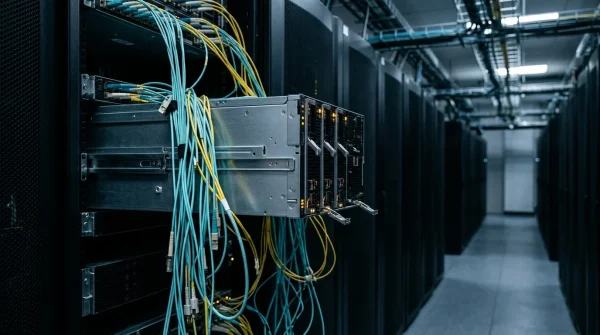
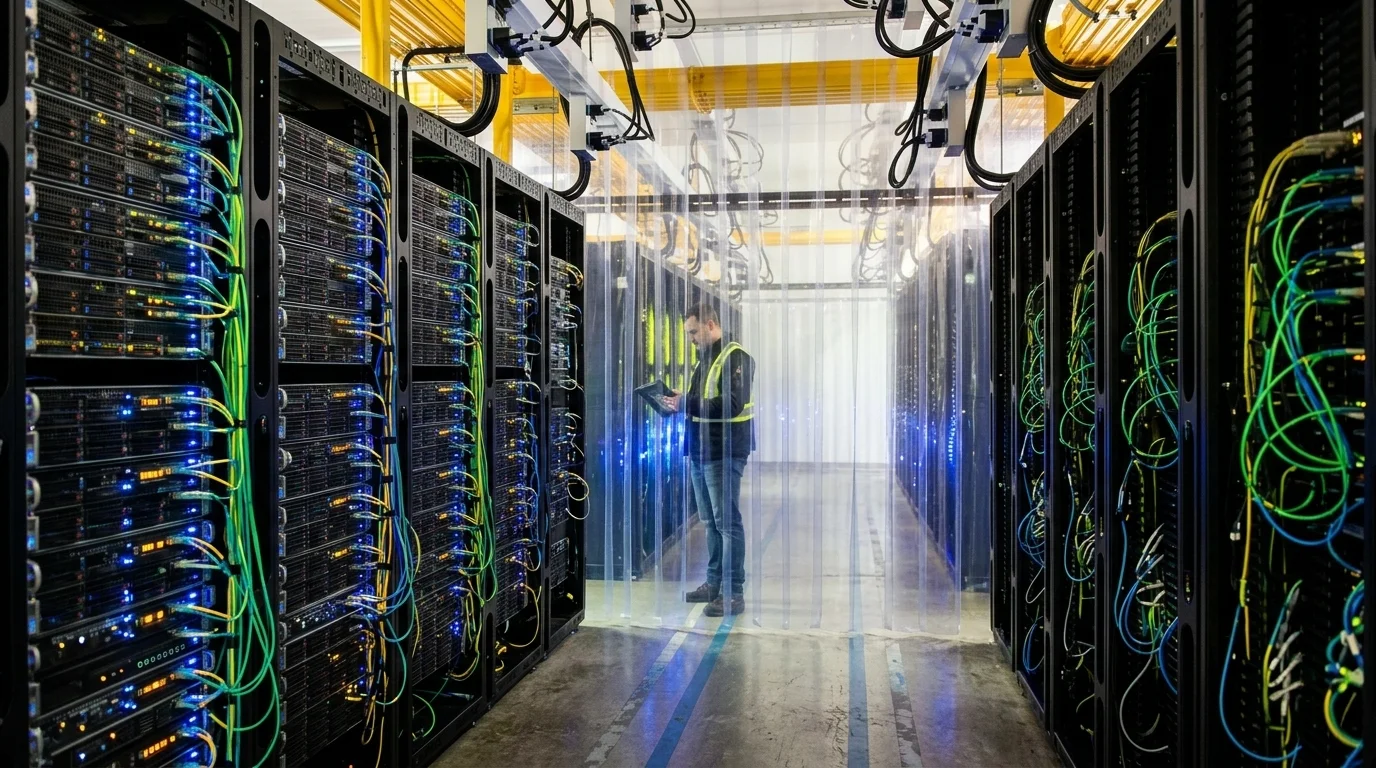
While software startups compete for venture capital, the physical build-out of AI infrastructure is testing the limits of commercial risk transfer. According to Beinsure, McKinsey estimates that global data center investment could reach $6.7 trillion by 2030, with roughly $5.2 trillion allocated specifically to infrastructure supporting AI workloads. Rather than functioning as standard commercial real estate, these facilities combine dense concentrations of advanced graphics processing units (GPUs), circuit boards, cooling systems, and high-voltage power equipment under one roof.
This concentration creates exposure across every phase of a facility’s lifecycle. During development, underwriters must evaluate construction and engineering risks. During hardware procurement, the shipment of specialized chips and servers creates high-value exposures for marine cargo and inland transit policies. Once operational, facilities face acute property, cyber, and environmental risks.
A primary concern for carriers is “insurance clash” and systemic contagion—scenarios where a single event triggers claims across multiple policy lines simultaneously. In an October 8 briefing reported by Insurance Business, S&P Global Ratings warned that some hyperscale data center campuses carry $20 billion to $30 billion in insurable value. Because these centers rely on interconnected power grids, cooling systems, contractors, and network infrastructure, an outage can halt operations without direct physical damage to the servers. According to Expansión, Uptime Institute data indicates that power supply interruption is the leading cause of data center failures, accounting for 45% of incidents.
Coverage Gaps, Loss Models, and Capacity Limits
The gap between soaring asset values and limited historical loss data is complicating how policies are structured and priced. While Beinsure frames the expansion as a growth opportunity for carriers that build specialized underwriting capabilities, The Seoul Economic Daily reports that insurers struggle to model losses beyond physical damage—specifically service interruptions, customer compensation, and the loss of electronic data or trained AI models. Because standard property policies frequently exclude the loss of electronic data, and because underwriters lack historical actuarial models for AI-scale outages, operators often face higher premiums or restrictive policy caps. In one early-operating-phase case noted by the publication, the maximum payout for building and equipment damage was capped at $450 million, a fraction of a hyperscale facility’s total value.
Physical site selection in the United States adds natural catastrophe accumulation to the equation. According to Captive.com, citing research from the Swiss Re Institute and Munich Re, approximately 40% of US data center capacity is located in regions with significant to very high tornado activity. Placing tens of billions of dollars of computing hardware in severe convective storm corridors requires multiple insurers and reinsurers to syndicate risk to protect their capital positions.
Estimates on the exact financial scale of this insurance market vary by methodology. The Seoul Economic Daily cites Swiss Re estimates placing current global data center insurance premiums at $10.6 billion, with projections reaching $24.2 billion by 2030. Separately, Captive.com reports that the Swiss Re Institute projects cumulative data center investment above $6 trillion by 2030, generating a $91 billion global insurance-premium opportunity by the end of the decade.
To address the immediate capacity bottleneck, brokers and syndicates are rolling out dedicated facilities. As reported by Expansión and Insurance Business, broker Marsh launched its Nimbus facility in June 2025 with up to $1 billion in construction coverage—later expanded to $2.7 billion including delay and interruption protection—and in August 2026 introduced Stratus, an insurance exchange bringing together 30 traditional and alternative capital providers to offer up to $10 billion in operational property capacity for US-domiciled digital infrastructure.
Frequently Asked Questions
How much insurance capacity is needed for a hyperscale AI data center?
According to S&P Global Ratings, large hyperscale data center campuses can hold between $20 billion and $30 billion in insurable value. Because no single carrier can absorb a loss of that magnitude, operators must rely on shared capacity syndicated across multiple insurers, reinsurers, and specialized exchanges like Marsh’s $10 billion Stratus facility.
Why do standard property policies fall short for AI facilities?
Standard property insurance primarily covers physical damage to buildings and hardware. However, AI data centers face severe financial exposure from non-physical outages—such as grid power failures or cooling interruptions—as well as the loss of electronic data, ruined training runs for AI models, and contingent business interruption for third-party customers relying on the facility’s compute capacity.
Where is InsurTech venture funding going in 2026?
Venture capital is heavily concentrated in mature startups building AI tools. In the second quarter of 2026, global InsurTech funding reached $2.44 billion, with 99.1% going to AI-focused companies and $1.67 billion concentrated in mega-rounds of $100 million or more, while early-stage funding dropped by more than half.
Sources
- Beinsure – 2026 Global InsurTech Funding Update and AI Data Center Insurance Risks
- Beinsure – AI data center boom creates new insurance risks as investment hits $6.7 tn
- KPMG – Pulse of Fintech H1’2026
- Insurance Business – Insurtech AI shakeout looms as start-ups crowd the market
- Insurance Business – Data centre losses could cross policies and portfolios, Asia-Pacific insurers warn
- The Seoul Economic Daily – AI data centers outgrow insurance as loss models lag
- Captive.com – Swiss Re, Munich Re warn of rising global risks
- Expansión – Data center insurance capacity and risk report