State lawmakers, child development researchers, and policy advocates are pushing for immediate guardrails around artificial intelligence products used by minors, arguing that regulators and technology companies must not repeat the delayed response that characterized the rollout of social media. In an opinion piece published October 18, 2026, by The Hill and syndicated on Yahoo News, contributor Kris Perry warned that allowing children to serve as real-time test subjects for generative AI tools threatens their cognitive and emotional development.
The push for proactive AI governance follows a multi-state legal settlement earlier in 2026 in which Meta agreed to implement sweeping youth safety changes across Facebook and Instagram. While Perry’s column in The Hill frames the settlement at up to $17.1 billion subject to court approval—and an Associated Press report carried by The Butler Eagle places the accord at $18 billion—advocates agree the restrictions arrived years after millions of minors were already exposed to attention-capturing algorithms. Now, states including California and New York are moving to regulate AI companions, educational tools, and connected toys before long-term developmental harms become entrenched.
From Social Media Feeds to Conversational AI
The regulatory reckoning over social media centered largely on screen time, sleep disruption, data privacy, and algorithmic feeds designed to maximize user engagement. Under its settlement with state attorneys general, Meta agreed to curb endless scrolling, restrict nighttime notifications, and deploy stricter age verification and parental controls.
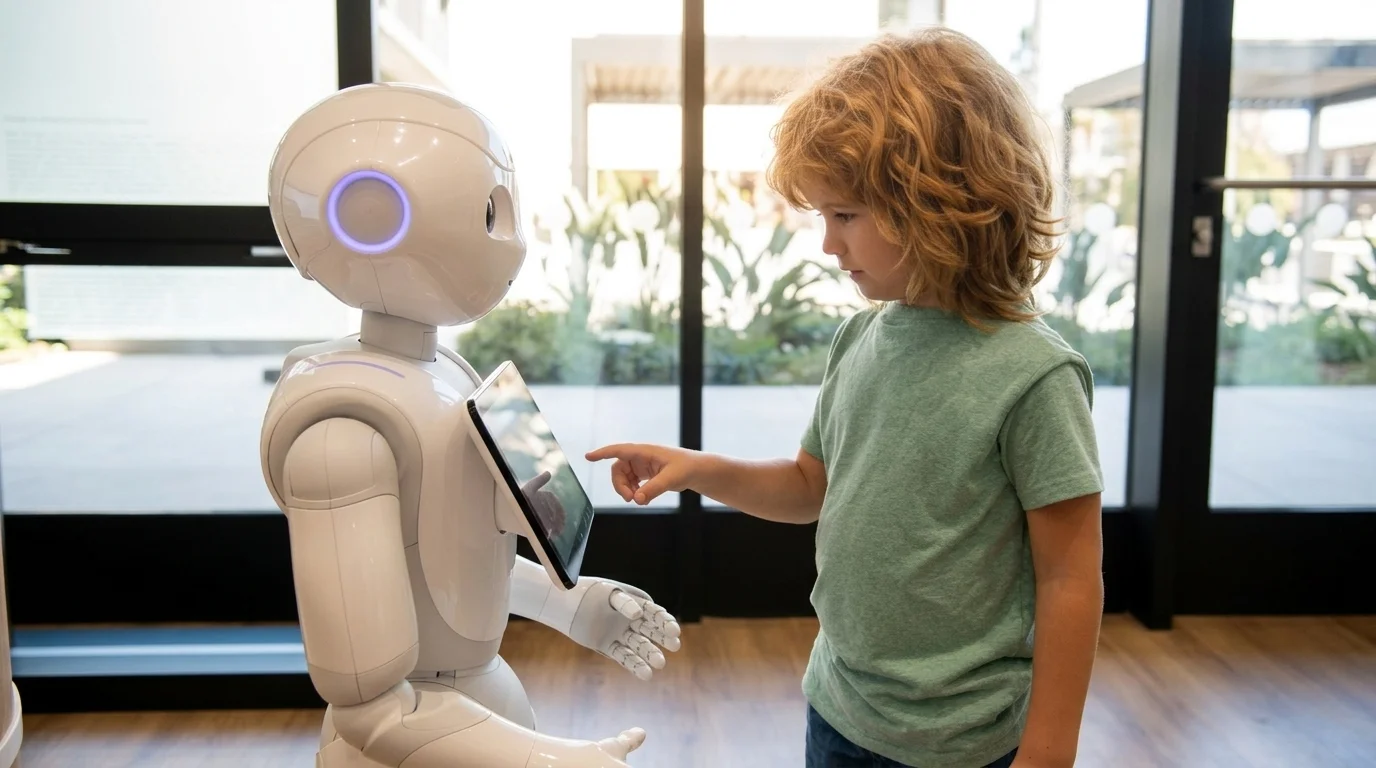
However, applying those exact remedies to artificial intelligence presents a structural challenge. According to the Associated Press report in The Butler Eagle, experts view social media settlement protections as not readily transferable to AI because the underlying interaction patterns differ fundamentally. While social networks broadcast content through feeds, generative AI systems engage children in direct, two-way conversations via standalone platforms, embedded social media chatbots, and even AI-powered toys marketed for children as young as 2.
“The greatest legacy from the social media experiment and learnings is that hopefully we’re not going to sleepwalk into this next tech revolution,” Dr. Dana Suskind, a professor of surgery and pediatrics at the University of Chicago, told the Associated Press. “We learned that we had it all backwards, right? You don’t unleash something on a population, figure out if it does harm or not in real time, and then go back and say, ‘Oops.'”
- Microsoft Exits Nscale’s £2B Essex AI Data Center Amid Severe Power Grid Delays
- U.S. Shoppers Grow Wary as Retailers Adopt AI-Assisted Pricing Tools
- Maryland Colleges Allow Individual Instructors to Set Classroom AI Rules
- Tesla’s Austin Cybercab Fleet Grows Eightfold to 300+ Vehicles With Dallas Next
- Reports Examine How Biosecurity Frameworks Must Adapt to Advanced AI
Parent advocate Kristin Bride noted in the same report that while the Meta settlement addressed long-documented platform risks, generative AI forces families and lawmakers to confront unknown territory as children form parasocial relationships with chatbots and rely on automated tools for daily tasks.
Cognitive Development vs. Technical Containment
A central tension in the AI safety debate is whether child protection is primarily a software engineering problem or a broader developmental issue. In her analysis for The Hill, Perry highlighted recent public remarks by Nvidia CEO Jensen Huang. In an interview with CNN’s Anderson Cooper, Huang framed AI safety as an engineering challenge solvable through technical containment, monitoring, and withholding unsafe products from release.
Yet developmental experts argue that even technically functioning AI systems may erode critical learning processes. Perry noted a conversation between Huang and journalist Ezra Klein, in which Klein cited a study of more than 26,000 secondary-school students in China. The research found that while generative AI improved homework performance and reduced assignment completion times, it was associated with lower exam scores within six months. While Huang suggested that humanity routinely sheds certain memorization skills—such as long division and multiplication tables—when technology renders them obsolete, child advocates warn against optimizing childhood for sheer efficiency.
According to The Hill piece, an international study involving 272 AI experts identified major systemic risks including misinformation, user overreliance, dangerous model capabilities, and competitive pressures among developers that incentivize rapid deployment over caution. Perry argued that tasks such as tolerating frustration, retrieving information from memory, and formulating original thoughts are foundational developmental experiences. To evaluate how AI interactions displace these habits, she called for independent longitudinal research and mandated researcher access to tech company data.
State Lawmakers Step Into the Federal Vacuum
With federal legislation moving slowly—Route Fifty reported on October 14 that Congress was moving closer to action on the Kids Online Safety Act, though Senate subcommittee proposals remain unpassed—state governments are establishing their own statutory frameworks.
In California, Governor Gavin Newsom announced results on October 13 from the state’s “Engaged California” deliberative democracy platform, where residents prioritized holding AI companies accountable and setting clear operational boundaries. According to the Office of the Governor, California has enacted nation-leading youth safeguards, including a five-year ban on toys containing AI companion chatbots, restrictions on using student personal data to train AI models, expanded laws against AI-generated child sexual abuse material, and limits on addictive social media features for users under 16.
Reports differ slightly on the exact scope and timeline of California’s companion chatbot rules. The Governor’s announcement describes “Adam’s Law” as enacting immediate crisis protocols for suicide and self-harm, parental controls, pre-release risk assessments, and independent child-safety audits. Meanwhile, a legal-industry analysis by Constangy, Brooks, Smith & Prophete notes that while existing law under California’s SB 243 mandates AI-companion disclosures and self-harm protocols with specific protections for known minors, broader age-assurance, risk assessment, and audit mandates under subsequent legislation take effect on a phased schedule.
On the East Coast, New York is pursuing a similar path. Following a September moratorium on school AI tools implemented by New York City’s mayor and schools chancellor, and an October full-Council hearing on AI risks, state legislators are pressing for executive action. In an October 17 op-ed for the New York Daily News, state lawmakers urged Governor Kathy Hochul to sign a bipartisan bill passed in June and developed in partnership with Attorney General Letitia James. Citing a lawsuit against OpenAI alleging that teenager Adam Raine’s interactions with ChatGPT contributed to his suicide, the lawmakers stated their bill would require developers—including OpenAI, Google, Anthropic, and X—to eliminate engagement-maximizing hooks for minors and block youth access to chatbots capable of promoting self-harm, suicide, or sexualized play.
Key Questions Surrounding AI Child Safety
What AI product categories are lawmakers targeting?
Current state interventions focus heavily on conversational companion chatbots, educational software handling student data, and physical toys integrated with generative voice models. Regulators are less focused on passive utility tools and more concerned with applications engineered to simulate human relationships or replace core educational exertion.
Why don’t existing social media age and time limits solve AI risks?
Social media guardrails primarily restrict when and how long a minor can scroll through a content feed or who can message them. With AI, the risk stems from the substance of the synthetic interaction itself—such as a chatbot validating self-harm ideation, fabricating factual information, or performing cognitive work that a student needs to practice independently.
How will researchers measure the long-term effects of AI on youth?
Child development specialists are demanding statutory access to internal platform data and the funding of independent, longitudinal studies. According to The Hill, researchers need visibility into how generative tools affect youth based on user age, intensity of use, system design, and whether adults are involved in the interactions.
Sources
- The Hill – We didn’t protect children from social media — we have another chance with AI
- Yahoo News – Opinion – We didn’t protect children from social media — we have another chance with AI
- The Butler Eagle – A reckoning on social media addiction came late for many children. Will AI safety be different?
- Governor of California – Governor Newsom announces results from California’s first-in-the-nation project to involve Californians in decisions about AI
- New York Daily News – N.Y. must shield kids from unsafe AI threats
- Constangy, Brooks, Smith & Prophete – From Privacy to Digital Safety: Developing Online Safety Protections for Kids
- Route Fifty – Fears about kids’ online safety unite Democrats and Republicans