A sharp November drizzle coats the windshield as streetlights hum to life across downtown. You squeeze your car into a tight parallel spot against the curb, cut the engine, and step onto cold asphalt, glancing at your watch. The aluminum parking kiosk looms thirty paces away under the yellow wash of a sodium bulb, its weathered face scarred by salt spray and city grime.
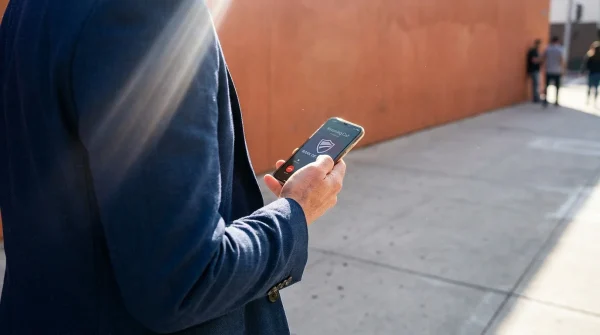
You pull your phone from a dry pocket, open the camera, and aim it at the black-and-white square framed beneath the words “Scan to Pay.” A clean yellow web link pops onto your glass display, promising a two-minute transaction so you can escape the rain. You tap through, type in your card numbers, and hurry toward the restaurant without looking back.
Forty-eight hours later, your banking app alerts you to recurring charges originating from an overseas shell corporation, followed by an empty checking balance. Nothing looked broken; the heavy steel pay station was securely bolted into five hundred pounds of solid municipal concrete. Yet that familiar machine just served as an unmonitored accomplice, passing your financial credentials directly to an offshore skimming syndicate.
The Counterfeit Skin on Public Infrastructure
We naturally assign safety to weight and permanence. When you interact with a cast-iron mailbox, an automated teller machine, or a municipal parking meter, your subconscious treats the physical object as an authorized institutional guardian. If the machine belongs to the city, the print stamped on its exterior must belong to the city as well.
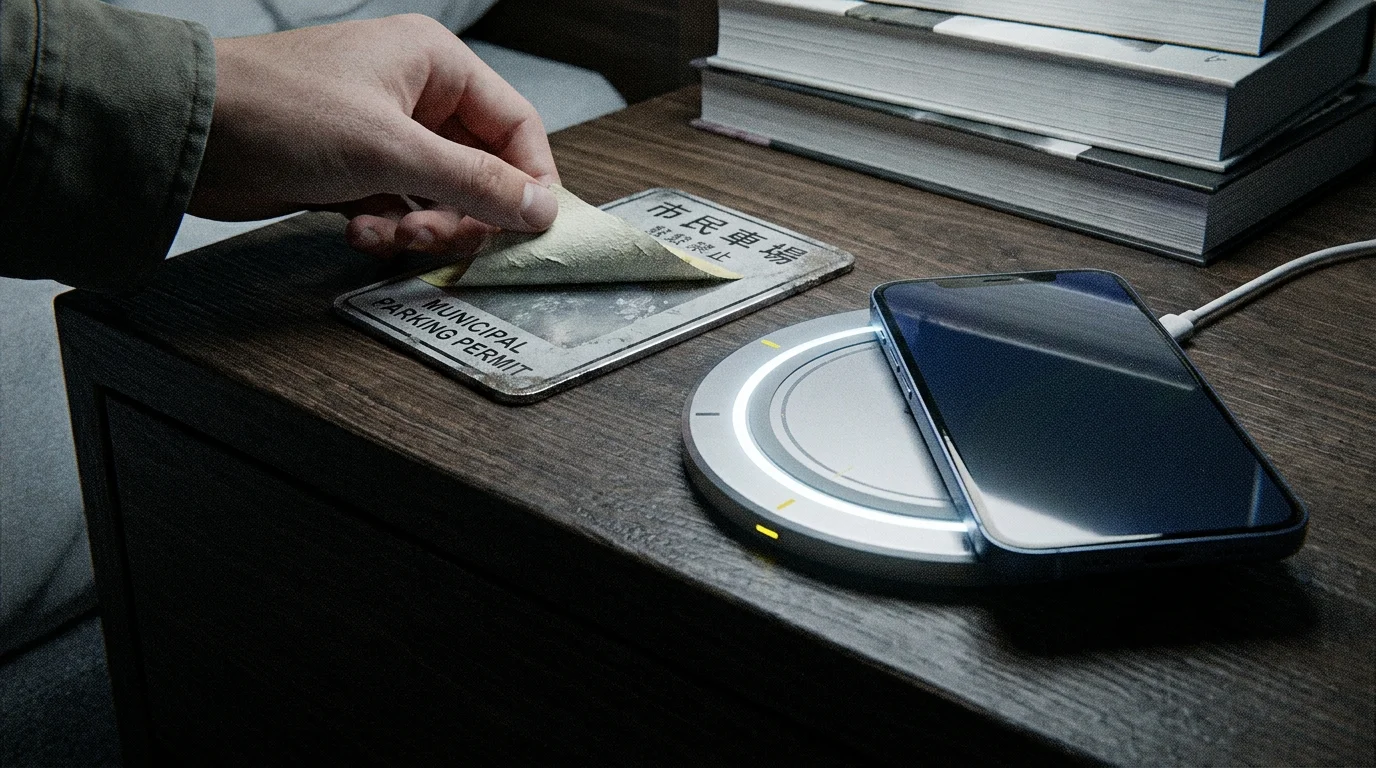
Criminal syndicates exploit that cognitive shortcut through an attack vector known as quishing, treating public infrastructure like an open billboard for fraudulent digital skin grafts. Rather than hacking the meter’s encrypted cellular modem or prying open its coin vault, **attackers paste microscopic counterfeit stickers** directly over legitimate municipal barcodes. The hardware remains completely uncompromised, yet your phone camera registers the malicious vinyl decal resting half a millimeter above the real aluminum faceplate.
The scam works because camera viewfinders process high-contrast squares indiscriminately, swallowing whatever pattern fills the frame. The fraudulent code whisks your browser away to an aggressive clone of the city parking portal, mimicking official department seals, fonts, and local municipal logos down to the exact hex codes. Once you submit your billing information, the site issues a convincing mock receipt, leaving you completely unaware that your credentials were harvested until your statement arrives.
Field Evidence: Marcus Vance and the Austin Sweeps
Marcus Vance, a 44-year-old parking enforcement supervisor and transit fraud investigator in Austin, Texas, spends his pre-dawn shifts scouring curbs with a jeweler’s loupe and a plastic scraper. In early spring, his division began recovering hundreds of UV-coated, weather-resistant decals applied directly over official city decals in high-turnover entertainment corridors. “These aren’t sloppy home-printer stickers cut out with kitchen shears,” Marcus explains while peeling a fresh counterfeit off an pay station near the convention center. “They are industrial-grade outdoor vinyl, precisely color-matched to the city’s signage, stamped with fake city seals, and applied with automotive-grade acrylic adhesive during 3:00 AM lulls.”
- Sengled smart bulbs drop offline after power cuts without persistent recovery modes
- Android Focus mode schedules silence disruptive workplace pings while routing emergency calls
- Sony PS5 vents accumulate thick lint blankets triggering deafening cooling fan whines
- Google Nest Mini microphones secretly store accidental room audio through default history
- Pixel Camera app settings ruin indoor portraits with noisy digital grain
Decal Diagnostics Across Real-World Scenarios
Different parking environments invite distinct styles of deceptive overlays. Recognizing the specific tactics used in each setting lets you spot the deception before your camera shutter clicks.
For the Rushed Commuter in Dense Commercial Zones
High-turnover street spaces near business districts rely heavily on rapid mobile payment to prevent traffic snarls. Scammers capitalize on your hurry by posting oversized overlays that obscure the original meter numbers, forcing you to use the fraudulent digital route rather than typing in the zone code manually.
In these zones, look for **abrupt shifts in surface sheen** under overhead streetlights. If the pay station has a matte, weathered powder-coat finish while the barcode area exhibits a glossy, light-catching reflection, you are looking at fresh vinyl applied over aged metal.
For the Weekend Traveler at Surface Lots and Transit Hubs
Unattended gravel lots near sports stadiums, concert halls, and airports are prime targets for large-format adhesive fraud. Here, thieves often slap complete, fake metal-look placards over whole instruction panels, featuring forged logos from reputable national aggregators.
These overlays frequently use URL shorteners or slightly misspelled municipal domains that look legitimate on a condensed mobile screen. Because out-of-town visitors do not know what the local parking authority’s official payment app looks like, **counterfeiters deploy generic payment prompts** designed to capture card numbers without validating vehicle license plates.
Mindful Application: The Fingernail Sweep and Domain Scrutiny
Protecting your accounts does not require avoiding street parking altogether. A deliberate, five-second tactile check stops physical barcode interception instantly.
Legitimate city signage is either printed directly onto the metal chassis, recessed beneath a transparent polycarbonate window, or fused as a permanent factory transfer. Counterfeit decals, no matter how professionally printed, must sit on top of the substrate.
- Run your fingernail across the perimeter: Scrape the outer margin of the code square with your thumb; if you feel a distinct ridge, catch an adhesive edge, or feel the sticker slide, step away.
- Inspect the backplate transparency: Authentic municipal stickers are applied to bare metal; if you spot remnants of an older, authentic pattern peeking out beneath an off-center sticker edge, it is a decoy.
- Audit the browser destination bar: Never approve a transaction if your browser lands on a non-governmental domain or prompts for unnecessary credentials like full billing addresses or Social Security digits.
- Bypass the camera entirely: Manually download the verified municipal parking application directly from the official platform store, or punch the physical zone number into the keypad on the kiosk itself.
Take two quiet seconds before unlocking your device. That brief pause allows your senses to spot physical irregularities that digital convenience trains us to ignore.
The Curbside Tactical Toolkit
Keep these specific operational benchmarks in mind whenever paying at an unattended terminal:
- Inspection Window: 5 seconds of physical and visual verification before aiming your lens.
- Tactile Border Threshold: Any lip protruding more than 0.1 millimeters above the surface plate warrants an immediate halt.
- Valid URL Pattern: Official municipal systems almost exclusively terminate in authorized dot-gov (.gov) or verified municipal transit agency domains.
- Fallback Tool: Manual entry of the 4-to-6 digit zone code directly into the city’s pre-installed application.
The Bigger Picture: Reclaiming the Physical Boundary
The modern city asks us to move fast, frictionless, and half-distracted through an environment saturated with automated signals. We tap, scan, and confirm without looking at the textures beneath our fingertips, handing our hard-earned security over to whichever glossy square presents itself first.
Slowing down to touch the surface of a machine isn’t an inconvenience; it is a grounding act of self-defense. When you use your senses to verify the real world, **you instantly disarm criminal schemes** that rely entirely on human speed and blind trust in automated hardware.
“Physical presence creates false trust; when a machine is bolted to the earth, we forget that its skin can be forged in seconds.”
| Key Point | Detail | Added Value for the Reader |
|---|---|---|
| Tactile Edge Detection | Running a fingernail along the code border to catch raised vinyl film. | Instantly identifies adhesive overlays without requiring technical tools. |
| Domain Architecture Check | Confirming verified dot-gov endpoints rather than redirected commercial URLs. | Prevents financial exposure even if the scam code is accidentally scanned. |
| Direct Zone Entry | Typing physical zone numbers directly into verified municipal apps. | Circumvents physical kiosk decals entirely, rendering quishing stickers useless. |
Frequently Asked Questions
Can scanning a malicious sticker compromise my phone without entering card information?
Simply viewing the web page rarely infects modern, patched mobile devices; financial theft occurs when the user inputs payment details into the spoofed payment portal.What should I do if I find a raised sticker on a meter?
Do not attempt to peel it off yourself, as this can alert nearby spotters; instead, snap a photo of the meter ID and report it immediately to local parking enforcement or the non-emergency police line.Are parking meters with integrated digital screens safe from this scam?
Digital screens that dynamically generate codes on an active glass display are significantly safer, though you should still verify that a physical clear sticker has not been placed over the protective casing.Why don’t cities remove these stickers faster?
Municipalities manage thousands of dispersed meters across miles of streets; scammers monitor enforcement routines and replace peeled stickers within hours of city sweeps.Will my credit card company cover charges from a fake parking meter?
Most major credit cards offer zero-liability fraud protections, but debit cards tied directly to checking accounts carry much higher exposure and slower recovery timelines.