A delivery van door slams shut somewhere down your street. That dull, metallic thud has become the ambient soundtrack of American afternoons, usually followed seconds later by the sharp buzz of your phone against the granite counter. You wipe wet hands on a dish towel, glance at the lock screen, and read the prompt: USPS: Your package cannot be delivered due to an incomplete street address. Please update your information within 12 hours to avoid return to sender.
Your pulse skips a beat. You might be waiting on replacement air filters, a birthday gift for your sister, or perhaps nothing at all. Yet the sheer volume of daily parcels flowing through our lives creates an odd psychological vulnerability—a quiet fear of missing out on something already paid for. The screen glows under your thumb, practically begging for a quick tap on the truncated web link nestled in the text.
That single impulse is precisely where the trap snaps shut. Modern parcel scams no longer arrive dressed as poorly phrased emails from distant monarchs. They arrive disguised as mundane municipal logistics, engineered to catch you mid-stride between making coffee and answering work emails.
Beneath that innocent link lies an elaborate harvest machine designed to siphon your checking account dry before the delivery van even turns the corner. Understanding how these predators exploit our logistical dependence is the first step toward shutting them out of your pocket forever.
The Administrative Illusion: Why Urgency Blinds Digital Reflexes
Phishing via text message—commonly known as smishing—relies on a mechanical sleight of hand. When a package notification slips into your standard SMS stream, your brain processes it through the lens of utility rather than threat. It feels like an errand, not an ambush.
Scammers understand that friction is their greatest adversary, so they lower your defenses by demanding pennies instead of thousands. The deceptive landing page looks indistinguishable from the official postal service portal, complete with familiar blue-and-white eagle insignia, tracking progress bars, and formal bureaucratic phrasing. The form asks for your updated street name, apartment number, and a nominal redelivery fee—typically forty-five cents to a dollar and twenty cents.
Because the amount seems trivial, your critical defenses drop. You enter your debit or credit card number without a second thought. But that payment field is not a cash register; it is an open microphone. The moment you press confirm, automated credential-scraping bots ingest your card number, billing address, security code, and phone number, immediately testing them against banking portals and mobile wallets.
In many cases, the site triggers a simulated loading spinner while behind the scenes, their automated script initiates a fraudulent wire transfer or high-value purchase. When your actual bank texts you a real one-time authorization code, the fraudulent portal simultaneously asks you to input your verification passkey to confirm your parcel address. You hand them the digital keys to your vault while thinking you just paid for a parcel reroute.
- Samsung One UI toggles cut background network searching to preserve battery bars
- iPhone 15 cameras trap muddy grain under raw 48MP shooting modes
- iPhone App Switcher force-closes drain battery bars through constant memory reloads
- Samsung Galaxy S24 cellular switching drains battery bars along daily commutes
- Blink Outdoor cameras freeze motion sensors once subscription cloud tiers expire
Sarah Jennings, a 42-year-old middle school science teacher from Henrico County, Virginia, experienced this precise sequence during a quiet Tuesday prep period. Expecting a box of microscope slides for her eighth-grade classroom, she clicked a redelivery link that arrived from a local area code. Within forty minutes of typing her debit details to pay a sixty-cent address correction fee, her bank account was drained of seventeen hundred dollars through four rapid-fire peer-to-peer transfers.
Anatomy of the Trap: From Garbled Domains to Ghost Senders
To defend your accounts, you have to look at the anatomy of these fraudulent alerts with mechanical precision. Attackers use three primary architectural tricks to bypass built-in safety filters and dupe carrier firewalls.
The first telltale mark lives in the web address itself. The United States Postal Service operates strictly on usps.com. Threat actors cannot buy that real estate, so they register deceptive lookalike domains using strange top-level extensions or hyphenated suffixes, such as usps-post-redirection-notice.top or package-tracking-support.icu. When viewed on a smartphone, the browser address bar frequently truncates these lengthy strings, displaying only the first few letters and hiding the suspicious suffix.
The second trick involves sender origin masking. Real delivery notifications from national carriers arrive through five-digit or six-digit SMS short codes, such as 28777 (which spells 2USPS). Fraudulent alerts almost always arrive from full ten-digit personal telephone numbers, international country codes like +63 or +44, or anonymous email addresses masquerading as iMessage senders. If your shipping alert originates from an Outlook, Hotmail, or Gmail address, it is an active attack vector.
The third trick is artificial urgency. Legitimate postal carriers do not threaten to return parcels within an arbitrary twelve-hour countdown timer sent via unsolicited SMS. Packages with missing information are held at your local post office branch, flagged through physical slips left in your physical mailbox, or updated on your existing, pre-authenticated account dashboard.
The Two-Minute Smartphone Lockdown
You do not need to abandon mobile ordering or live in paranoid isolation to keep your financial life intact. Modern mobile operating systems contain deeply buried routing toggles that silently sever these fraudulent SMS channels before they ever vibrate against your palm.
Take sixty seconds right now to alter how your phone handles incoming messages from numbers outside your known contacts. This single configuration change turns off the constant barrage of predatory carrier texts.
For iPhone Users (iOS):
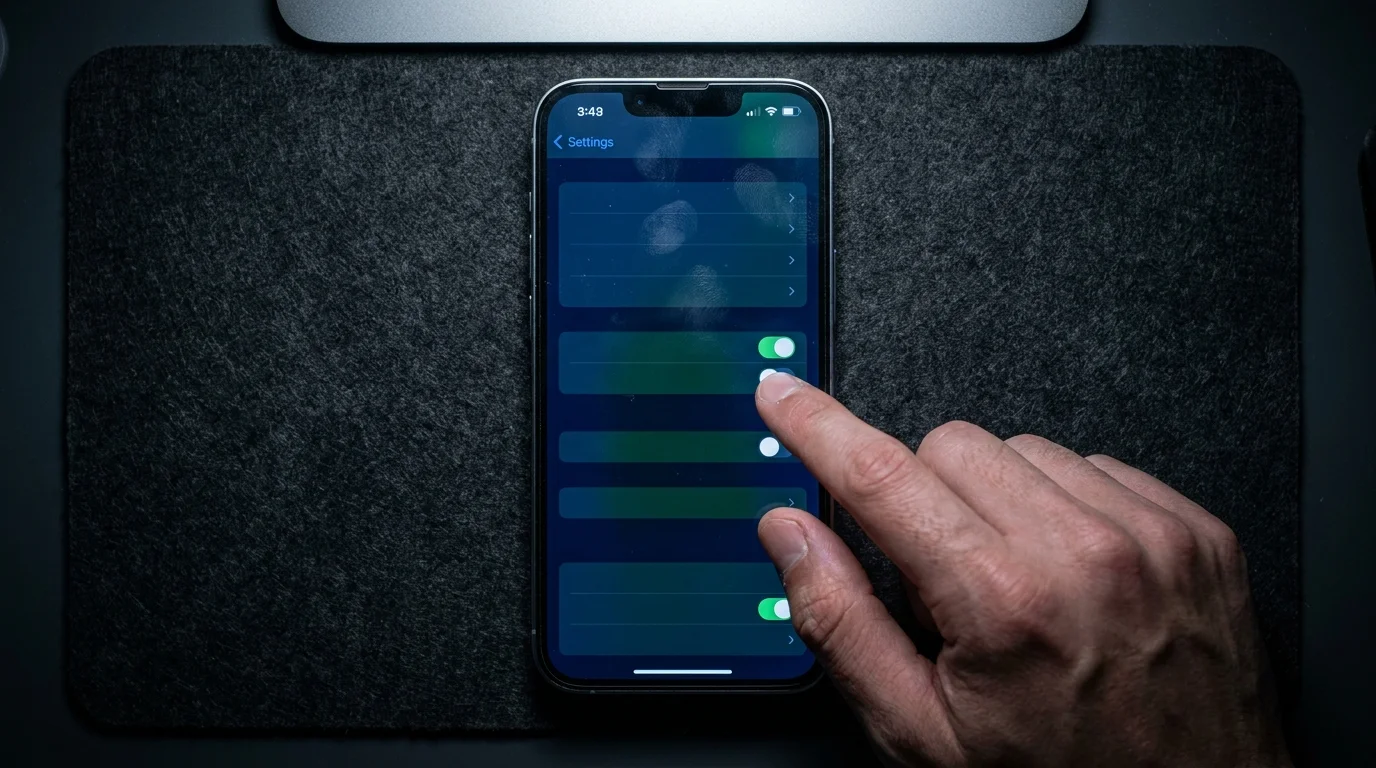
- Open your Settings app and scroll down to select Messages.
- Scroll down to the Message Filtering section.
- Switch the toggle next to Filter Unknown Senders to the active green position.
- This action creates a separate tab inside your Messages app. Texts from anyone not in your address book arrive silently in an alternate inbox without ringing your phone or cluttering your primary lock screen.
For Android Users (Google Messages):
- Open the Messages app on your device.
- Tap your profile avatar in the upper right-hand corner and choose Messages settings.
- Scroll to the bottom and select Spam protection.
- Ensure that Enable spam protection is turned strictly on. Google’s real-time pattern detection automatically quarantines suspicious bulk-sent delivery links into your spam folder.
To finish fortifying your workflow, store the official national shipping short codes directly in your phone’s address book. Label them clearly so that when an authentic message arrives, your phone immediately verifies its sender identity against your saved address book.
The Tactical Verification Protocol
Whenever an alert appears claiming an issue with a box or letter, resist the temptation to touch the embedded hyperlink. Treat unsolicited SMS links like uninspected wires dangling from an open electrical panel. Instead, use this three-step tactical routine:
First, ignore the text and open an independent web browser window. Navigate directly to the carrier’s primary home portal by typing the address manually. Locate their public tracking utility and paste the alphanumeric shipment code directly into their verified search bar.
Second, remember the twenty-two digit standard. Authentic domestic package tracking numbers used by the postal service generally consist of twenty to twenty-two numbers starting with a 9 (for example, 9400 1000 0000 0000 0000 00). Many fraudulent texts deliberately invent nonsensical five-character codes or leave the code out entirely, forcing you to click their link to see what is missing.
Third, establish an authentic digital trail through the official USPS Informed Delivery portal. This free, secure service sends you a single morning digest email showing black-and-white digital scans of incoming envelope mail and tracking numbers for incoming boxes. When you rely on an authenticated morning dashboard rather than reactive text notifications, rogue messages lose their psychological grip.
Reclaiming the Boundary of Your Pocket Screen
Our phones were supposed to make daily logistics invisible and effortless. Instead, they have opened tiny backdoor entry points into our personal finances, turning our natural attentiveness into a weapon used against us.
The modern scam economy does not win by cracking complex military-grade encryption; it wins by catching tired people when their attention is scattered. When you learn to spot the slight irregularities in a URL, shut down unknown senders at the operating system level, and verify parcel movements through your own direct channels, you shift the balance of power back where it belongs.
Peace of mind rarely requires complex cybersecurity hardware. It simply takes a brief pause, a refusal to be rushed, and the quiet satisfaction of deleting a bad link before it ever touches your life.
Real logistics carriers track packages through authenticated dashboards; scammers track your attention through manufactured panic.
| Key Point | Detail | Added Value for the Reader |
|---|---|---|
| Sender Identification | Authentic alerts use 5-digit registered short codes (e.g., 28777). Scams use 10-digit phone numbers or international emails. | Allows instant triage before reading a single word of the incoming message. |
| Web Address Structure | Official links end purely in .com/ (usps.com). Scams use complex subdomains ending in .top, .icu, or .link. | Prevents card credential entry on spoofed lookalike payment pages. |
| Payment Requests | Carriers never collect redelivery fees via cold text messages. Packages are held locally free of charge. | Guarantees that any payment demand sent via SMS is fraudulent by definition. |
| OS Inbox Filtering | Native toggles in iOS and Android sort unknown senders into a silent background partition. | Cuts notification fatigue and stops deceptive urgency prompts from waking your lock screen. |
Frequently Asked Questions
What should I do if I already clicked the link and entered my card details?
Immediately contact the financial institution tied to that card to freeze the account and request a replacement with a new number. Check your banking app for pending unauthorized charges and change your online banking login credentials from a separate, secure device.Does the real Postal Service ever send text messages about packages?
Yes, but exclusively if you have manually registered for SMS tracking updates on a specific tracking number through usps.com, or if you actively use Informed Delivery. They do not send unsolicited cold texts about surprise packages with missing street details.Why do these texts frequently come from Hotmail or Gmail accounts?
Attackers use automated cloud scripts to push spam through Apple iMessage or RCS pathways using disposable free webmail accounts. Because iMessage transmits over data rather than cellular voice networks, it allows global bad actors to bypass standard carrier SMS spam filtering.Can simply tapping the link infect my iPhone or Android with malware?
While mobile operating systems isolate browser processes to prevent immediate drive-by infections, visiting the link exposes your device type, IP address, and location. The primary danger remains the deceptive input forms that trick you into handing over credentials voluntarily.How can I report these fake delivery alerts to the authorities?
Forward the message directly to 7726 (spells SPAM on your keypad), which alerts your mobile carrier’s fraud investigation unit. You can also take a screenshot and forward it to [email protected] to assist the United States Postal Inspection Service in taking down spoofed domains.