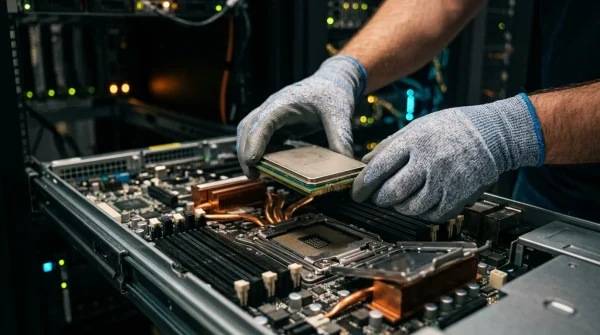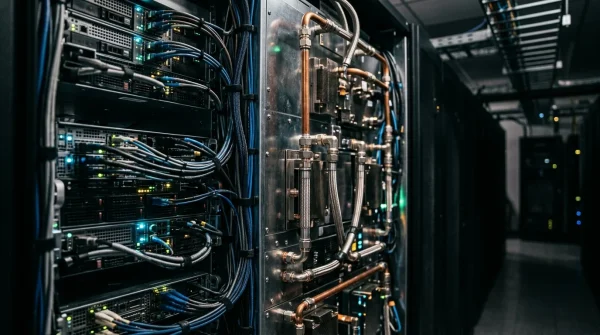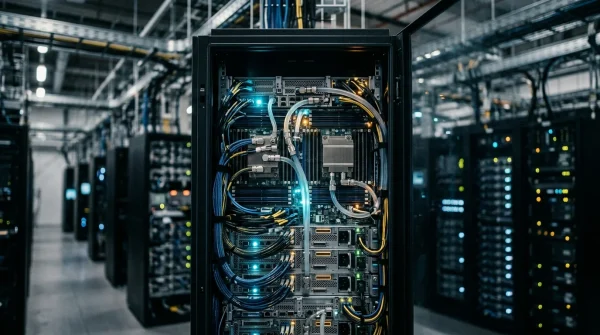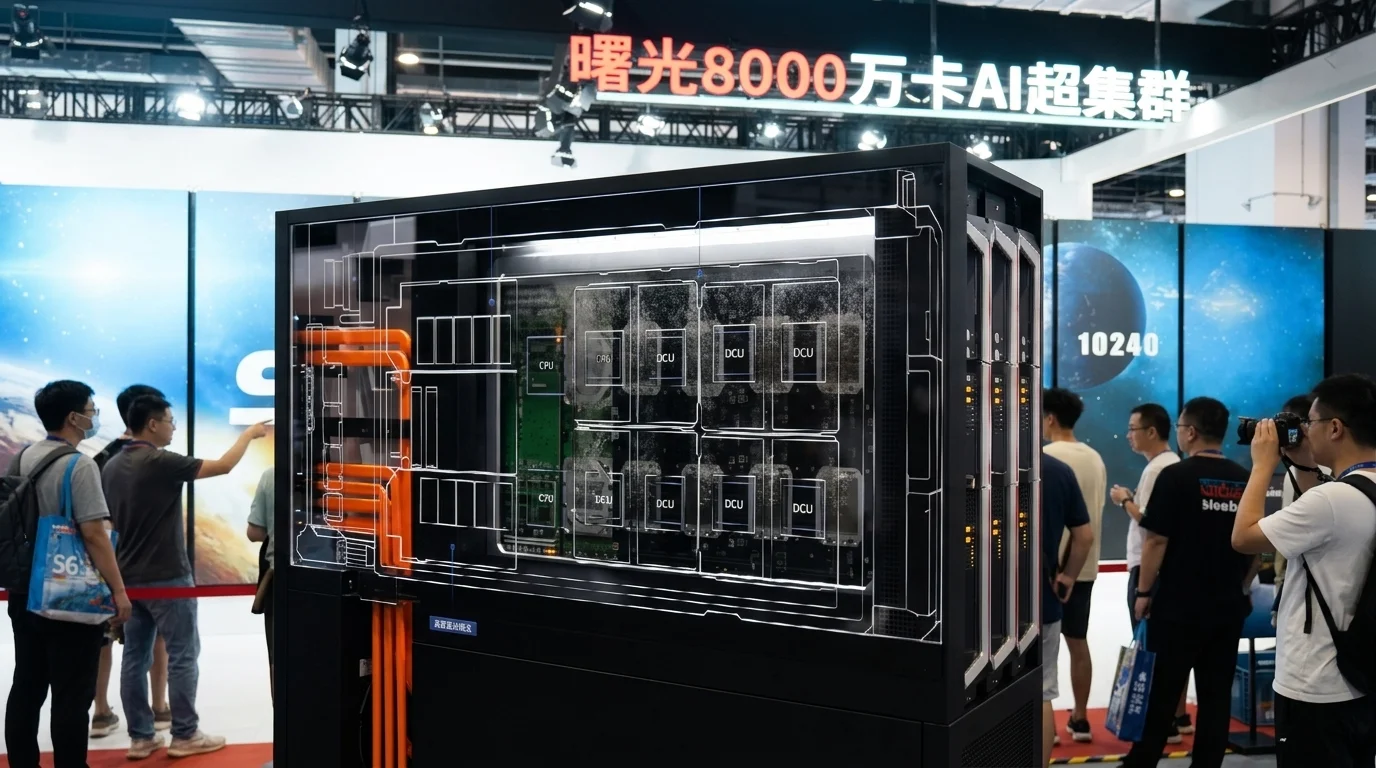
China publicly unveiled the physical hardware of its first domestically developed 100,000-card artificial intelligence supercluster on October 18, 2026, during the 2026 China National Annual Conference on High Performance Computing in Shenzhen. According to reporting by the Global Times and CCTV.com, the presentation included 10 frontier research application results designed to demonstrate the large-scale computing system’s capabilities across scientific and industrial domains.
The hardware marks a milestone in China’s push for self-reliant high-performance computing infrastructure. Built to link more than 100,000 homegrown AI computing cards via high-speed interconnects, the supercluster is engineered to merge traditional scientific supercomputing with large-scale AI model training and inference on a single hardware base.
Bridging Supercomputing and AI Architecture
In coverage of the rollout, Chinese media outlets use slightly different English naming conventions for the system. While the Global Times refers to the hardware as the “Sugon 8000,” CGTN identifies the infrastructure as the “Dawning 8000 (Dengfeng).” Chinese-language reporting relayed by Sina Finance uses the Chinese name “曙光 8000” (which translates to both Sugon and Dawning), though the reports do not specify whether “Dengfeng” serves as a project label or an alternate designation.
Beyond the sheer number of interconnected accelerator cards, the primary engineering focus of the 8000-series cluster is its unified computing architecture. Historically, traditional supercomputing and modern AI computing have operated on separate tracks with distinct hardware optimizations. Supercomputing relies on high-precision calculations to model the underlying laws of the physical world, delivering accurate physical simulations at the cost of longer processing times.
Conversely, AI computing rapidly identifies patterns and rules from vast datasets, excelling at speed and candidate screening. Because AI models identify statistical patterns without necessarily calculating physical laws, they remain prone to generating false or misleading outputs, commonly known as hallucinations.
- Connecticut Officials Seek Regulatory Probe Into Utility AI Risks
- Trump Accounts Sell Micron Shares and Buy Up to $25.3 Million in Meta Stock
- Waymo Plans First Canadian Robotaxi Service in Toronto by 2028
- U.S. Retailers Face Backlash Over AI Pricing Tools as States Enact New Rules
- Riot Games Overhauls Valorant Esports With 15 Host Cities and 2027 Manila Pacific Cup
According to CGTN, the domestic supercluster addresses this divide by creating a closed scientific computing loop on a single platform. First, the supercomputing component conducts virtual physical experiments to generate reliable simulation data. Next, AI models train on that data to rapidly screen vast numbers of potential solutions down to a smaller subset of candidates. Finally, the high-precision supercomputing layer verifies those candidates through physical simulation, filtering out AI hallucinations.
Deployment Timeline and Research Applications
While the physical machine made its conference debut in Shenzhen on October 18, components and exhibitions of the technology have appeared throughout 2026. Photo records from the Global Times and CGTN note that displays of the supercluster were shown at the 2026 World Artificial Intelligence Conference (WAIC) in Shanghai in July 2026.
Reports also offer differing descriptions of the system’s completion and operational dates. CGTN states that the supercluster was completed earlier in 2026, while a report from Sina Finance (citing CCTV News and IT Home) notes that the 100,000-card cluster was officially declared operational in August 2026. The available reporting does not clarify whether those dates represent separate milestones for hardware construction and formal operational launch.
At the Shenzhen conference, organizers presented 10 frontier research application results generated on the platform. Although the state media summaries do not enumerate all 10 specific projects or their participating institutions, the Global Times reports that the showcased work spans commercial aerospace, meteorology and oceanography, agricultural breeding, energy exploration, and engineering research and development.
In terms of broader software adoption, reports provide slightly different metrics on the system’s workload. According to the Global Times, more than 300 key applications across over 30 research and industrial fields have been optimized for the cluster, with more than 20 applications actively running across the full system. Meanwhile, Sina Finance reports that the cluster supports more than 300 computing tasks across 26 fields, specifically highlighting new materials, innovative drug discovery, and artificial intelligence. The slight variance between the two accounts likely stems from different ways of categorizing software applications versus active computing tasks.
Projected Capabilities vs. Verified Benchmarks
Much of the promotional framing surrounding the Shenzhen unveiling focuses on the theoretical scale of the hardware. Both CGTN and CCTV.com state that the cluster’s computing power could support the creation of a digital twin of the human brain or simulate the evolution of a universe spanning tens of billions of light-years. Similarly, Sina Finance relays claims that one second of peak computing on the cluster equals 200 years of continuous calculation by the entire human population.
For industry analysts and hardware engineers, it is important to separate those illustrative projections from completed work. The descriptions of brain digital twins and cosmic evolution are framed as potential capabilities the infrastructure could support in the future, rather than completed simulations. Furthermore, the state media announcements have not been accompanied by independent third-party benchmark results.
Unanswered Technical Questions
While linking 100,000 domestic accelerator cards represents a significant systems-engineering effort, key hardware details remain undisclosed in the public reporting:
What are the exact hardware and power specifications?
The official reports do not disclose the specific accelerator card models, memory capacity, interconnect topology, data-center footprint, or total power consumption required to run the 100,000-card installation.
What independent benchmarks have been published?
No standardized, third-party metrics—such as sustained floating-point operations per second (FLOPS), large-model training throughput, scaling efficiency across all 100,000 nodes, or hardware uptime—have been released alongside the conference announcements.
What does “fully domestic” cover in the supply chain?
While the cluster is described as China’s first fully homegrown 100,000-card system, the reports do not break down the exact domestic sourcing across the silicon fabrication, high-speed networking switches, memory modules, and underlying software stack.
Sources
- Global Times – China unveils first 100,000-card AI supercluster hardware, showcases 10 frontier research applications
- CGTN – Supercomputing plus AI: How China’s first homegrown 100,000-card supercluster could simulate a universe
- Sina Finance – “能装一个宇宙”:我国首个十万卡 AI 超集群真机亮相
- CCTV.com – [朝闻天下] ‘全’释硬科技 我国首个十万卡AI超集群‘能装一个宇宙’