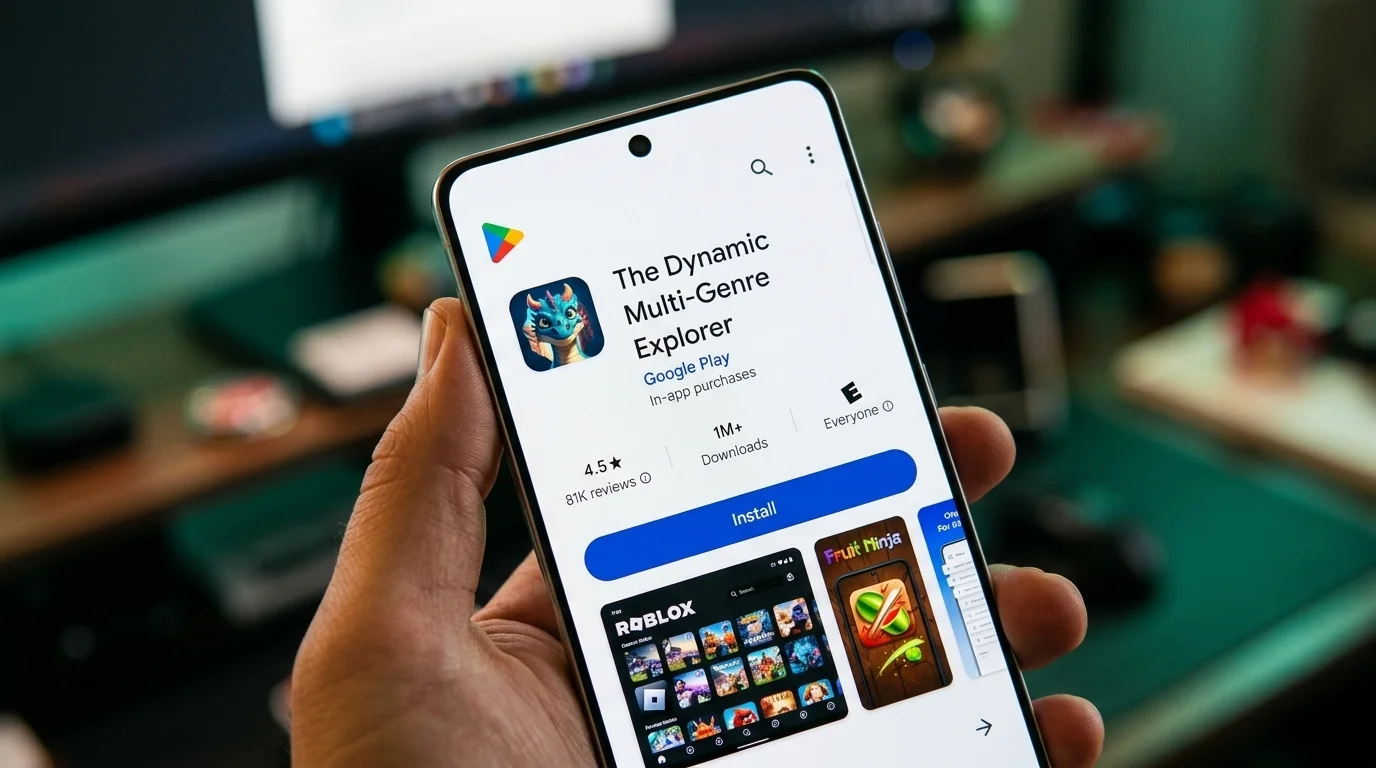
Google Play is rolling out a wave of AI-powered discovery tools, custom app creation features, and social gaming updates this October, yet a persistent storefront limitation continues to frustrate Android users: opaque in-app purchase disclosures. While Google’s latest platform updates introduce side-by-side app comparisons via Ask Play and personalized recommendations through Game Finder, consumer reports highlight that Play Store listings still aggregate in-app purchases into broad price ranges rather than itemizing individual subscriptions, upgrades, or digital goods before download.
There is a notable disconnect between Google’s official feature announcements and consumer concerns regarding storefront pricing clarity. According to Google and the Android Developers Blog in announcements published on October 13, 2026, the company’s fall update centers on AI curation, user-generated apps, and developer engagement tools, making no mention of any newly introduced policy regarding in-app price range displays. Meanwhile, an October 18, 2026 consumer report from How-To Geek spotlights the ongoing friction caused by existing Play Store disclosures, where prospective downloaders are only shown a single price spectrum at the bottom of an app’s information page without a breakdown of what specific features or subscriptions cost.
The Price Transparency Gap on Android
When evaluating a free-to-download application or game on the Google Play Store, users rely on sections like “About this game/app,” “Data safety,” and “Ratings and reviews” to understand what the software entails. However, determining the true cost of using an app beyond its initial download remains difficult. As documented by How-To Geek and summarized by Oduu, Google Play’s “In-app purchases” disclosure—tucked near the bottom of the “About” section—merely presents a minimum-to-maximum price range with no itemized catalog.
Because Google does not require developers to list individual add-on prices on the storefront, users cannot easily tell whether the top end of a displayed price range represents an optional bundle of in-game currency, a one-time pro upgrade, or a recurring annual subscription. Developers rarely volunteer detailed pricing structures in their text descriptions. Even when users turn to Google’s Gemini-powered “Ask Play about this app” tool to query monetization details, How-To Geek notes that the chatbot provides limited details about available purchases and their exact prices, though the platform will soon feature usage-based billing options for developers.
- HKU and Global Cybersecurity Alliance Launch Joint AI Security Research Center
- South Korean Reports Highlight AI Infrastructure Risks and Banking Security Errors
- Anthropic Commits 5% of Shares to New Public Benefit Fund
- Coursera Report Shows AI Course Enrollments Surging in Ghana, Nigeria, and South Africa
- SpaceX Targets Monday Morning Launch for Bandwagon-5 Rideshare Mission
By contrast, Apple’s App Store mandates that developers list available in-app purchases and their corresponding prices directly on an app’s store page. If an iOS app offers no additional paid items, nothing is listed, giving consumers an immediate signal that an app is entirely free. Because of this disparity, some Android users actively cross-reference multi-platform apps on the Apple App Store before installing them on an Android device. While iOS and Android pricing are not always identical and some apps are exclusive to a single operating system, Apple’s itemized disclosures offer a clearer preview of whether a service relies on microtransactions or tiered subscriptions. Users can also check developer websites—some of which utilize App-to-Web (A2W) billing arrangements connected to Google Play’s payment ecosystem—or scan user reviews for pricing mentions before committing to an install.
AI-Driven Discovery and Custom App Creation
While itemized pricing remains absent from store listings, Google is heavily investing in how users find, compare, and build software. In its October 13 update, Google announced that users aged 18 and over in select markets, including the United States, can now use Google AI Studio to “vibe code” custom Android applications and launch them directly onto their personal devices through Google Play. This functionality requires only a standard Google account rather than a registered developer account, keeping personal projects private and separate from the public catalog. In the coming months, Google plans to let users share these custom builds with friends and family, alongside a pathway to graduate to a professional developer account subject to standard Trust & Safety reviews.
For public catalog browsing, Google is expanding its AI discovery suite. According to The Verge, the Ask Play assistant can now generate side-by-side app comparisons directly within search results, synthesizing user feedback and functional differences, while app recommendations are also integrating into Gemini Live. According to GamesIndustry.biz, Google reported that its “Play in Gemini” integration has generated more than 6 million app installs since launching two months prior and will expand to all Gemini users soon.
On the gaming front, Google introduced “Game Finder” (alongside “Gamer DNA” profiling), an AI tool that recommends titles based on gameplay habits, personal preferences, and community reviews, while explaining why each game was selected. While some coverage describes Game Finder as immediately available, the Android Developers Blog specifies that the feature began rolling out on October 13 to English-language users in the US, meaning access is expanding gradually before reaching other global markets. Google is also tailoring Play Store interfaces for cars with Google built-in, immersive 3D XR environments, and Googlebook large-screen devices, alongside new Sports Topic Pages covering the Premier League, Champions League, La Liga, Liga MX, and Major League Soccer.
Social Gaming Features and Developer Incentives
Beyond search and discovery, Google Play’s October rollout targets player retention and developer monetization across an ecosystem that, according to GamesIndustry.biz and the Android Developers Blog, now sees more than 250 million monthly active users on its personalized “You” tab, over 700 million gamer profiles, and more than 2 billion players connected via Play Games Sidekick (with Sidekick itself reaching over 285 million users).
New social and cross-platform gaming capabilities include:
- Sprints: 48-hour competitive gaming challenges that match small groups of players (reported as 2 to 5 players) of similar skill levels.
- Sidekick Playbacks: A tool allowing users to capture 30-second gameplay clips via the Sidekick overlay and share them with friends without exiting the active game.
- Expanded Quests and PC Gaming: Quests will begin awarding in-game items such as skins and boosters alongside standard Play Points. Google is also introducing Game Playlists, bringing mobile Game Trials to PC, and expanding its PC catalog with titles like Dave the Diver and Warhammer 40,000: Boltgun featuring cross-platform cloud saves.
To encourage studios to adopt these tools—such as Game Stats for daily Streaks and Play Games Rewards—Google is offering lower service fees through its “Apps Experience” and “Level Up” quality programs. Available now in the US, UK, EEA, Japan, and Australia, with South Korea scheduled to join before the end of the year, these programs have already yielded measurable revenue shifts. According to the Android Developers Blog, titles like Summoners War, Fruit Ninja, and PUBG MOBILE have integrated Level Up guidelines; PUBG MOBILE subsequently recorded a 22% uplift in new installs from high-value players and a 62% increase in spend per buyer among engaged players.
Frequently Asked Questions
Does a displayed in-app purchase range on Google Play show individual item or subscription prices before installing?
No. Google Play’s store listings display a single minimum-to-maximum price range at the bottom of the “About” section. It does not itemize whether those figures represent one-time digital items, permanent upgrades, or recurring subscriptions, requiring users to either install the app, check the developer’s website, or look up the app on the Apple App Store to see specific pricing tiers.
Do Ask Play comparisons expose exact in-app purchase prices before download?
While the Gemini-powered Ask Play tool can generate side-by-side app comparisons in search results to highlight feature differences and user feedback, official descriptions do not indicate that it provides an itemized price list, and consumer testing shows it currently offers limited details regarding specific in-app purchase costs.
When will Game Finder and the new discovery tools reach all US users?
Google began rolling out Game Finder to English-language users in the United States on October 13, 2026, alongside personal app creation via Google AI Studio for US users aged 18 and older. Because Google is deploying these features via a staged rollout, availability will expand progressively across eligible accounts and additional international markets over the coming months.
Sources
- How-To Geek – Google Play hides in-app prices in a range, so I do this instead
- Oduu – Google Play Shows Limited In App Purchase Pricing Details
- Google – New on Google Play: More ways to create, discover, and play
- Android Developers Blog – New ways to drive smarter discovery, deeper engagement, and business growth on Google Play
- The Verge – Google Play adds AI features to help you find new games
- GamesIndustry.biz – Google Play adds Game Finder, Sprints, and Sidekick Playbacks in discovery push