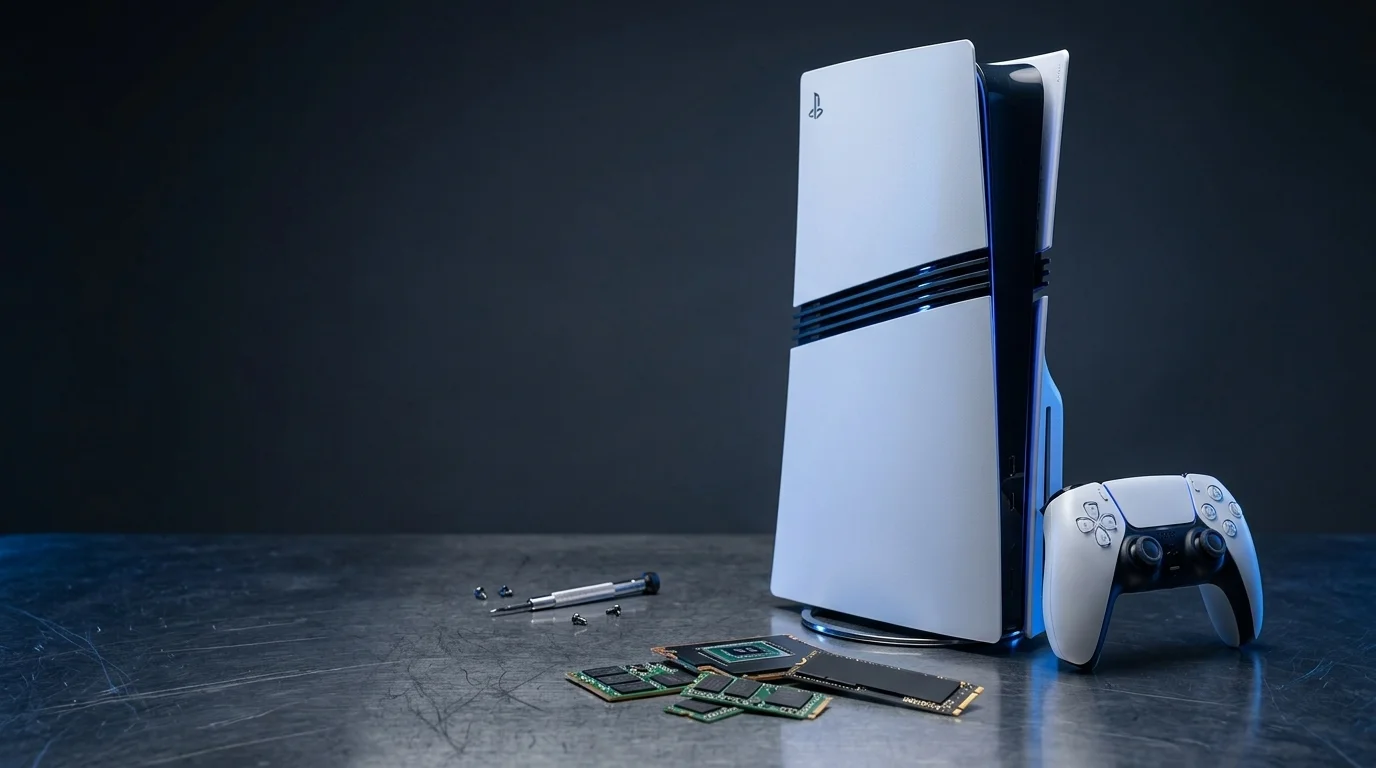
The combined cost of system memory and flash storage for Sony’s unannounced PlayStation 6 exceeds $680 per unit, according to recent NeoGAF forum posts by prominent hardware leaker KeplerL2. Reported in October 2026 across multiple technology outlets, including VGC and TweakTown, the single-source estimate highlights how ongoing global memory shortages driven by artificial intelligence data centers are driving up next-generation console manufacturing expenses. While the unverified component estimate has fueled media speculation of a $1,000-plus retail price tag, Sony has not confirmed the PlayStation 6’s hardware specifications, manufacturing costs, or launch window.
GDDR7 Price Surges and the Bill of Materials
The core of the pricing pressure stems from a sharp increase in dynamic random-access memory (DRAM) and NAND flash costs since Sony began initial hardware planning. According to TweakTown, KeplerL2—an insider known for accurately predicting AMD GPU specifications and the base PlayStation 5’s compute unit count—stated on NeoGAF that “RAM + NAND alone is over $680.” In a follow-up post, the leaker noted that when Sony initially started designing the console’s system-on-chips (SoCs), next-generation GDDR7 memory was projected to cost roughly $3 per gigabyte. Currently, those prices have climbed to an estimated $20 to $23 per gigabyte.
Because the $680-plus figure only accounts for GDDR7 system memory and the solid-state drive’s NAND flash, the total bill of materials (BoM) for the complete system would be substantially higher. As noted by TechPowerUp and Digital Trends, this subtotal excludes major hardware components such as the custom AMD processor, cooling assembly, power supply, chassis, and wireless controller, as well as assembly, packaging, shipping, and retail margins.
Estimates regarding the total cost of the console’s materials and its exact memory configuration vary across reports. According to TechPowerUp, KeplerL2’s estimate for the total bill of materials rose from about $760 in March 2026 to roughly $960 by July, whereas 80.lv reports the leaker stated total materials might cost $1,000, up from the $760 March estimate. Reports also differ on the underlying hardware specifications driving these numbers: TechPowerUp summarizes leak-derived possibilities as GDDR7 running on a 160-bit bus with up to 40 GB of capacity—with 30 GB considered more likely—while TweakTown notes prior reporting that associates the cost discussion with a possible 32 GB GDDR7 memory and 2 TB SSD configuration.
- Credit Markets Flag AI Debt Risks as Oracle Faces $118 Billion Stress Test
- Georgetown Report Details How Government Agencies Can Optimize Websites for AI Crawlers
- Jerusalem Post Analysis Examines How AI Tools Expose Israel’s Political Circles
- GAO Releases 2027-2032 Strategic Plan to Audit Federal AI and Hire Tech Specialists
- NYC Public Schools Halts Generative AI Use Through 8th Grade for 2026-27 Year
AI Data Center Demand Squeezes Consumer Hardware
The surge in memory pricing is a direct byproduct of the artificial intelligence sector absorbing global semiconductor fabrication capacity. According to 80.lv, the supply crunch gained momentum as memory manufacturers such as Micron prioritized RAM production for enterprise AI companies, triggering price hikes and hardware delays across the consumer electronics sector. A report from Nikkei Asia in April indicated that the memory chip shortage is expected to persist into next year and potentially extend further.
The bottleneck is affecting multiple hardware makers simultaneously. 80.lv points out that Valve engineer Yazan Aldehayyat previously stated that memory supply issues were larger than his team anticipated, heavily affecting pricing for the Steam Machine. At Microsoft, where a next-generation console codenamed Project Helix is currently in development, Xbox CEO Asha Sharma has already warned that elevated memory costs will impact the system’s pricing and availability, according to VGC.
These supply constraints are also reportedly altering console release timelines. While the PlayStation 6 and next-generation Xbox systems were once expected to target a 2027 or 2028 launch window, 80.lv notes that Sony previously delayed the PlayStation 6 internally to 2028 or 2029, reportedly due to the memory chip shortage and an expected extension of the PlayStation 5’s lifecycle.
What This Means for Console Pricing and Gamers
While several headlines frame the $680 component leak as proof of a $1,000-plus retail console, industry observers remain divided on how hardware manufacturers will price their next-generation systems. Current-generation hardware has already seen substantial markups; VGC notes that the base PlayStation 5 now costs over 50% more ($200 / £200 higher) than at launch, while the PlayStation 5 Pro has reached $899 following two price hikes within a year. According to Yahoo Tech, both Sony and Microsoft have experienced a substantial decline in total units sold over the past year following these hardware price increases.
Analysts offer contrasting views on whether Sony will breach the four-digit barrier for a standard console. Speaking to GamesIndustry.biz as cited by VGC, Aldora CEO Joost van Dreunen warned that “at this rate, the next generation may not even release until 2028, and when it does, north of a grand is the floor.” Conversely, Newzoo market intelligence director Manu Rosier told the publication that while premium hardware tiers could exceed $1,000, “base next-generation models are likely to hold under $999 for psychological and marketing reasons.”
Historically, console manufacturers have had the option to subsidize hardware by selling consoles at a loss and recouping margins through software sales and digital ecosystems. As Yahoo Tech and TweakTown point out, Sony CEO Hiroki Totoki has previously stated that the company has not made a final decision on PlayStation 6 pricing or release timing. If component costs do not stabilize before mass production begins, Sony will have to choose between passing unprecedented hardware prices directly to consumers or absorbing steeper hardware losses subsidized by higher PlayStation Plus subscription fees and storefront game prices.
Frequently Asked Questions
Is the $680-plus memory cost confirmed by Sony?
No. The figure comes from an unverified forum post on NeoGAF by hardware leaker KeplerL2. Sony has not disclosed supplier contracts, component costs, or official specifications for the PlayStation 6, and secondary media reports are citing the same single-source leak rather than independent corroboration.
Does the rumored bill of materials include assembly, shipping, and retail margins?
No. The $680-plus figure covers only the GDDR7 system memory and NAND flash storage. Even the broader rumored bill of materials estimates—reported at around $760 in March and between $960 and $1,000 by summer 2026—only reflect hardware components. They exclude assembly, packaging, shipping, import tariffs, taxes, and retailer cuts.
What memory and storage configuration is planned for the PlayStation 6?
Sony has not confirmed any specifications, and leak-derived reports vary. TechPowerUp notes possibilities of up to 40 GB of GDDR7 memory on a 160-bit bus, with 30 GB considered more likely, while TweakTown cites earlier reporting pointing to a possible 32 GB GDDR7 and 2 TB SSD configuration.
Sources
- VGC – PlayStation 6’s memory costs alone exceed $680 per console, it’s claimed
- TweakTown – PS6 memory and SSD cost more than an entire PS5, fueling $1,000+ price fears for PS6
- TechPowerUp – PS6 RAM and Storage Alone Reportedly Cost Sony Over $680, Claims Leaker
- 80.lv – PS6 RAM & NAND Reportedly Cost Over $680, Says Kepler_L2
- Yahoo Tech – The PlayStation 6 stands to be ludicrously expensive as its production cost alone reportedly approaches $1000
- Digital Trends – The PS6 could cost over $1000 because, apparently, gaming wasn’t expensive enough