Bank of America investment strategists are warning that the current artificial intelligence infrastructure buildout is mirroring historical capital spending booms that ultimately pressured corporate profitability. According to an October 16 client note by Bank of America investment strategist Sebastian Raedler, reported by Yahoo Finance, consensus expectations for hyperscaler capital expenditure over the next 12 months have reached roughly $1 trillion. While macro strategists caution that intensifying competition and falling service prices could erode the financial returns on that spending, separate equity research from the bank identifies nearly 40% upside in specialized hardware suppliers addressing AI memory constraints.
The dual assessments highlight a growing divergence on Wall Street between the broad economics of AI software monetization and the targeted hardware bottlenecks still driving data center procurement. Even as software token prices drop, physical constraints around memory capacity and bandwidth continue to create pockets of demand for infrastructure vendors.
A Trillion-Dollar Capital Cycle
The scale of planned spending by hyperscale cloud providers has expanded rapidly over the past two years. Forward 12-month consensus expectations for hyperscaler capital expenditure rose from $330 billion in early 2025 to approximately $1 trillion, according to Investing.com via Yahoo Finance. That $1 trillion figure represents roughly 3% of United States gross domestic product.
To put the current buildout into historical context, Raedler compared the AI spending surge to two major American infrastructure expansions. Capital investment during the railroad expansion of the 1870s peaked at 2.2% of U.S. GDP, while spending tied to the 1990s technology and telecommunications boom represented about 1.1% of GDP. In both historical periods, high initial profit margins attracted massive capital inflows, eventually leading to excess capacity and diminished pricing power.
“Most major capital cycles of the past have ended in disappointment, even though the underlying technology often lived up to expectations,” Raedler wrote in the note.
The strategist contrasted today’s AI buildout with the cloud computing expansion of the 2010s. During the cloud era, steep barriers to entry limited the number of viable competitors, allowing major providers to maintain pricing power and strong profitability. In the current AI cycle, competition has intensified rapidly at the model layer, driven in part by Chinese developers releasing competitive open-weight models.
- Eight States Sue OpenAI Over Alleged ChatGPT Risks to Children and Consumer Deception
- Anthropic Co-Founder Says AI Could Push US GDP to $44 Trillion by 2030
- China Proposes AI Export Controls Targeting Large Models and Open Weights
- AI Existential Risk Fears Shape US Legislation and Corporate Lobbying
- Bond Selloff at CoreWeave Exposes Debt Strains Behind the AI Data Center Boom
Falling Token Prices and the Jevons Paradox
The surge in model-layer competition is already showing up in service pricing. Bank of America estimates that average AI token prices—the basic units of text data processed and billed by AI models—have declined by roughly 50% since summer 2026.
This rapid price compression is at the center of an ongoing debate among technology analysts over whether lower costs will hurt infrastructure returns or stimulate broader adoption. Industry bulls point to Jevons Paradox, an economic principle stating that as technological improvements increase the efficiency of a resource and lower its cost, overall consumption rises enough to more than offset the lower per-unit price.
However, early corporate spending indicators suggest usage growth alone is not yet translating into higher total revenue. While the volume of tokens processed by AI systems has continued to climb sharply, data from Ramp AI cited in the Bank of America note indicates that U.S. business spending on AI has faded slightly since August 2026.
“This monetization disappointment in the face of intense competition is precisely the failure mode seen in past capital cycles,” Raedler wrote.
Broader equity markets have reflected some of this caution. AI-linked hardware indices have pulled back from earlier peaks, with the Philadelphia Semiconductor Index sitting 13% below its recent high and South Korea’s KOSPI index down 20% since early October 2026. Reflecting its macro caution, Bank of America remains underweight on semiconductor, banking, and capital goods equities, while projecting the European Stoxx 600 index to fall 10% to 580 by the second quarter.
Wall Street Weighs the Buildout
Across the financial sector, major U.S. banks that help finance the data center boom and deploy the technology internally offered mixed assessments during third-quarter earnings calls, according to Yahoo Finance.
Goldman Sachs CEO David Solomon noted that while the bank is proud of its role in AI financing, it remains uncertain how long-term demand for capital and computing power will evolve. Wells Fargo CEO Charlie Scharf described the physical buildout as “a complicated macroeconomic force in its own right,” pointing to heavy financial leverage across parts of the supply chain.
Other executives emphasized ongoing supply shortages and measurable internal productivity gains. Citigroup CEO Jane Fraser argued that higher interest rates would not slow infrastructure spending because “there’s simply not enough compute.” Citigroup reported that internal AI adoption has enabled the bank to build products up to 40% faster, while AI coding tools have reduced its technology vendor costs by 30%. Meanwhile, JPMorgan Chase CFO Jeremy Barnum stated that at an institution of JPMorgan’s scale, the financial benefits of AI take time to materialize and are not yet visible in quarterly results.
Memory Emerges as the Next Hardware Bottleneck
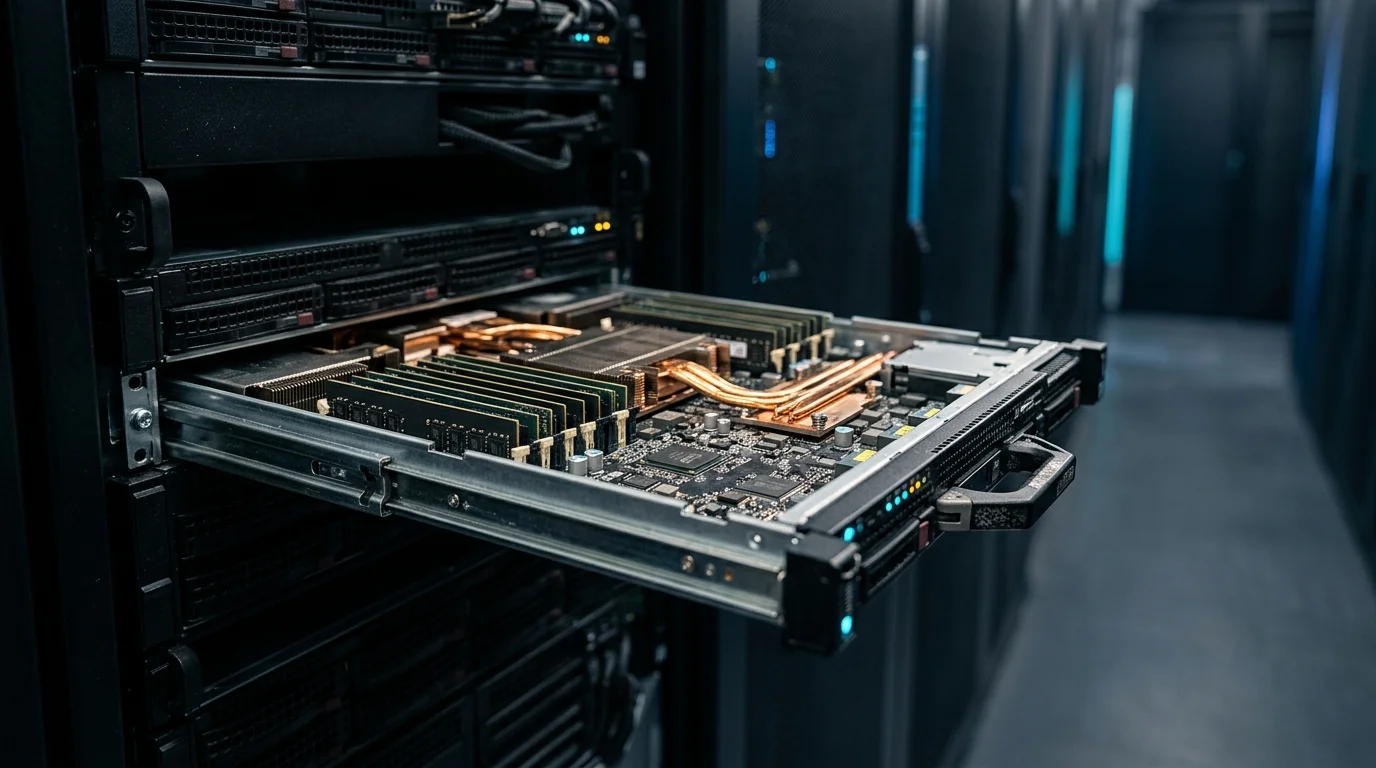
While Bank of America’s macro strategists warn of broad cycle pressures, the firm’s equity analysts see targeted opportunities where physical hardware constraints restrict AI deployment. In a separate research call reported by The Economic Times and parallel market coverage, Bank of America highlighted memory capacity and bandwidth as an increasingly critical bottleneck in AI systems.
On October 9, 2026, Bank of America initiated coverage of infrastructure provider Penguin Solutions with a Buy rating and a $100 price objective, representing roughly 39.7% implied upside from the stock’s price at the time of publication. The equity thesis centers on the growing need for high-bandwidth memory and specialized memory architectures to feed data to AI accelerators efficiently.
As AI workloads shift from basic model training to complex reasoning and high-volume inference, processors frequently sit idle waiting for data transfers, making memory bandwidth a primary performance limiter. Still, analysts noted that this hardware opportunity carries specific risks: a sharp market correction in memory component prices could undermine the revenue upside for specialized suppliers.
Frequently Asked Questions
Will lower token prices increase paid usage enough to offset reduced revenue per unit?
Analysts remain divided. Supporters of the AI buildout argue that Jevons Paradox applies, meaning a 50% drop in token prices since summer 2026 will stimulate enough new volume to grow overall revenue. Conversely, Bank of America strategists point to Ramp AI data showing that U.S. corporate spending on AI has dipped slightly since August 2026 despite surging token volumes, suggesting competition is compressing margins faster than paid demand is growing.
Does Bank of America’s 40% upside thesis apply to the entire AI hardware sector?
No. The roughly 40% upside figure is specific to an equity research call on Penguin Solutions, where analysts set a $100 price objective based on the company’s exposure to AI memory capacity and bandwidth constraints. At the broader sector level, Bank of America’s macro strategy team remains cautious and maintains an underweight stance on semiconductor stocks.
How sensitive is the memory bottleneck thesis to component price volatility?
The thesis is highly sensitive to pricing dynamics in the memory market. While physical constraints around memory bandwidth and capacity currently support specialized infrastructure vendors, research coverage notes that a sharp downward correction in memory prices is a primary risk that could erode the projected upside.
Sources
- Yahoo Finance – Bank of America Warns AI Investment Cycle Could Face Pressure From Competition and Falling Prices
- Investing.com via Yahoo Finance – Can AI avoid the boom-and-bust fate of past capital cycles? BofA weighs in
- Yahoo Finance – Bank of America warns of a disappointing old pattern
- The Economic Times – Bank of America sees 40% upside in AI’s next bottleneck