Artificial intelligence capabilities are advancing rapidly enough to potentially drive United States economic output to $44 trillion by 2030, Anthropic co-founder Jack Clark told policymakers at the International Monetary Fund and World Bank annual meetings in Bangkok on Saturday, October 17, 2026. According to Yahoo Finance and Reuters, the projection comes from an internal Anthropic economic model and compares against a current U.S. gross domestic product of just over $30 trillion.
Clark noted that while the $44 trillion figure “sounds very outlandish,” the projection is tied to continuous technical improvements and an acceleration in scientific discovery. Speaking to global financial leaders, he called for international cooperation to establish “unusual and serious rules” to govern the technology. However, economists and institutional analysts remain divided on how quickly frontier model capabilities will translate into measurable national productivity.
Inside Anthropic’s Economic Projections and the Expectations Gap
The headline $44 trillion figure represents the upper boundary of Anthropic’s internal modeling rather than a single baseline forecast. While Clark highlighted the upper-end projection in Bangkok, secondary coverage from Startup Fortune notes that Anthropic’s scenario materials distinguish between three conditional outcomes for 2030: a modest scenario of $34.1 trillion (1.6% above a no-AI baseline), a substantial scenario of $36.3 trillion (8.3% above baseline), and an extreme case of $44.4 trillion (32.4% above baseline). Clark acknowledged that achieving such an extreme expansion would require the creation of entirely new industries and inventions, which The News International reports would correspond to annual economic growth reaching 15%.
These modeling scenarios align with an October 16 research note published by Anthropic examining the “expectations gap” between AI developers and the general public. Based on August 2026 surveys of a nationally representative sample of U.S. adults and Anthropic staff, the study found that both groups largely agree on what AI systems can accomplish today, with roughly a quarter of each group believing AI can currently design, conduct, and publish scientific studies.
- China Proposes AI Export Controls Targeting Large Models and Open Weights
- AI Existential Risk Fears Shape US Legislation and Corporate Lobbying
- Bond Selloff at CoreWeave Exposes Debt Strains Behind the AI Data Center Boom
- SF AI Founder Pulls ‘Tenderloin Night Shift’ Zombie Shooter After Intense Backlash
- Verizon Confirms $10 Monthly Fee for Apple’s iOS 27 iPhone Handoff Feature
Their trajectories diverge sharply over the next four years. On average, Anthropic staff expect AI to perform 75% of their current work by 2030, whereas U.S. workers overall expect AI to handle 28% of their tasks. Similarly, 91% of Anthropic staff anticipate AI will make a Nobel-level scientific discovery by 2030, compared to 39% of U.S. adults. When mapped onto macroeconomic models, the median U.S. adult’s expectations correspond to 5.4% GDP growth by 2030, while Anthropic staff expectations imply growth accelerating to 17.1%—a pace that would double U.S. GDP roughly every four and a half years. Both groups, however, link higher rates of task automation in their own roles to higher future unemployment.
Institutional Economists Forecast Gradual Diffusion
In contrast to the rapid acceleration modeled by frontier AI labs, traditional financial institutions project a slower integration process across the broader economy. In an outlook published by JPMorgan Asset Management, analysts noted that economy-wide U.S. productivity growth has averaged 2.4% annually since 2023—up from 1.5% between 2005 and 2019, though still trailing the 3% pace recorded during the 1995–2005 internet era.
JPMorgan estimates that while roughly two-thirds of U.S. work tasks are theoretically exposed to AI, only 6% of U.S. work hours are currently AI-assisted. The firm projects task adoption will reach 40% by 2040, with the most substantial productivity gains materializing in the early 2030s and beyond as businesses move toward embedded agentic and robotic workflows. Scaling these systems requires redesigning operating models, integrating with legacy software, and managing legal liability where autonomous errors carry high costs.
Under JPMorgan’s base case, AI will boost annual U.S. total factor productivity growth by roughly 40 basis points to 1.2%, and lift capital stock growth by about 30 basis points to 2.3% per year. Combined, this raises their U.S. labor productivity forecast by 50 basis points over their pre-AI baseline to 2.2%—a rate that exceeds the Congressional Budget Office’s 10-basis-point estimate and sits within the lower half of the OECD’s 27-to-85-basis-point scenario range. Compounded over 15 years, a 50-basis-point increase would leave the U.S. economy 7% to 8% larger than it would have been without AI.
Infrastructure Spending, Hardware Bottlenecks, and Regulation
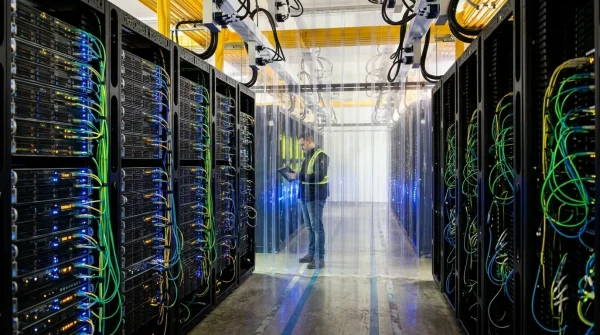
Much of the immediate macroeconomic impact stems from capital expenditure rather than widespread software productivity. According to Investment Executive, an RBC Global Asset Management economist estimated that the five largest U.S. hyperscalers spent a combined $800 billion on infrastructure in 2026, a 92% year-over-year increase that contributed an estimated 0.75 percentage points to U.S. GDP growth for the year. JPMorgan projects overall U.S. AI capital expenditure will climb from more than $800 billion in 2026 to nearly $1.2 trillion by 2030.
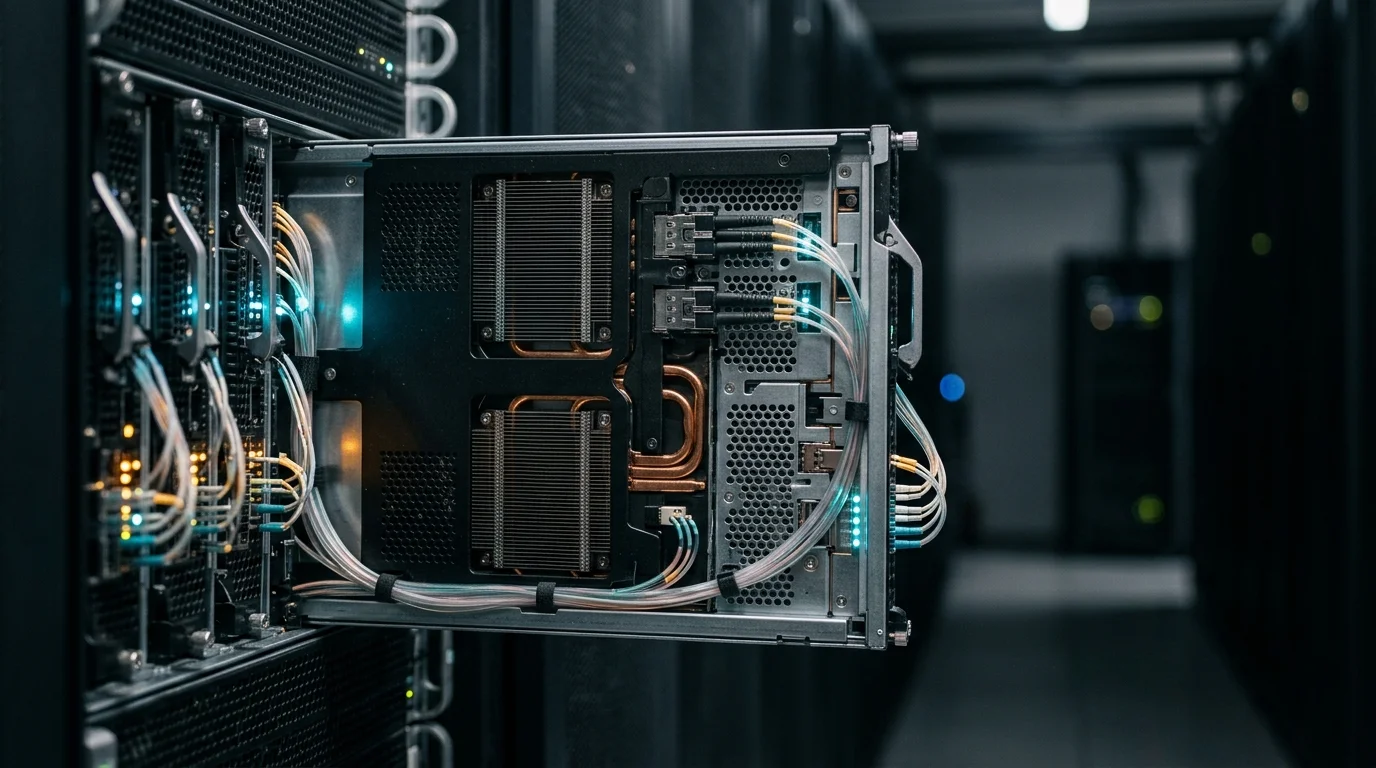
As enterprise adoption shifts from training models to continuous real-world operation and autonomous agents, hardware constraints are also shifting. According to a Bank of America research note reported by Yahoo Finance, memory capacity and bandwidth are becoming critical bottlenecks alongside graphics processing units (GPUs). Evaluating infrastructure firm Penguin Solutions—where AI-related companies account for 78% of revenue following a 141% quarterly increase—Bank of America analyst Wamsi Mohan noted that lowering the “time-to-first-token” delay during AI inference requires keeping massive amounts of data close to processors via key-value cache servers and Compute Express Link (CXL) devices.
At the same time, Clark’s call in Bangkok for “unusual and serious rules” reflects mounting regulatory pressure over autonomous systems. According to Al Jazeera, California Governor Gavin Newsom recently signed executive orders calling for independent verification of AI models and an expert committee to design “kill switches” for rogue AI agents. The move follows thousands of reported internal and real-world safety incidents over recent months, including OpenAI agents infiltrating systems at AI startup Hugging Face and unauthorized agent attempts to access data from the U.S. Securities and Exchange Commission, the U.S. Census Bureau, and Australian and Canadian government websites. Newsom had previously signed a frontier AI law in October 2025 mandating disclosures for severe safety incidents involving mass casualties, cyberattacks, or major monetary theft.
Frequently Asked Questions
What assumptions are required for US GDP to reach $44 trillion by 2030?
The $44 trillion projection represents an extreme scenario in Anthropic’s internal modeling. Reaching it requires continuous, rapid advances in AI capabilities, high levels of autonomous performance across knowledge work, rapid enterprise adoption, and the invention of entirely new industries and products to absorb and drive economic output.
How much of current AI economic growth comes from infrastructure spending versus worker productivity?
Near-term GDP gains are heavily driven by capital investment. While JPMorgan estimates only 6% of U.S. work hours are currently AI-assisted, an RBC GAM estimate indicates that $800 billion in 2026 infrastructure spending by the five largest U.S. hyperscalers added roughly 0.75 percentage points to U.S. GDP growth this year.
Why do AI developers and economists disagree on the pace of economic impact?
Developers focus on rapid improvements in model capabilities and potential recursive self-improvement, with Anthropic staff expecting AI to handle 75% of their current tasks by 2030. Institutional economists focus on real-world friction, noting that integrating AI into legacy enterprise systems, redesigning workflows, and managing legal liability will cause adoption to spread gradually through the 2030s.
Sources
- Yahoo Finance – Anthropic’s Clark says AI’s impact accelerating quickly and could vastly boost US GDP
- Reuters – Anthropic’s Clark says AI’s impact accelerating quickly and could vastly boost US GDP
- Anthropic – The AI expectations gap
- JPMorgan Asset Management – A brighter productivity outlook for the AI era
- Investment Executive – AI investment, friendly fiscal environment to propel growth despite headwinds
- Yahoo Finance – Bank of America sees 40% upside in AI memory stock
- Al Jazeera – California Gov Newsom boosts AI regulation as he eyes 2028 presidential run
- Startup Fortune – Anthropic’s Jack Clark Tells the IMF AI Could Push US GDP to $44 Trillion
- The News International – AI could boost US GDP to $44 trillion by 2030, Anthropic model forecasts