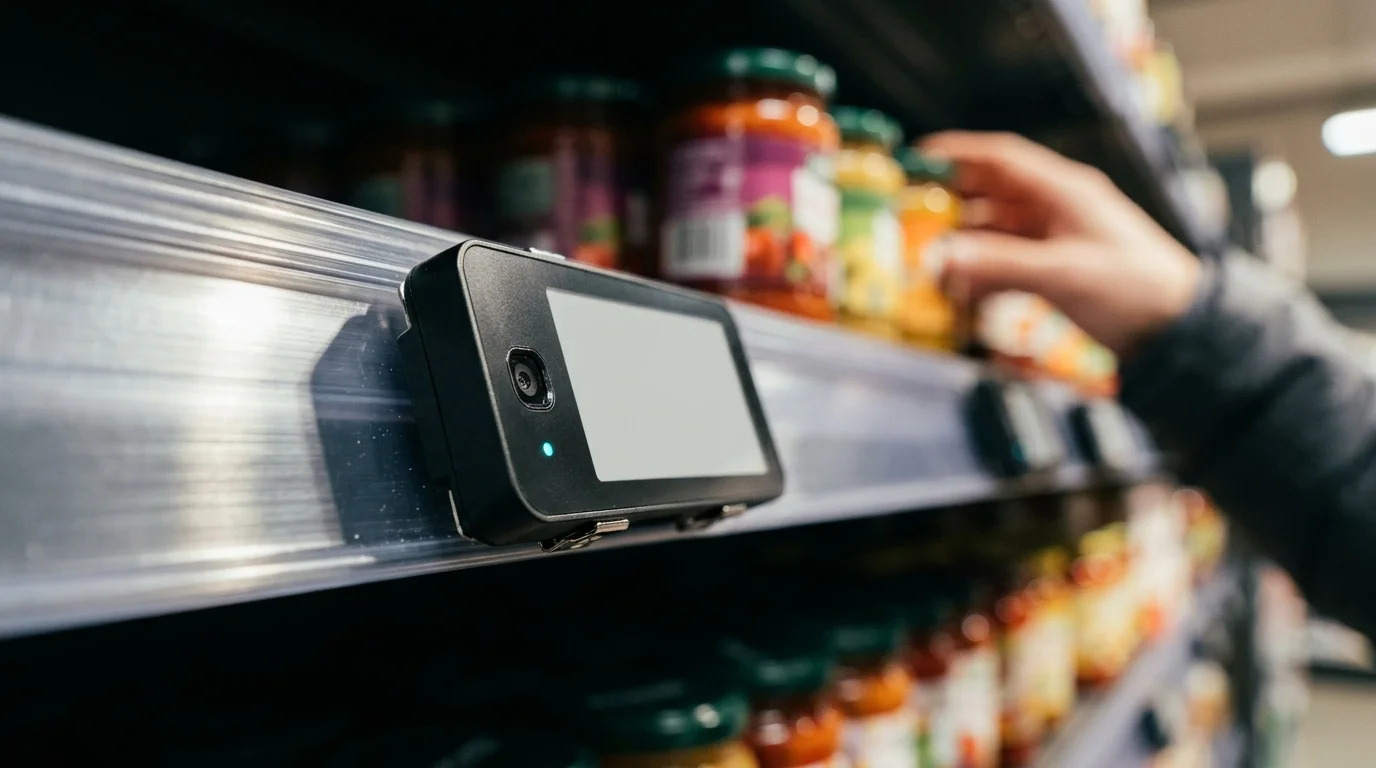
American shoppers and state lawmakers are increasingly pushing back against the adoption of artificial intelligence and digital pricing infrastructure across major U.S. grocery stores, department chains, and fast-food restaurants. While companies including Walmart, Target, and McDonald’s state their systems are designed to improve operational efficiency and manage local supply costs, consumer advocates warn the underlying technology enables “surveillance pricing”—the practice of using personal data to charge different individuals different amounts for the same item.
The friction has turned routine retail hardware upgrades, such as electronic shelf labels replacing paper price tags, into a flashpoint over consumer fairness and data privacy. According to the Bozeman Daily Chronicle, legislators in at least 30 states have considered pricing bills this year aimed at regulating algorithmic and personalized pricing, prompting major chains to issue public denials regarding how their software sets retail costs.
Dynamic vs. Surveillance Pricing: How the Tech Works
At the center of the debate is the technical distinction between traditional dynamic pricing and individualized, data-driven pricing. For decades, airlines, hotels, and ride-sharing platforms have relied on dynamic pricing algorithms to adjust rates in response to broad market conditions, including shifting patterns of supply and demand, inventory levels, weather, or the time of day. In those scenarios, the fluctuating price generally applies to everyone shopping in the same channel or location at that moment.
However, the integration of machine learning and vast consumer datasets has introduced the capability for personalized pricing. Analysts with the economic consulting firm Cornerstone Research noted in a 2025 report that modern AI tools empower firms to collect, process, and analyze disparate consumer data, leading to more granular and individualized pricing than previously observed, according to Yahoo Finance.
Lindsay Owens, CEO of the nonprofit economic policy think tank Groundwork Collaborative, warned that this technology threatens to overturn the norm of universal posted prices established in the 1860s by pioneering Philadelphia retailer John Wanamaker. Instead of pricing a good based on its base value and local overhead, AI algorithms can analyze a shopper’s location, browsing habits, and purchase history to estimate the maximum amount that specific buyer is willing to pay.
- Riot Games Overhauls Valorant Esports With 15 Host Cities and 2027 Manila Pacific Cup
- RentAHuman Platform Tests the Reality of AI Agents Hiring Human Workers
- Norfolk Deploys Amazon AI to Answer Thousands of Non-Emergency Municipal Calls
- Anthropic CEO Dario Amodei Says Company Culture Takes Up to 40% of His Time
- Teen AI Researcher Nathan Chen Leaves China’s Moonshot AI for the Bay Area
“Technology is allowing companies to stop setting prices for products and start setting prices for you,” Owens told CBS News, as cited by Yahoo Finance. She added that losing predictable posted prices makes household budgeting significantly harder for consumers from one week to the next.
In December 2025, Groundwork Collaborative and Consumer Reports published findings from a trial involving the grocery-shopping platform Instacart, which had acquired the AI pricing software platform Eversight in 2022. The groups reported that the AI-enabled system simultaneously showed different customers varying prices for identical grocery baskets from the same store, with maximum price differences reaching up to 23%.
Conversely, retail industry groups dispute the notion that such practices represent standard industry operations. According to a report in the Fort Worth Star-Telegram, the National Retail Federation has characterized claims of widespread individualized pricing in U.S. retail as speculative, stating there is no empirical evidence that merchants are broadly raising prices at the individual shopper level.
Major Chains Push Back Against Algorithmic Pricing Claims
As social media speculation over digital price tags and algorithmic menus has grown, several of the nation’s largest corporations have stepped forward to clarify how their systems operate.
Walmart has issued multiple public statements defending its store-wide rollout of electronic shelf labels. On September 25, 2026, Walmart CEO John Furner wrote in a blog post that the digital labels are meant to save workers time and keep inventory prices current, not to adjust rates based on the weather, time of day, or individual shopper data. “We price the product, not the person,” Furner stated. Katie Thomas, who leads an internal consumer behavior think tank at the management consulting firm Kearney, noted that social media posts have falsely implied Walmart’s electronic shelf labels scan shoppers’ faces or cellphones to set individualized rates.
The dispute escalated in October when Walmart Executive Vice President of Corporate Affairs Dan Bartlett sent a public letter to Groundwork Collaborative’s Owens, claiming she mischaracterized the retailer’s digital shelf labels as a precursor to real-time dynamic pricing, according to Retail Brew. While Groundwork Collaborative pointed to a decade of Walmart patent filings to argue the company’s technology could be used to profile and track customers, Bartlett wrote that implying personalized pricing is where Walmart’s business is headed is inaccurate. Owens responded that the confusion is of Walmart’s own making, citing contradictions between its customer letters, investor communications, and patent filings.
Other major brands have faced similar scrutiny. Following a report based on software screenshots alleging that McDonald’s uses an AI tool to analyze millions of transactions and generate an “optimal price” for menu items at each location, the fast-food chain issued a denial on October 13, 2026. McDonald’s stated that AI does not set or change the price of a Big Mac or determine what an individual customer pays, explaining that its “pricing recommendation tool” simply provides data and research to franchisees, who ultimately make their own pricing decisions.
Similarly, U.S. News & World Report noted on October 15, 2026, that Target publicly denied using customer data to raise prices based on a shopper’s identity or location. Target explained that while prices can vary due to local operating costs, regulations, competition, and store- or channel-specific promotions, the rates remain uniform for all customers using the same platform or visiting the same physical store.
State Legislatures Move to Restrict Data-Driven Pricing
Because consumers generally cannot see the backend inputs driving retail software, verifying whether a price change stems from routine supply-chain costs or personal profiling remains difficult. That lack of transparency has spurred preemptive legislative action across the United States.
Rather than waiting for a single federal standard, state lawmakers are enacting jurisdiction-specific rules to restrict how personal data can be utilized at the checkout counter. According to a policy summary by FoodNavigator, a Maryland law restricting data-driven grocery pricing by large retailers and third-party food delivery services took effect on October 1, 2026. Similar restrictions are scheduled to take effect in Connecticut on July 1, 2027, followed by the New Jersey Fair Price Protection Act on August 1, 2027.
Frequently Asked Questions
Does a digital price tag mean a store is charging people different prices?
Not necessarily. Electronic shelf labels allow retailers to update prices remotely and more quickly than replacing paper tags by hand. While this capability supports faster operational repricing across a store, the hardware itself does not mean different shoppers are seeing personalized prices.
Why do prices sometimes differ between a retailer’s app and its physical store?
Retailers such as Target note that price differences across channels or locations typically reflect local overhead costs, regional competition, local regulations, or platform-specific promotional discounts, rather than algorithms targeting an individual shopper’s personal profile.
How are states regulating AI-assisted grocery pricing?
At least 30 states have considered legislation addressing algorithmic or personalized pricing this year. Maryland implemented restrictions on data-driven grocery pricing by large retailers and third-party delivery platforms on October 1, 2026, with Connecticut and New Jersey set to enforce their own statutory restrictions in July and August 2027, respectively.
Sources
- Bozeman Daily Chronicle – Consumer apprehension grows as US retailers adopt AI-assisted pricing tools
- Yahoo Finance – Why AI could end the price tag as we know it
- Retail Brew – Walmart, McDonald’s push back against dynamic pricing fears
- U.S. News & World Report – Target Says It Does Not Use Customer Data to Raise Prices
- Fort Worth Star-Telegram – National Retail Federation disputes widespread individualized pricing claims
- FoodNavigator – How AI could reshape product discovery and grocery pricing
- FoodNavigator – Walmart’s announcement on electronic shelf labels follows a wave of state laws