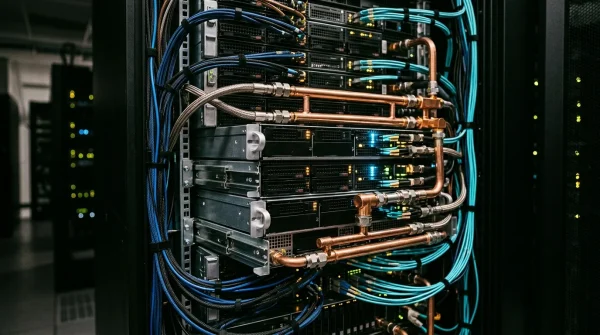
Recent analyses and regulatory inspections out of South Korea are exposing critical pressure points across the global artificial intelligence landscape. From high false-positive rates in automated banking security tools to mounting investor scrutiny over multi-trillion-dollar data center buildouts and sovereign compute dependencies, the findings illustrate the widening gap between hardware spending and reliable enterprise deployment.
While surging demand for memory and logic chips continues to buoy South Korea’s broader economy, financial regulators, institutional investors, and international monetary officials are increasingly warning of operational bottlenecks and capital allocation risks that could ripple across global technology markets.
Financial Sector AI Struggles With Context in Security Audits
The push to automate enterprise cybersecurity is encountering significant technical hurdles in South Korea’s banking sector. According to Maeil Business Newspaper, recent tests conducted by the Financial Security Service revealed that AI tools deployed by financial firms to detect software vulnerabilities misidentified normal program code as security risks 40% to 60% of the time.
The inspection, disclosed through data submitted to National Assembly member Kim Hyung-yeon of the Cho Kuk Innovation Party on October 19, evaluated ten major financial institutions—including Shinhan Bank, Hana Bank, and Woori Bank. The institutions had been granted temporary relief from strict network separation rules last month specifically to test AI-driven source code analysis.
Despite Financial Services Commission Chairman Lee Eok-won advocating for automated systems that defend against AI-driven cyberattacks using AI, the test results underscored severe limitations in how current models parse complex enterprise software. Evaluators found that the AI systems examined isolated snippets of source code without grasping the broader operational architecture or end-to-end data flow of the applications.
- Anthropic Commits 5% of Shares to New Public Benefit Fund
- Coursera Report Shows AI Course Enrollments Surging in Ghana, Nigeria, and South Africa
- SpaceX Targets Monday Morning Launch for Bandwagon-5 Rideshare Mission
- Anthropic Pitches Federal AI Safety Bill With $1B and 50-Person Harm Thresholds
- Disney’s $60M Character.AI Deal, Meta’s Brazil Ruling, and Anthropic’s IPO Plans
In practice, the models frequently flagged fixed internal values that could not be altered externally, falsely warning that attackers could manipulate them because the software failed to trace where the values originated. The systems also ignored existing perimeter defenses and authentication checks located outside the immediate code block being scanned, triggering false alarms about authentication bypasses. Rather than reducing workloads, the 40% to 60% false-positive rate forced human security engineers and developers to manually verify each alert and confirm whether external security controls were active.
Macroeconomic Growth Versus Data Center Financing Strains
The operational growing pains in enterprise software coincide with heightened debate over the financial sustainability of the physical infrastructure powering AI. South Korea remains a primary beneficiary of the hardware buildout. According to The Korea Times, the International Monetary Fund (IMF) recently upgraded South Korea’s 2026 economic growth forecast by 0.7 percentage points from its July projection, raising it from 2.6% to 3.3% largely due to robust semiconductor exports tied to data center demand.
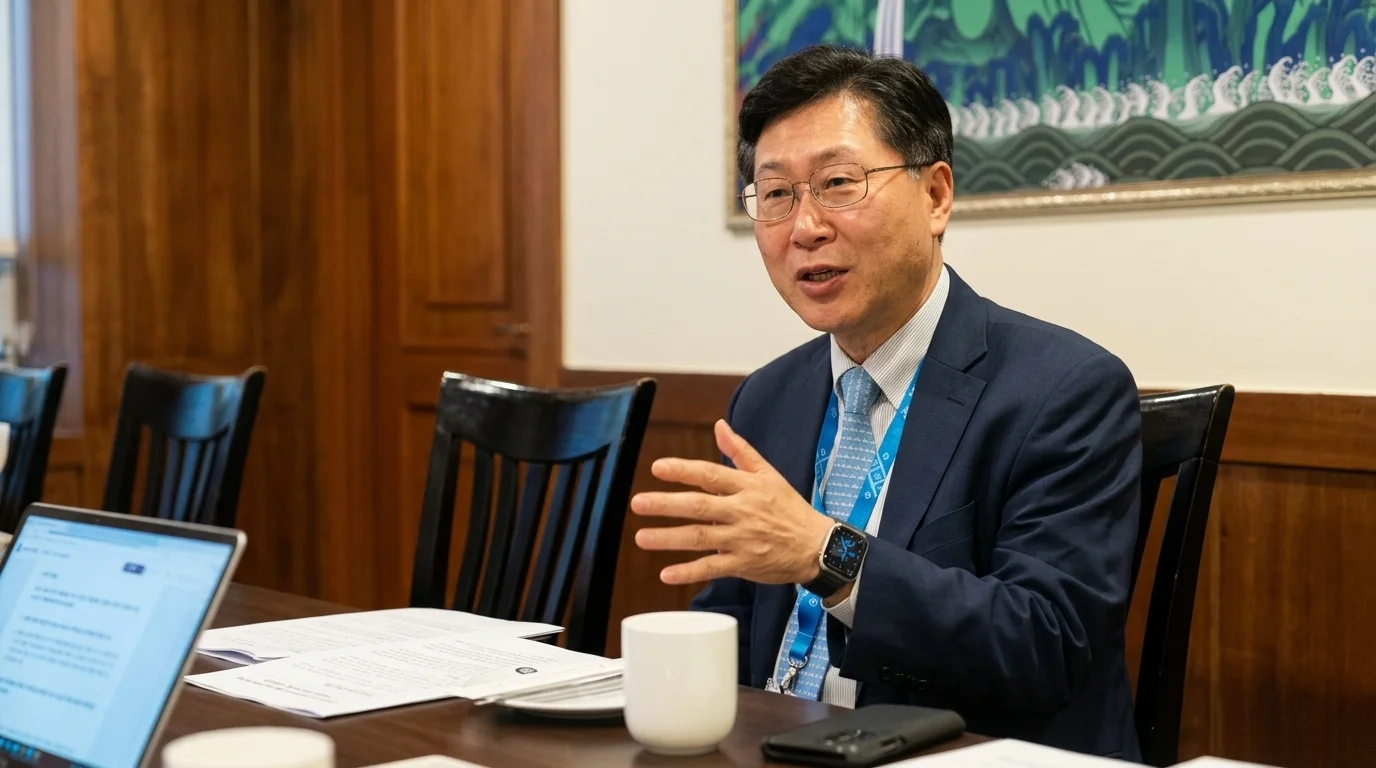
Speaking to reporters in Bangkok on October 15 during the IMF and World Bank Group Annual Meetings, Choi Ji-young, executive director of the IMF Asia and the Pacific Constituency Office, noted that the infrastructure cycle has a long runway because building AI data centers can take around 10 years. At the same time, Choi cautioned that if the AI boom falters, South Korea could face a stock market correction, current account adjustments, and broader business disruptions.
Those macroeconomic warnings align with broader anxiety in global capital markets. As reported by Bloomberg, funding fears and US inflation concerns recently triggered a sharp equity selloff in Asia, sending South Korea’s Kospi index down 8% in a single session—nearly 40% below its June peak—while chipmakers Samsung Electronics and SK Hynix each dropped more than 9%.
Systemic risk monitors are also flagging the mechanics of how this infrastructure is funded. According to Seoul Economic Daily, the IMF’s October Global Financial Stability Report highlighted the danger of “circular financing,” wherein major technology firms invest in AI startups that subsequently use that capital to purchase cloud services and semiconductors from their backers. If end-user revenue falls short, a simultaneous contraction in funding and sales could amplify losses. A related report by Seoul Economic Daily noted that a combined shock of falling AI asset prices, rising sovereign bond yields, and energy constraints could reduce global banks’ core capital ratios by 1.5 percentage points, down to 11.5%.
The Revenue Gap and Neocloud Consolidation
The core issue unsettling lenders is whether software revenue can justify unprecedented capital expenditure. According to Reuters, analysts at Goldman Sachs expect combined capital spending by five major AI hyperscalers to reach approximately $1.2 trillion next year.
However, industry projections suggest differing views on how quickly that capacity will pay off. According to The Register, research firm Gartner estimates that AI providers will spend nearly $1 trillion on infrastructure in 2026 and an additional $6 trillion between 2027 and 2030. Assuming a standard 12% target return on invested capital, Gartner calculates that data center operators would need to generate $8.5 trillion in revenue to cover capital spending and financing costs, yet forecasts total attributable enterprise and consumer AI revenue during that window to reach no more than $3.6 trillion.
Gartner warns that this shortfall could lead to over $4 trillion in capital write-downs by 2032 as newer graphics processing units (GPUs) render older hardware obsolete, predicting that 80% of specialized “neocloud” GPU-as-a-service operators will cease to exist as standalone businesses by 2030. Conversely, Reuters reporting carried by U.S. News notes that while investors are reassessing whether builders can earn adequate returns on compute, land, and power, dealmakers maintain that physical data center supply remains far short of actual demand. Institutional investors are responding by tightening valuation criteria; South Korea’s National Pension Service Asia infrastructure lead recently emphasized deliverable power capacity, fiber connectivity, tenant credit quality, and long-term usage contracts as mandatory benchmarks for selective data center backing.
Sovereign AI Ambitions Meet Hardware Dependencies
Alongside commercial infrastructure pressures, national governments and corporate boards are prioritizing “Sovereign AI”—the drive to maintain domestic control over foundational models and sensitive data. Yet South Korea’s own blueprint illustrates the paradox of pursuing technological independence while relying on a concentrated foreign supply chain.
According to Aju Daily, South Korea’s planned sovereign AI initiative carries a proposed budget of 4.7 trillion won, targeting a March 2027 launch subject to final budget and procurement approvals. Of that total, approximately 3.9 trillion won is earmarked to acquire 10,000 Nvidia Vera Rubin GPUs, with the remaining 800 billion won allocated for training data.
For enterprise technology leaders and policymakers in the United States and Asia alike, the allocation underscores a central reality of the current hardware market: establishing local governance over training data and model weights does not eliminate reliance on dominant US semiconductor architectures. Combined with the high false-positive rates seen in early financial sector deployments, the findings from Seoul suggest that securing compute is only the initial hurdle in translating raw infrastructure spending into dependable, profitable enterprise systems.
Sources
- Maeil Business Newspaper – Artificial intelligence (AI) innovation has become important, but for corporate boards, data sovereignty…
- The Korea Times – AI boom sustains Korea’s growth despite global headwinds: IMF official
- The Register – The AI math isn’t mathing as infrastructure spending forecast to outstrip expected revenue
- Seoul Economic Daily – IMF Urges Korea to Save Chip Windfall for Future Crises
- Seoul Economic Daily – Retail Buying Loses Steam as Investor Deposits Fall
- Reuters / U.S. News – Analysis: Market Selloff, Rising Rates Test AI Data Centre Deal Boom
- Bloomberg – AI Selloff Deepens in Asia as Funding Fears Mount
- Reuters – Wall St Week Ahead: AI rally wobbles, stock markets spotlight turns to earnings
- Aju Daily – South Korea Sovereign AI Plan and GPU Procurement Report